
UN stresses the need for de-escalation in Ukraine war as attacks rise
UN Urges De-escalation Amid Escalating Ukraine War Tensions
Qinilo.com – As tensions in the Ukraine conflict intensify, a UN representative emphasized the critical importance of reducing hostilities during a Security Council session on Monday. The official highlighted the growing risks of conflict spillover, urging all parties to prioritize diplomacy and restraint to prevent further deterioration of the situation.
Romania’s Call for Emergency Action
Romania initiated an urgent meeting of the Security Council following a Russian drone intrusion into its airspace on Friday night. The incident, which targeted an apartment complex in the eastern city of Galaţi, resulted in two injuries—a woman and a child—marking the first civilian casualties linked to such an attack in the region. This development underscored the heightened threat posed by aerial warfare to neighboring states.
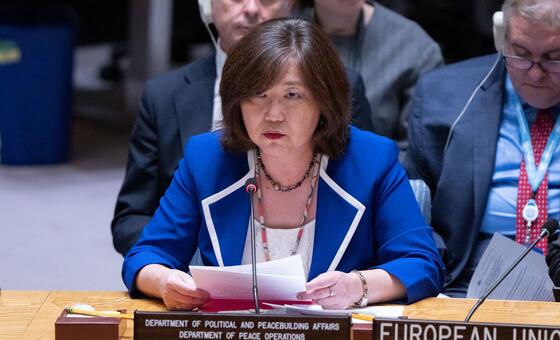
“Last Friday’s event served as a clear reminder of the dangers we’ve repeatedly warned about, including the potential for conflict to spread beyond Ukraine’s borders,” stated Kayoko Gotoh, a director within the UN’s political and peacekeeping divisions.
Gotoh noted that while drone incursions into Romanian airspace were not unprecedented since Russia’s full-scale invasion began, the specific attack in Galaţi represented a pivotal moment. The incident occurred amid a pattern of increasing drone activity near the borders of both Ukraine and the Russian Federation, raising concerns about regional stability.
Global Concerns Over Drone Incursions
Over the past year, multiple countries have reported drone attacks, including Moldova, Latvia, Lithuania, Estonia, Finland, Poland, Kazakhstan, and Belarus. Additionally, three other nations—Bulgaria, Greece, and Türkiye—have documented similar incidents in their territories. These breaches have prompted discussions about the need for coordinated efforts to address the growing threat of aerial warfare.
Gotoh also pointed to the broader context of escalating attacks by Russian forces. In the last 12 months, there has been a sharp increase in missile and drone strikes on Ukrainian urban centers, leading to a significant rise in civilian casualties and damage to essential infrastructure. The scale of these assaults has intensified the pressure on the international community to intervene and mediate.
Nuclear Facilities at Risk
A particular cause for alarm emerged from the recent strike on the Zaporizhzhia Nuclear Power Plant, located in southern Ukraine. On 30 May, the International Atomic Energy Agency (IAEA) was informed that a drone had damaged a turbine building, creating a breach in the structure. This marked the first direct attack on the plant’s premises in two years, highlighting the vulnerability of critical energy installations to remote aerial threats.
Gotoh warned that the risk of miscalculation has reached dangerous levels, especially regarding nuclear facilities. “The potential for an accident at such sites could have catastrophic consequences,” she said, stressing that the situation demands immediate attention to prevent irreversible harm.
Counterarguments from Russian Delegation
In response to Romania’s concerns, Russian Ambassador Vasily Nebenzya criticized the timing and focus of the meeting. He argued that the drone strike in Galaţi was a direct result of Ukrainian military operations targeting Russian territory. “The Kyiv regime’s actions have triggered a retaliatory response,” he stated, asserting that the attack was part of a larger pattern of escalation.
“We believe the primary objective of today’s meeting is to fuel Western narratives against Russia, regardless of the evidence,” Nebenzya claimed.
He highlighted that Russian forces had conducted operations in the Reni port and the Odessa region, which serve as key supply routes for Western military aid to Ukraine. According to Romania, these strikes were carried out by a Geran-2 drone, which reportedly carried a payload of approximately 50 kilograms of explosives. Nebenzya questioned the severity of the damage, suggesting that a full impact would have required a more powerful detonation.
Commitment to Peace and Stability
Ms. Gotoh concluded her remarks by reinforcing the UN’s commitment to fostering dialogue. “In times of heightened conflict, it is essential for all parties to act with responsibility and avoid actions that could deepen the crisis,” she said. Her comments aligned with the UN Secretary-General’s earlier warning that the current trajectory of escalation could lead to uncontrollable consequences if left unchecked.
Romanian Foreign Minister Oana-Silvia Ţoiu echoed this sentiment, declaring that the situation demanded decisive action. “This is a moment that cannot be overlooked,” she emphasized, noting that Romania had taken the unprecedented step of convening an emergency Security Council session to address its security concerns. Ţoiu stressed that the international community must not only recognize the urgency but also commit to preventing further aggression.
Regional and International Implications
The UN’s call for de-escalation reflects a broader strategy to stabilize the region. By advocating for dialogue, the organization aims to create a framework for sustainable peace that reduces the likelihood of prolonged conflict. Gotoh reiterated that such efforts are crucial for ensuring a stable environment across Europe and beyond.
As the war in Ukraine enters a new phase, the balance of power and the stakes for global security have become increasingly evident. The recent drone incidents in Romania and Ukraine serve as a stark reminder of the interconnected nature of modern warfare, where attacks can ripple across borders and threaten critical infrastructure. The Security Council’s response will be pivotal in determining whether this conflict can be contained or if it risks escalating into a wider regional war.
With the situation evolving rapidly, the international community faces a critical juncture. The UN’s role in mediating and highlighting the dangers of continued escalation remains vital, even as differing perspectives on the conflict intensify. The outcome of this meeting may set the tone for future diplomatic efforts and shape the course of the war in the months ahead.