
Myanmar’s illicit economy fuels escalating violence, with civilians bearing the brunt
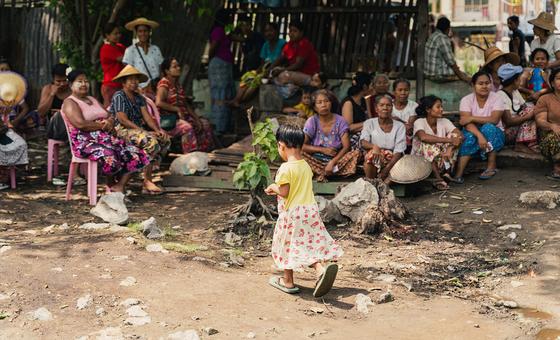
Civilians Face Deepening Peril as Myanmar’s Conflict Expands
Qinilo.com – Myanmar’s civil war is continuing to inflict devastating harm on civilians, with widespread attacks, blocked aid and a rapidly expanding illicit economy intensifying an already dire humanitarian crisis. The country has remained engulfed in conflict since the military removed the democratically elected Government in February 2021, prompting armed resistance in many parts of the country.
The scale of civilian suffering has become increasingly severe. At least 8,384 civilians had been killed by military forces since the coup through 15 September 2026, UN Special Rapporteur Kelley Anne Eckels-Currie said in a new assessment of conditions in Myanmar.
Special Rapporteurs are independent experts selected by the UN Human Rights Council. They work in a personal capacity and are not paid for their mandates.
Peace initiative failed to halt attacks
A military “100-day peace plan”, announced for the period from 20 April to 31 July 2026, did not bring relief to communities caught in the fighting. Instead, conditions worsened during those months, with approximately 753 civilians killed. Myanmar’s military and associated paramilitary forces were responsible for 89 per cent of those deaths.
Military operations have included air attacks and artillery fire directed at places essential to civilian life. Schools, hospitals and other health facilities, markets, places of worship and camps for displaced people have all been struck or damaged amid the conflict.
“These are not accidents… This is intentional infliction of harm on civilian populations for the purpose of terrorising them and trying to force them into submission,” Ms Eckels-Currie told journalists.
The attacks create dangers that extend well beyond the immediate loss of life. When healthcare facilities are damaged, injured people can lose access to treatment. Destruction of schools disrupts education, while attacks on markets and displacement sites can further undermine families already struggling to find food, shelter and safety.
“Four Cuts” strategy compounds the humanitarian emergency
The Special Rapporteur identified the military’s long-standing “Four Cuts” doctrine as a central element of the campaign against areas resisting military rule. The strategy seeks to deprive such areas of food, resources, humanitarian access and networks of support.
In practice, this has meant obstacles that make emergency relief far more difficult to deliver. Telecommunications shutdowns, restrictions on movement and checkpoints have impeded the transport of food, medicine, fuel and other necessities to people displaced by the violence.
Humanitarian personnel also face direct risks. Aid workers have been subjected to harassment, arbitrary detention, torture and killings. In July 2026, three humanitarian workers were allegedly tortured and killed in Dawei, a city in southeastern Myanmar.
For displaced communities, the consequences of blocked access can be immediate. Food supplies may not arrive, medical care can be delayed, and families may be left without reliable communication during periods of intensified fighting. Restrictions on aid therefore affect not only relief agencies but also the people whose survival depends on their work.
Criminal Economy Becomes a Driver of War
The conflict is also being sustained by a growing illicit economy. Rather than functioning solely as a by-product of instability, criminal activity has become an important force helping to prolong the violence, Ms Eckels-Currie warned.
Myanmar’s formal economy has weakened under the combined pressure of war and economic mismanagement. In that environment, activities such as online scam operations, illegal mining, trafficking in people and forced labour have become more prominent. These networks exploit weak oversight, insecurity and cross-border connections while generating large illicit revenues.
Those profits help fund the military’s purchase of weapons, including weapons from China and Russia, and assist efforts to maintain loyalty within the junta. This relationship between armed conflict and criminal enterprise makes the crisis harder to resolve: violence enables illegal activity, while illegal revenue helps sustain the forces carrying out the violence.
Cross-border networks and digital platforms
Chinese transnational criminal groups form the “backbone” of many illicit enterprises operating in Myanmar, the Special Rapporteur said. Their activities make use of cryptocurrency services, including Tether, as well as major social-media platforms such as TikTok, Meta and X.
Digital tools can allow criminal groups to move funds, communicate and reach potential victims across borders. That international dimension means the consequences of Myanmar’s conflict cannot be viewed only within its national boundaries. Corruption in neighbouring countries also facilitates cross-border trafficking, further strengthening networks that profit from instability and human exploitation.
Efforts to disrupt such operations present difficult choices. Measures intended to cut communications to scam centres can also affect ordinary people and humanitarian organizations. Attempts to limit Starlink access, for example, have in some cases deprived local communities and aid groups of connectivity that is vital for communication, coordination and access to assistance.
This challenge underscores the need for responses that target criminal structures without worsening isolation for civilians. In areas affected by war, internet access may be essential for seeking emergency help, sharing information about security threats, contacting relatives or organizing the delivery of humanitarian supplies.
A Crisis With No Clear End in Sight
Myanmar’s conflict now combines military violence, displacement, restrictions on life-saving aid and entrenched criminal economies. Each element reinforces the others, leaving civilians exposed to repeated harm and narrowing the space for recovery.
Protecting civilians requires attention not only to battlefield violence but also to the systems that keep it going: blocked humanitarian access, the targeting of civilian infrastructure, cross-border trafficking and financial channels that enable illicit groups to operate. Until those pressures are addressed, communities across Myanmar will remain burdened by a conflict that has already caused profound loss and displacement.
Related Reading
Frequently Asked Questions
What is Myanmar s illicit economy fuels escalating?
Myanmar s illicit economy fuels escalating is the main topic of this guide. The article explains the context, practical details, and next steps readers should understand.
Why does Myanmar s illicit economy fuels escalating matter?
Myanmar s illicit economy fuels escalating matters because readers are looking for a useful answer, not just a short summary. Good content should match search intent and help them decide what to do next.