
‘Business as usual is a business of death’: UN adopts road safety pledge over US objection
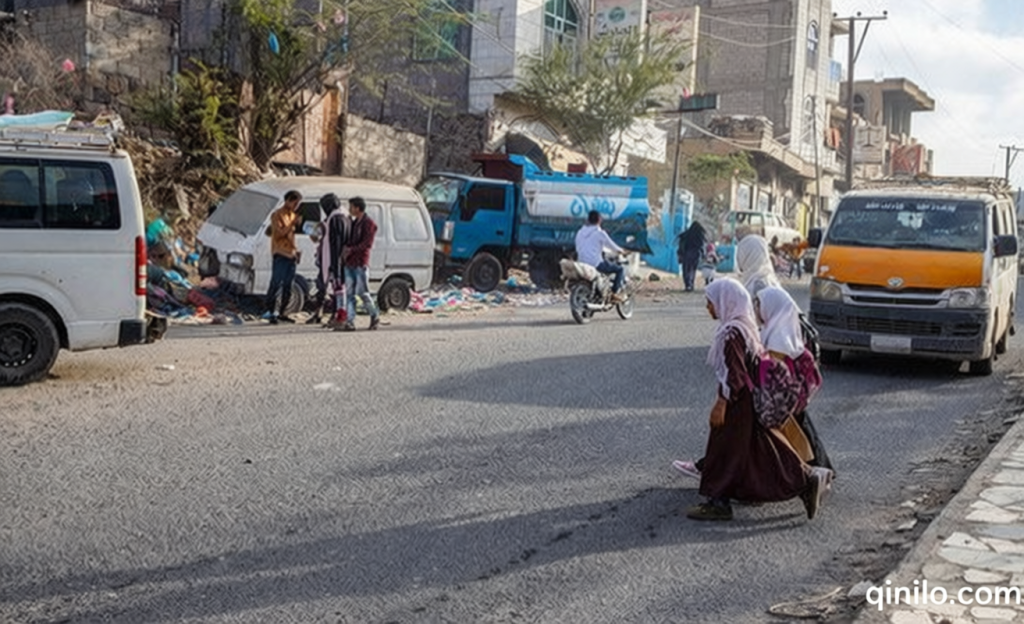
UN Adopts Historic Road Safety Declaration Despite US Opposition
Qinilo.com – The United Nations General Assembly concluded its inaugural High-level Meeting on road safety on Tuesday, approving a comprehensive new declaration with the objective of reducing global road fatalities by half before 2030. The United States stood alone in voting against the measure.
Following a recorded vote, the Progress Declaration received 162 affirmative ballots with zero abstentions and only one negative vote from Washington.
Core Commitments and American Concerns
Under the agreement, member states pledged to enhance domestic road safety frameworks, modernize vehicle and infrastructure requirements, and embrace the ‘Safe System’ methodology. This approach prioritizes designing transportation networks that accommodate human error without resulting in severe consequences.
Washington’s delegation criticized what they termed excessive expansion of the declaration’s scope. The American representative argued that such “mandate creep that has eroded the credibility of this institution” undermines the organization’s focus.
Specifically, the US objected to connections between road safety and broader environmental objectives. The representative emphasized that “Road safety is a practical matter of engineering, sober driving and personal responsibility.” They further warned that the declaration “should not be used as a backdoor vehicle to enforce global climate pacts and top-down environmental restrictions on freedom of mobility.”
Regional Perspectives and Personal Connections
While supporting the declaration, several nations expressed particular reservations. Argentina highlighted its authority to apply the agreement according to domestic legislation, while also noting its separate stance regarding the World Health Organization’s involvement. Paraguay clarified that both the follow-up mechanisms and the declaration itself operate on a voluntary, non-binding basis.
During the opening session, General Assembly President Annalena Baerbock addressed a common question about why the UN dedicates attention to road safety amid global conflicts and emergencies. Her response centered on the magnitude of the problem.
According to Baerbock, road collisions claim over 1.2 million lives annually and cause injuries to approximately 50 million additional individuals. She pointed out that this toll exceeds deaths from direct warfare, homicide, and malaria combined.
“Since I began speaking,” she informed attendees, “several more families had already received news that would change their lives forever.”
Baerbock invited participants to reflect on their daily commutes—whether arriving by automobile, bicycle, or foot to UN Headquarters—as examples of navigating “the complex choreography of New York’s traffic system.”
The matter holds personal significance for the Assembly President. Her aunt perished after being struck by a tram, an event whose impact “lingered,” creating “never-ending ripples of devastation” throughout her family.
Global Statistics and Regional Disparities
Accompanying the declaration, updated WHO statistics revealed that worldwide road mortality decreased by 21 percent between 2011 and 2025, despite the addition of more than one billion vehicles to roads globally.
Nevertheless, 1.16 million individuals lost their lives in traffic accidents during 2025. Road-related injuries continue ranking as the primary cause of death among children and youth aged five through twenty-nine.
WHO Director-General Tedros Adhanom Ghebreyesus began his address by requesting that anyone who had experienced a crash or lost or known someone killed or injured in one, please rise. “I think almost all of us,” he observed. “All road deaths are preventable and none are acceptable.”
Progress remains highly variable across regions. Europe experienced a 36 percent reduction in fatalities, while the Western Pacific saw a 15 percent decline. South-East Asia recorded only a two percent decrease, the Americas showed no change, and Africa experienced a 17 percent increase.
Motorcyclists represent an increasingly vulnerable group. Their numbers have more than tripled since 2011, and they now comprise nearly one-third of all traffic fatalities. However, WHO notes that wearing a certified helmet reduces the likelihood of death by more than six times.
As UN Special Envoy for Road Safety Jean Todt summarized: “Business as usual is a business of death.”
Related SEO Topics
- Home
- Artikel terkait Business as usual is a business
- DR Congo: Ebola outbreak still expanding, WHO sees signs of stabilization
- Security Council LIVE: Spotlight on Syria as Guterres heads to Damascus
- UN refugee agency reports 144 migrants dead or missing off Mauritanian coast
- Health response brings lifesaving care closer to thousands in Yemen
Frequently Asked Questions
Apa itu Business as usual is a business?
Business as usual is a business adalah topik utama yang dibahas di artikel ini dengan konteks praktis agar pembaca memahami informasinya dengan jelas.
Mengapa Business as usual is a business penting?
Business as usual is a business penting karena membantu pembaca membandingkan pilihan, menghindari kesalahan umum, dan mengambil keputusan yang lebih tepat.
Bagaimana cara memakai panduan Business as usual is a business ini?
Gunakan poin utama, contoh, dan tautan terkait di halaman ini sebagai rujukan awal, lalu cek detail terbaru sebelum mengambil keputusan final.