
Wildfires: Prevention is the best defence, UN says
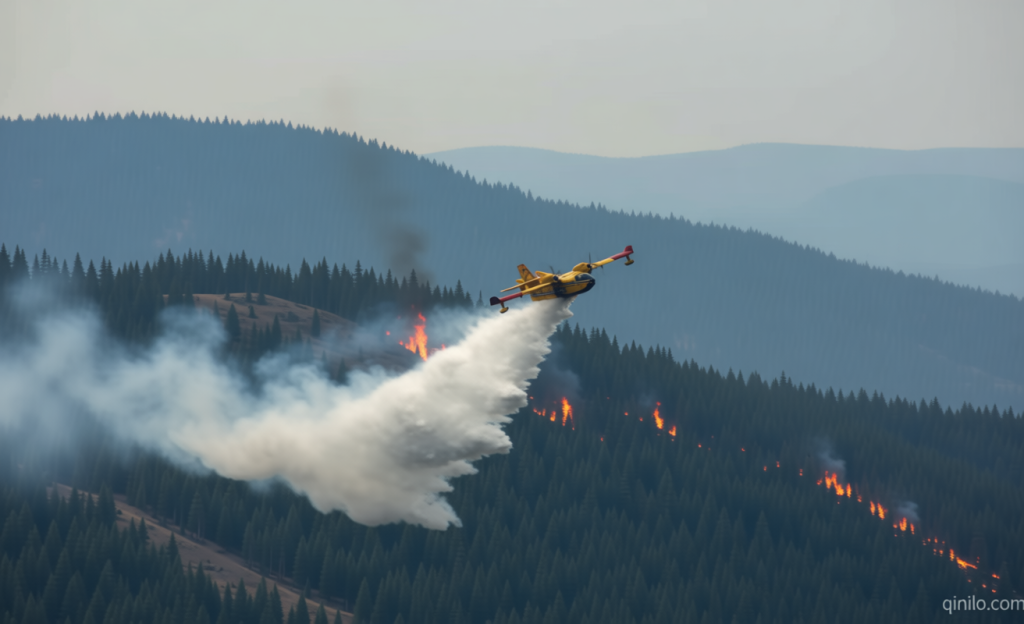
Prevention Emerges as Critical Shield Against Escalating Wildfires, UN Reports
Qinilo.com – The devastating blazes sweeping through North America and Europe underscore an immediate call for intervention. As shifting climates, land development pressures, and human behaviors intensify, the probability of catastrophic fires continues to climb.
According to the United Nations Economic Commission for Europe (UNECE), over 434,000 hectares have already succumbed to flames across the European continent this year, based on current figures.
Human and Economic Consequences
While fire extent is commonly tracked by hectares consumed, the repercussions reach well beyond woodland boundaries. Entire populations may be compelled to abandon their homes suddenly, while critical infrastructure and local economies face destruction. Additionally, smoke plumes can traverse thousands of kilometers, compromising air quality for distant populations.
The financial burden continues mounting. Within the European Union alone, annual expenses related to wildfires total approximately 2.5 billion Euros. These costs encompass infrastructure repairs, diminished tourism income, and broader economic disruptions.
Recovery extends long after flames subside. Communities must address biodiversity decline, ecosystem deterioration, diminished crop yields, health complications, and costly rehabilitation efforts.
Regional Fire Statistics
France’s Gironde region has witnessed the destruction of roughly 42,000 hectares of pine woodland, prompting evacuations of tens of thousands of locals and visitors. Meanwhile, Spain has documented over 200,000 hectares consumed—double its typical seasonal average—marking one of the nation’s most severe fire seasons in recent memory.
The European Union has cautioned that fire threats are shifting eastward. Greece and Italy now confront escalating dangers as heatwaves, drought conditions, and powerful winds persist into early August.
Across the Atlantic, conditions prove equally dire. The United States has logged approximately 1,849,000 hectares burned this year. Canada has endured more than 4,000 separate wildfires that have consumed 3,770,000 hectares, with dozens of major blazes still raging uncontrollably.
Root Causes and Climate Feedback
Human actions remain the primary driver of wildfires. Approximately nine out of ten fires originate from human behavior, whether through carelessness or intentional ignition.
This reality demonstrates that many conflagrations could be avoided through enhanced public education, stricter regulations, temporary access limitations during peak danger periods, and responsible conduct in natural spaces.
Simultaneously, climate change amplifies fire intensity and reach. Rising temperatures, extended droughts, more frequent heatwaves, and altered precipitation patterns lengthen fire seasons while exposing regions once deemed safe.
Paradoxically, wildfires accelerate the climate crisis themselves. In 2021, these fires released an estimated 1.8 billion tonnes of carbon dioxide into the atmosphere. Between 2001 and 2023, worldwide wildfire emissions surged by roughly 60 percent, while emissions from boreal forests across Europe, North America, and Central Asia nearly tripled.
The UNECE describes this as a perilous cycle: climate change elevates fire vulnerability, while larger fires emit additional greenhouse gases, intensifying global warming.
Solutions and Forward Path
Though extreme fires cannot always be halted once ignited, their frequency and severity can be substantially curtailed.
“Every summer reminds us that wildfire is no longer an exceptional event but an increasingly predictable consequence of a warming climate,” said Paola Deda, Director of UNECE’s Environment and Forests Division.
“While emergency response remains essential, our greatest opportunity lies in prevention, sustainable forest management and building more resilient landscapes and communities.”
The UNECE advocates for increased investment in preventive measures, sustainable woodland practices, early warning systems, public education, and climate adaptation strategies to safeguard lives, preserve forests, and minimize losses.
Emerging technologies play an increasingly vital role. Artificial intelligence-powered detection systems in Türkiye, satellite surveillance capabilities, and real-time risk mapping tools are proving valuable.
However, the UNECE emphasizes that technological solutions alone cannot resolve the challenge.
“As climate risks continue to grow, strengthening forest resilience to fire is no longer only an environmental priority – it is an investment in public safety, economic stability and climate security,” the Commission stated.