
Ebola: Motorbike riders carrying the sick may hold key to response boost
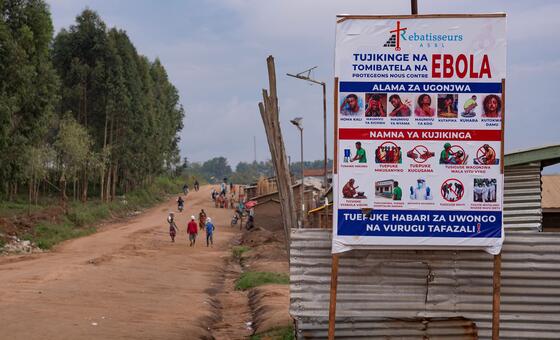
Ebola Response in DRC Pivots on Motorbike Riders as Community Surveillance Backbone
Qinilo.com – Ebola – In the heart of the Democratic Republic of the Congo’s most lethal Ebola epidemic to date, the World Health Organization revealed on Tuesday a sweeping community-engagement strategy built around an unlikely but critical group: the motorbike riders who ferry patients and the deceased between villages. The announcement came one day after yet another ambulance serving the outbreak response was attacked.
“Almost on a daily basis we face some kind of reaction from the communities,” said Dr Thierno Baldé, WHO Incident Manager for the Bundibugyo virus disease in the DRC. “These are difficult situations. People are having their relatives who are sick, who are dying.”
Speaking by video link from Bunia, the outbreak’s epicentre, Dr Baldé told reporters in Geneva that Monday’s ambulance assault was far from an isolated event. Local authorities confirmed on the same day that the Bundibugyo epidemic had claimed 2,325 lives, overtaking the 2,299 fatalities recorded during the 2018–2020 DRC outbreak. Government data placed the case-fatality rate at 46 per cent.
Scale of the Crisis
The confirmed-case threshold of 5,000 has now been breached, and infections have surfaced in a sixth province, Bas-Uele. Dr Baldé acknowledged the severity of the situation while stressing that personnel are working around the clock to contain the spread.
“The situation is quite difficult, but people are working here days and nights trying to control this outbreak,” Dr Baldé insisted.
Bikers as First-Line Surveillance Agents
At the centre of the operational redesign is a plan to recruit motorbike riders formally as surveillance and response officers. Hand-washing stations and disinfectant supplies have already been distributed to them, but the new mandate goes further: riders must report every transport of a sick person to the surveillance team so that suspected cases can be tested promptly.
The rationale is straightforward. Because of their transport duties, bikers are among the most heavily affected segments of the population; some have lost several family members to the virus. Their constant movement through communities makes them a natural node in the disease-detection chain.
“We are really recentering all of the operational approach, all of our activities, around the engagement of the communities,” the WHO official said.
Dr Baldé stressed that this grassroots mobilization proceeds “in a very dignified manner,” achieved through persuasion and explanation rather than coercion.
“By convincing them, explaining to them…this is for the good of themselves, the good of their family.”
Broader Operational Scale-Up
Beyond the rider programme, WHO intends to place 100 additional expert epidemiologists across health zones. They will be backed by more than 500 community health workers tasked with contact tracing, identifying infected individuals, and persuading them to seek treatment. Over the preceding two weeks, roughly 400 beds were added to facilities in various localities.
Safe and dignified burial practices also remain a priority. Dr Baldé called for equipping village burial workers with chlorine and gloves so that bodies can be handled safely.
Signs of Stabilization
The official pointed to the localities of Lita and Nizi as concrete examples of progress, contrasting today’s situation with the overwhelming community death tolls recorded six to seven weeks earlier.
“Today, we are reporting only few cases, few deaths, and those deaths are being safely and dignifiedly, buried at the right time… We have seen a kind of stabilization of the situation where we are capable of intervening as quick as possible,” he concluded.
Vaccine and Treatment Developments
The Bundibugyo outbreak, declared by DRC authorities on 15 May, currently has no approved vaccine or treatment. On Tuesday, the International Health Regulations Emergency Committee convened for the second time on the epidemic, already designated a public health emergency of international concern, and was expected to issue updated risk-level guidance to member states.
In remarks to the panel, the WHO Director-General noted that clinical trials are advancing for vaccines and therapeutics targeting the Bundibugyo virus specifically. For the first time, two vaccines designed expressly against this strain have entered human trials. A separate candidate, which demonstrated cross-protection in animal studies, is being proposed for phase III evaluation — the third of four clinical-trial phases and typically the final step before regulatory approval.
“The response still needs faster data sharing, enhanced surveillance, sustained financing.”
Related Reading
Frequently Asked Questions
What is Ebola?
Ebola is the main topic of this guide. The article explains the context, practical details, and next steps readers should understand.
Why does Ebola matter?
Ebola matters because readers are looking for a useful answer, not just a short summary. Good content should match search intent and help them decide what to do next.