
‘The lake is our life’: Protecting a shared lifeline in Uganda
Uganda’s Lake Albert Faces a Plastic Tide as Fishing Communities Sound the Alarm
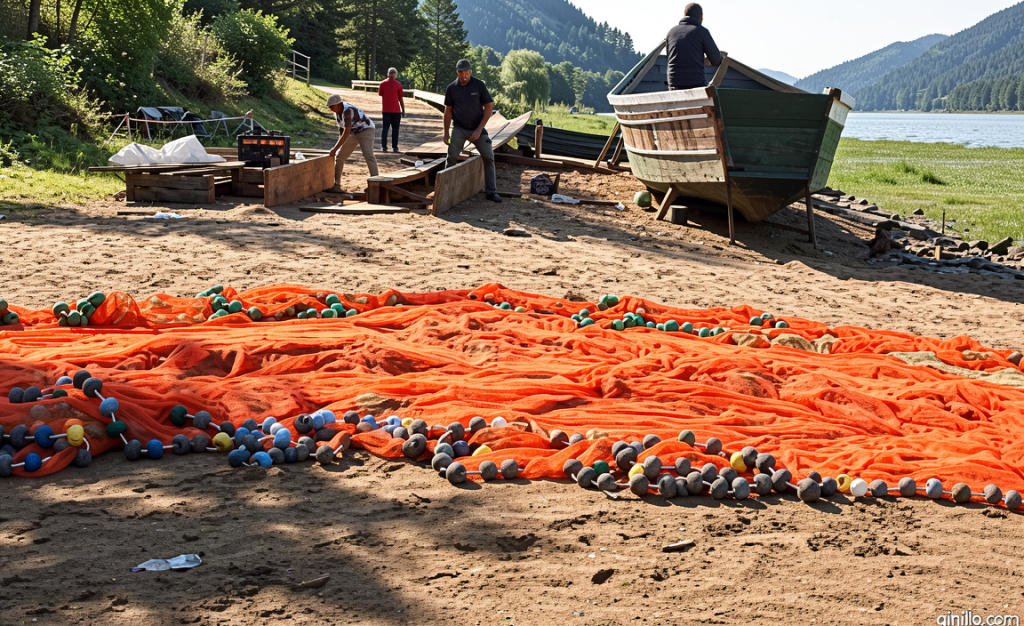
Qinilo.com – Before the sun clears the horizon along the Nkondo shoreline in Uganda’s Kikuube district, men are already out on the water, casting nets into Lake Albert. For the families clustered around this vast freshwater body, the lake is not a scenic backdrop or a recreational amenity. It is the engine of daily existence — the source of protein on the plate, the origin of household income, and the last line of economic defense for communities with few alternatives. Yet that lifeline is being strangled, slowly and visibly, by a growing accumulation of plastic waste and industrial debris flowing into its waters.
A Community Leader’s Warning
Solomon Wamara, who chairs the fishers’ association operating on Lake Albert, has made it his public mission to ensure the threat is no longer treated as an abstract environmental concern. Speaking around World Lake Day, observed each year on 27 August, Wamara framed the issue in terms his constituents understand immediately: the lake sustains them, and they cannot keep drawing from a vessel they are simultaneously filling with refuse.
“It is a good time to highlight the we threats facing this lake that is our lifeline,” Wamara told UN News.
For Wamara, the problem is not merely one of aesthetics or sanitation. Plastic bags, packaging, and assorted debris discarded along riverbanks and shorelines eventually migrate into the lake, settling in the shallow zones where juvenile fish spawn and mature. The contamination disrupts breeding cycles and narrows the productive area available to fishers each season.
The pathways of pollution are well mapped in his account. Agricultural runoff and poorly managed waste disposal along the Wambaya, Waki, and Nguse rivers carry contaminants directly into Lake Albert. Wamara stressed that these tributaries are not peripheral to the lake’s health — they are integral to it.
“River pollution affects fish breeding grounds and also food security. These rivers are essential for the survival of fish and communities that depend on the lake,” he said. “The lake is our life.”
Global Context: A Deteriorating Water Picture
The local alarm echoes a broader planetary trend documented in a 2024 joint report by the UN Environment Programme (UNEP) and UN-Water. That assessment found that surface water bodies are shrinking or disappearing entirely in regions inhabited by 93.1 million people. In addition, more than a quarter of monitored freshwater systems are growing progressively turbid as pollution loads intensify. Freshwater species declines linked to habitat degradation and chemical contamination have been flagged by the United Nations for decades, and Lake Albert’s trajectory fits squarely within that pattern.
Uganda’s position makes the stakes particularly acute. Lake Albert — shared with the Democratic Republic of Congo and South Sudan — supports one of the country’s most important inland fisheries. Its tributary network drains agricultural land where smallholder farming and waste management infrastructure remain underdeveloped, meaning that every tonne of untreated runoff represents a direct input of nutrients, sediments, and microplastics into the lake basin.
Government Response and Institutional Framework
Godwin Angalia, the Kikuube district commissioner, brings a personal dimension to the policy conversation. A former fisher himself, he grew up in a lakeside community and understands the economic gravity of the water. He described the government’s position as treating lakes as foundational pillars of local economies and public welfare.
“As a government, we value lakes because they enable the lives of millions of citizens,” Angalia said. “They also provide various resources that support society.”
Nevertheless, he acknowledged that Lake Albert contends with multiple simultaneous pressures: chemical and solid pollution from upstream activity, illegal fishing that bypasses seasonal closures and size limits, and habitat loss in the surrounding catchment. The district administration, he noted, is pursuing a two-track strategy — combating anthropogenic pollution while safeguarding the water sources that replenish the lake.
“Of course, rivers like Nguse and Wambaya have been polluted,” he said. “Also, the Bugoma Forest is very important for the life of Lake Albert and the creatures in it.”
The Bugoma Forest, situated at the lake’s southern margin, functions as a natural filtration and recharge zone. Its degradation would accelerate sedimentation and reduce the lake’s capacity to self-purify. Angalia confirmed that protection measures for both the forest and the tributary corridors are underway, and he has directed village-level leaders to monitor and report environmental offenders to district authorities.
Putting Fishers at the Centre of Conservation
A distinctive element of the district’s approach is the formation of indigenous community committees tasked with assisting fisheries management in their respective zones. Angalia argued that fishers possess intimate, generational knowledge of the lake’s seasonal rhythms, spawning grounds, and carrying capacity — knowledge no external agency can replicate.
“We fishermen ourselves know that we should not catch young fish,” he said. “We use natural and environmentally friendly methods in fishing.”
Wamara, for his part, has called for monthly cleanliness campaigns to be scaled up beyond their current geographic reach, drawing in more lakeside settlements. He also urged authorities to calibrate fiscal policy to the realities of small-scale fishers: rather than imposing heavy levies that push operators into informality or overharvesting, the state should invest in sustainable gear, training, and enforcement that keep traditional fishers productive and compliant within the law.
The convergence of community vigilance, institutional oversight, and upstream pollution control represents the only viable path to stabilizing Lake Albert’s ecosystem. As population pressure and agricultural expansion continue to tighten the grip on the catchment, the window for preventive action narrows with each passing season. For the families at Nkondo and the thousands of households along the Albertine shore, the calculus is simple and unforgiving: protect the water, or lose the life it sustains.
Related Reading
Frequently Asked Questions
What is The lake is our life?
The lake is our life is the main topic of this guide. The article explains the context, practical details, and next steps readers should understand.
Why does The lake is our life matter?
The lake is our life matters because readers are looking for a useful answer, not just a short summary. Good content should match search intent and help them decide what to do next.