
Security Council LIVE: Deadly gang attacks spike in Haiti
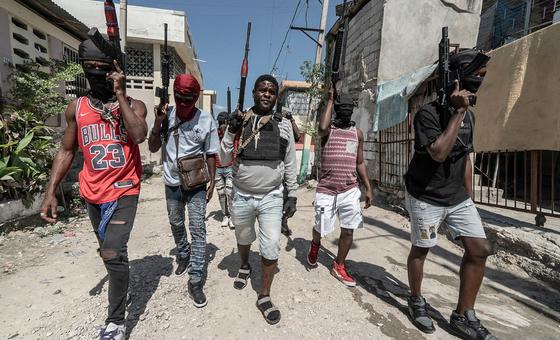
Haiti’s Gang Crisis Forces Emergency UN Security Council Session as Violence Escalates
Qinilo.com – The United Nations Security Council convened an emergency session at 3:00 p.m. local time to address a sharp deterioration in Haiti’s security situation. The gathering was triggered by a wave of lethal gang attacks targeting civilians across the Caribbean nation, compounded by growing evidence that unlicensed weapons continue to flow into the country despite a formal arms embargo. Council members were expected to hear briefings on the latest developments and debate options for strengthening the international response.
A Single Day of Carnage in Kenscoff
The most recent flashpoint came on 23 August, when armed gangs struck the Kenscoff district, located just outside the capital, Port-au-Prince. In that one-day episode, at least 47 people were killed, 22 more sustained injuries, and over 52 residents were abducted. The scale of the assault in a densely populated area so close to the seat of government underscored how little geographic distance now separates ordinary Haitians from organized armed groups.
Kenscoff has long been a contested corridor between rival gang territories and the capital’s administrative core. Its proximity to Port-au-Prince means that violence there carries immediate political and humanitarian consequences: hospitals overflow, supply routes to the capital are disrupted, and the psychological toll on a population already traumatized by years of instability deepens further.
Half a Year of Numbers That Defy Comprehension
The Kenscoff killings are not an isolated spike but the latest data point in a sustained pattern. Between 1 April and 30 June, the UN Integrated Office in Haiti (BINUH) recorded 1,408 deaths and 656 injuries linked to gang-related violence. In the same period, 326 individuals were subjected to sexual violence. Those figures cover only a single quarter and only the incidents captured in official reporting; independent monitors have long cautioned that the true toll is likely higher given gaps in documentation in areas where state authority is minimal.
The sexual-violence component, in particular, has drawn sustained attention from human-rights bodies. In contexts where displaced populations shelter in schools, churches, and informal camps, the risk of gender-based abuse rises sharply, and the failure to secure safe passage or protected spaces compounds the humanitarian emergency.
The Embargo Question: Weapons Arriving in Plain Sight
A parallel thread running through the crisis is the question of where the guns come from. The UN Human Rights Office (OHCHR) has documented that illicit flows of firearms and ammunition into Haiti continue to equip and embolden armed gangs. The Security Council has maintained an arms embargo on the country since 2022, yet this week a gang operating in and around Port-au-Prince posted what appeared to be a fresh shipment of weapons arriving from abroad on its social-media account. The imagery circulated widely and raised pointed questions about enforcement, transit routes, and whether the embargo is being observed by neighbouring states or shipping operators.
If the embargo is being circumvented at scale, the practical effect is to supply the very actors the international community is trying to contain. Each crate of small arms and ammunition that reaches a gang compound translates directly into more capacity to kill, kidnap, and extort in communities that have no effective policing to counter them.
What the International Community Has Already Authorized
The Security Council’s response to Haiti’s gang crisis has unfolded in stages. In 2023, members authorized the creation of a multinational security support mission designed to assist Haitian institutions in restoring order and protecting civilians. Building on that framework, a dedicated gang-suppression force was established in 2025, tasked with more direct operational roles against organized armed groups.
The existence of these missions does not, however, neutralize the threat. Gangs in Haiti operate across dozens of territories, control key infrastructure including the main airport and port, and maintain networks of informants and financiers. A foreign force, however well-intentioned, operates within constraints of mandate, rules of engagement, and host-government coordination that limit its reach. The emergency session was, in part, an acknowledgment that the current architecture of support may be insufficient against the pace of escalation.
Why the Emergency Session Matters Now
Emergency meetings of the Security Council are reserved for situations where the normal monthly or ad-hoc calendar is judged inadequate. Convening one over Haiti signals that Council members view the current trajectory—mass killings in a single day, hundreds of deaths per quarter, visible violations of an arms embargo—as requiring immediate deliberation rather than routine monitoring.
For the roughly 11 million people living in Haiti, the stakes are concrete: whether the next week brings another Kenscoff, another abduction wave, another shipment of weapons landing in a port with no effective customs inspection. The emergency session is the institutional mechanism through which the international community signals that the status quo is no longer acceptable. What emerges from the chamber—whether strengthened mandates, new sanctions, pressure on transit states, or expanded operational authority—will shape whether the next quarter’s figures continue their upward climb or finally bend downward.
Related Reading
Frequently Asked Questions
What is Security Council LIVE?
Security Council LIVE is the main topic of this guide. The article explains the context, practical details, and next steps readers should understand.
Why does Security Council LIVE matter?
Security Council LIVE matters because readers are looking for a useful answer, not just a short summary. Good content should match search intent and help them decide what to do next.