
As wildfires spread north, UN agencies race to help Europe adapt
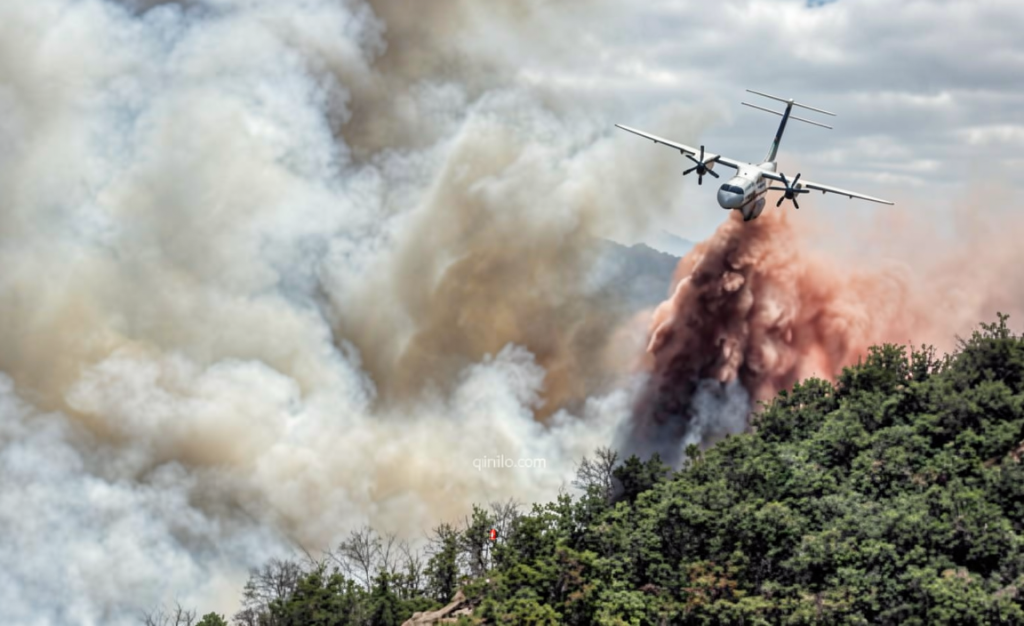
Europe’s Wildfire Frontline Moves North as Climate Shifts Redraw the Map of Fire Risk
Qinilo.com – For decades, the image of a European wildfire was inseparable from sun-scorched Mediterranean landscapes — the pine-clad slopes of Portugal, the scrublands of Greece, the vineyards of southern France. That picture is changing. As temperatures climb and rainfall patterns destabilize, fire danger is creeping into regions that once seemed almost immune: the peat bogs of Scotland, the Atlantic uplands of Ireland, the forests of southern Scandinavia. The question facing policymakers, land managers, and ordinary residents across Western and Central Europe is no longer whether wildfires will arrive, but how quickly and how destructively they will do so.
A Scottish Mountain Town Learns the Lesson the Hard Way
In mid-July 2026, a wildfire ignited in the Cairngorms range of Scotland. The area had seen small fires before, but this year’s exceptional dryness changed everything. Flames sank into the desiccated peat layer beneath the surface, generating persistent hotspots and sudden flare-ups that repeatedly defeated containment efforts. More than 500 firefighters were deployed, backed by aerial water-dropping and bulldozers carving firebreaks through dense terrain.
High winds drove the unpredictable blaze southward toward the village of Nethy Bridge, home to roughly 600 residents. Nine days after the initial outbreak, Police Scotland formally declared a major incident and ordered evacuations. Among those displaced was James MacEwan, who recalled a harrowing stretch of days with no rainfall to break the cycle.
“We were very fortunate that the wind remained from the west and took the fire towards the hills, otherwise we would have had a serious threat to property and possibly life. The downside was that this took the fire into relatively inaccessible terrain and made containing it extremely difficult.”
The Scottish Fire and Rescue Service did not officially stand down its crews until more than a month after the fire first took hold — a duration that underscores how far removed modern European fire events have become from the brief, contained blazes of the past.
The Numbers Behind the Northward Shift
Across the European Union, over 600,000 hectares of land burned during the first eight months of 2026, according to data tracked by the European Forest Fire Information System. While that figure falls short of the record set by the same period in 2025 — the worst year ever recorded — it dwarfs the 20-year average of approximately 280,000 hectares. The gap between the long-term norm and current reality is the signal that adaptation, not merely response, must now guide policy.
Most of the burned area still concentrated in historically fire-prone nations such as France and Spain. Yet the trajectory is unmistakable: Western and Central European regions, including the United Kingdom and southern Scandinavia, are experiencing increasingly frequent dry windows in which vegetation becomes combustible. Will Hayes, a researcher at the UK’s Leverhulme Centre for Wildfires, Environment and Society, notes that growing wildfire concerns have already surfaced in the Atlantic uplands of Ireland and Scotland as well as other parts of Northern and Central Europe.
“These areas are not becoming Mediterranean landscapes, but traditionally wetter, cooler regions are now experiencing more frequent windows where increasing amounts of vegetation is dry enough to burn and fires can spread.”
“People should not assume that wet or green landscapes are immune to fire. During dry, warm and windy periods, vegetation can become highly flammable, even in upland and northern regions.”
Compounding Factors: El Niño and Land-Use Change
Human activity — agricultural burning, power-line faults, recreational fires — remains the primary ignition source for most European wildfires. What climate change alters is not the spark but the fuel bed: warmer temperatures and reduced moisture accelerate drying, extend the fire season, and amplify the speed and intensity of any blaze that catches. Changing land-use patterns, including the abandonment of traditional grazing and the accumulation of dense undergrowth, further compound the hazard.
In the near term, the developing El Niño phenomenon — a recurrent oscillation in Pacific Ocean temperatures — may intensify the situation. El Niño events can shift rainfall patterns and push temperatures toward extremes, increasing the probability of prolonged dry spells across parts of Europe during the coming months.
Preparedness Beyond the Fire Service
Hayes argues that treating wildfire purely as an emergency-response problem is a category error. Prevention, in his view, lives in landscape management decisions made years before a single match is struck.
“Wildfire prevention is not just about fire services, it is about how landscapes are managed before they burn. Wildfire risk should be treated as a land-use, climate-adaptation and public-health issue, not just an emergency-response problem.”
At the individual level, he urges residents to avoid campfires, barbecues, and careless ignition sources such as cigarette lighters during high-risk weather windows, and to heed local fire warnings without exception.
Public-Health Frameworks Enter the Picture
The World Health Organization’s Strategic Toolkit for Assessing Risks (STAR) methodology now provides a structured pathway for public-health authorities to evaluate wildfire and heat-related risks alongside other sectors. Countries including Cyprus and Ireland have recently completed their first-ever STAR assessment workshops, using the framework to identify and prioritise pressing health hazards ranging from heatwaves to wildfire smoke exposure. Those workshops lay the groundwork for smarter, more strategic emergency preparedness that integrates health surveillance, land management, and climate forecasting into a single operational picture.
The practical implication for European governments is clear: the adaptation window is narrowing. Regions that once planned around a handful of Mediterranean fire seasons must now budget, legislate, and engineer for a continent-wide wildfire regime — one in which the Cairngorms, the Irish moors, and the Scandinavian taiga are no longer outside the risk envelope.
Related Reading
Frequently Asked Questions
What is As wildfires spread north UN agencies?
As wildfires spread north UN agencies is the main topic of this guide. The article explains the context, practical details, and next steps readers should understand.
Why does As wildfires spread north UN agencies matter?
As wildfires spread north UN agencies matters because readers are looking for a useful answer, not just a short summary. Good content should match search intent and help them decide what to do next.