
Plight of Afghans going ‘from bad to worse’, but the world is looking away: Türk
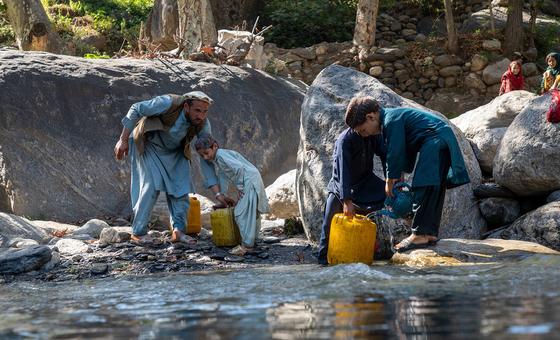
Afghanistan’s Human Rights Crisis Deepens Amid Fading Global Attention
Qinilo.com – Millions of people in Afghanistan are confronting worsening poverty, shrinking freedoms and mounting uncertainty, while international attention to their situation appears to be receding. UN High Commissioner for Human Rights Volker Türk has warned that the country’s population is being left to endure an increasingly severe crisis with too little global response.
“Today, the plight of many in Afghanistan is going from bad to worse.”
Speaking in Geneva, Türk said the international community must not allow Afghanistan’s people to be forgotten. His warning comes five years after the Taliban returned to power in 2021, a period marked by expanding restrictions on daily life and the removal of many rights previously available to women, girls, journalists, minorities and perceived political opponents.
“The silence is deafening.”
Restrictions Reach Into Everyday Life
Rules imposed by the de facto authorities have sharply limited access to schooling, work, movement and participation in public life. The impact is especially visible for women and girls, but men have also faced arrest and punishment under the enforcement of strict social rules.
The Taliban’s Office for the Propagation of Virtue and Prevention of Vice has detained both men and women for alleged breaches involving clothing requirements, beard length and music. Such controls affect not only personal choice but also the ability of families to study, earn an income, travel and take part in their communities without fear of intervention.
Media freedom remains under pressure as well. Journalists have been arrested, outlets have faced temporary shutdowns, and censorship continues to constrain independent reporting. When reporters and local media cannot work freely, it becomes harder for communities to share concerns, scrutinize authorities or draw attention to abuses.
Corporal punishment has also continued. The UN said that at least 449 women and men were subjected to such penalties during the first six months of the year. The figure highlights the human cost of a justice system in which punishments can be imposed in public and with limited safeguards for those accused.
Women and Girls Bear a Disproportionate Burden
Women have endured some of the most far-reaching exclusions since 2021. More than two million Afghan girls and women have been barred from secondary and higher education, closing off routes to qualifications, professional careers and greater economic independence.
The loss is not confined to individuals. Restricting education for such a large share of the population also weakens families’ long-term prospects and reduces the number of trained professionals available to support essential services in the future.
New decrees issued this year have added further concern. They make separation from a spouse more difficult for women and implicitly permit child marriage as well as violence against women and children. Türk also condemned what he described as the complete exclusion of women from public decision-making.
“Such restrictions imposed on women and girls – which amount to gender apartheid – have no place in any society.”
One year ago, Taliban leaders extended restrictions to prevent Afghan women, including UN employees, contractors and visitors, from entering United Nations premises across the country. The measure has complicated humanitarian work at a time when women aid workers can be essential for reaching women and girls who may otherwise be unable to seek assistance.
Minorities, Former Opponents and Returnees Face Additional Risks
Human rights concerns extend beyond gender-based restrictions. Violations against former Taliban adversaries from the conflict that followed the 2001 allied invasion of Afghanistan have continued to be documented. Religious minorities, including Shi’a and Ismaili communities, also remain subject to discriminatory restrictions and insecurity.
At the same time, Afghans who sought safety outside the country are increasingly vulnerable to forced return. More than 400,000 people have been sent back, primarily from Iran and Pakistan, while returns have also taken place from Türkiye, Tajikistan and European Union Member States.
For some, return means entering a country they have never lived in. They may arrive without housing, support networks or reliable access to food, clean water, healthcare, education and jobs. Rebuilding a life under those conditions can be especially difficult for families with children, people with disabilities and those who fled persecution or conflict.
“Many are forced to enter a country where they have never even stepped foot, and where they will face deep poverty, and inadequate food, clean water, and access to healthcare, education and employment.”
A Humanitarian Need That Cannot Be Ignored
An estimated 21.9 million people in Afghanistan, roughly 45 per cent of the population, need humanitarian assistance. Yet foreign aid is declining, placing additional strain on a country where many households already struggle to meet basic needs.
The combination of reduced assistance, forced returns and restrictive policies creates a difficult outlook. Humanitarian support can ease immediate hardship, but it cannot fully compensate for the loss of education, employment and equal participation in public life. Sustained attention is needed alongside efforts to protect rights and ensure that aid reaches those most at risk.
“I implore all States to reconsider their actions, and to put the lives of the suffering population first.”
Türk’s appeal is directed at governments considering return policies, funding decisions and diplomatic engagement with Afghanistan. For Afghan civilians, those choices have immediate consequences: whether a family can obtain food, whether a girl can continue learning, whether a returnee can find shelter, and whether people can safely speak, work and live with dignity.
Related Reading
Frequently Asked Questions
What is Plight of Afghans going from bad?
Plight of Afghans going from bad is the main topic of this guide. The article explains the context, practical details, and next steps readers should understand.
Why does Plight of Afghans going from bad matter?
Plight of Afghans going from bad matters because readers are looking for a useful answer, not just a short summary. Good content should match search intent and help them decide what to do next.