
‘Violence will only defer a problem’: UN Assembly President on trust, AI and lessons from the Rohingya crisis
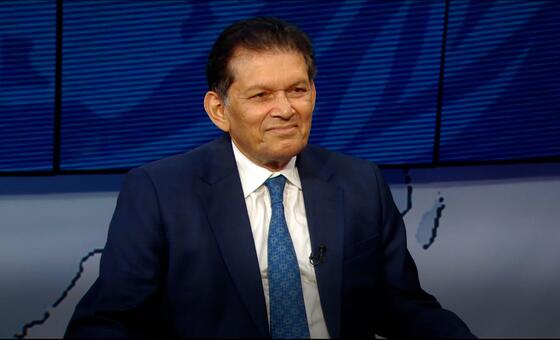
UN General Assembly President Puts Restoring Trust at Centre of 81st Session
Qinilo.com – As world leaders gather in New York for the United Nations’ annual High-Level Week, Khalilur Rahman is placing confidence in the organization at the heart of his presidency of the General Assembly. The Bangladeshi diplomat, who is also serving as his country’s foreign minister, began leading the Assembly’s 81st session with a stated goal: rebuilding trust in an institution facing deep public and political frustration.
Rahman has worked with the United Nations in different capacities for 35 years. His one-year term as Assembly President arrives at a moment when the organization’s ability to respond to war, inequality, development setbacks and fast-moving technology is under close scrutiny.
“High-level Week is the most powerful manifestation of the convening power of the United Nations.”
For Rahman, the week matters not only because of its scale but because it brings leaders into direct contact with one another. It offers an unusually broad forum for governments to describe their priorities, assess pressures in their regions and set out what they expect from multilateral cooperation.
He intends to listen particularly closely for ideas on renewing confidence in the UN. Trust, he says, is not simply a communications issue. It is connected to whether Member States and the public believe the organization can meet the expectations attached to its founding.
Unfinished Expectations Since 1945
Rahman traces that challenge to the end of the Second World War. In 1945, Franklin D. Roosevelt, Joseph Stalin and Winston Churchill met in Yalta while plans were taking shape for a new international body intended to prevent another catastrophic global conflict. When the UN was formally established in San Francisco later that year, delegations responded with a prolonged standing ovation, reflecting the enormous hopes invested in the new institution.
Eight decades later, Rahman notes that the world has avoided another conflict on the scale of the two world wars. The UN has also expanded far beyond the group of states present at its birth, as countries gained independence from colonial rule and helped strengthen its development work.
Yet the record is mixed. Many conflicts have not been prevented, while development gains have often come too slowly. These shortcomings, Rahman argues, have contributed to disappointment with the organization and weakened trust in its ability to deliver.
The Security Council remains central to those concerns. Its responsibility for international peace and security means that division among its members can have consequences far beyond its chamber. Rahman says the Council must operate with greater coherence and produce results closer to what governments and citizens reasonably expect.
He also points to human rights, the third of the UN’s core pillars alongside peace and security and development. Only four per cent of the organization’s overall spending goes to human rights work, he observes. Although substantial progress has been achieved, he believes much more remains necessary.
“Both pillars carry major unmet expectations, and that breeds frustration.”
His argument is that confidence cannot be restored through one reform or one meeting. Progress is required across peace, development and human rights, with governments and other stakeholders sharing responsibility for the outcome.
Artificial Intelligence as a Global Test
Rahman has also identified artificial intelligence as one of the most consequential issues facing the international community. AI could significantly accelerate human progress, he says, but warnings from prominent figures about its potential harms cannot be dismissed.
His position is not to obstruct technological advances. Innovation should continue, he maintains, but safeguards must develop alongside it. The key question is whether the technology remains directed toward human benefit rather than producing new risks or deepening existing inequalities.
“We need all of these communities to be part of the discussions and decisions ahead.”
That means governments cannot make decisions in isolation. Developers, users and other communities involved with AI need a role in shaping the rules and norms that will guide its use. The challenge for the UN is to help create a path that supports innovation while encouraging safety, accountability and broad participation.
The issue also demonstrates why international dialogue remains important. Technologies do not stop at borders, and decisions made by a small number of governments or companies can affect people far beyond the places where those decisions originate.
The Assembly’s Role Beyond Formal Power
Critics sometimes portray the General Assembly as ineffective when compared with the Security Council, particularly when the Council is blocked by disagreement. Rahman rejects the idea that the Assembly has no practical purpose.
He points to the attendance at High-Level Week as evidence of its continued relevance. Heads of State and Government return because the Assembly represents the full membership of the UN, giving leaders a setting unlike any other global forum.
“If the assembly were useless, there wouldn’t be a high-level week.”
Much diplomacy takes place away from public view. The Assembly’s value, in Rahman’s view, includes its capacity to bring leaders together in a secure environment where difficult matters can be discussed directly and possible solutions explored. Even where it cannot impose outcomes, it can create the political space in which cooperation becomes possible.
Rahman’s own path to the presidency adds a personal dimension to the role. More than four decades ago, he served his foreign minister during an earlier Bangladeshi presidency of the General Assembly. He now returns to the same institution as its presiding officer, carrying experience from diplomacy and from work connected to the Rohingya crisis.
His central message is that violence postpones rather than resolves underlying problems. Rebuilding trust, confronting unmet expectations and setting responsible limits for powerful new technologies are therefore not separate tasks. Together, they form the test of whether multilateralism can remain credible in an increasingly divided world.
Related Reading
Frequently Asked Questions
What is Violence will only defer a problem?
Violence will only defer a problem is the main topic of this guide. The article explains the context, practical details, and next steps readers should understand.
Why does Violence will only defer a problem matter?
Violence will only defer a problem matters because readers are looking for a useful answer, not just a short summary. Good content should match search intent and help them decide what to do next.