
As aid dries up, countries pledge to close the $4 trillion development gap
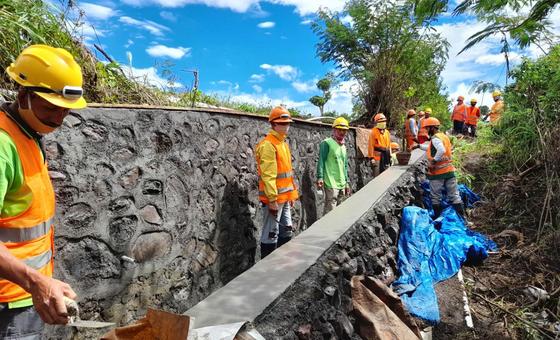
Global Commitment to SDGs Reinforced Amid Funding Shortfalls
Qinilo.com – On Wednesday, UN Member States adopted a declaration reaffirming their dedication to the Sustainable Development Goals (SDGs). The document outlines measures to address the $4 trillion financing gap, emphasizing collective action to ensure progress toward global development targets.
Reforms Stemming from the Sevilla Summit
The proposed reforms, rooted in commitments made at the 2024 development finance summit in Sevilla, focus on boosting public and private investments, expanding debt relief programs for developing nations, and tackling corruption. These steps aim to create a more robust framework for achieving the SDGs.
“Today’s decision proves that multilateralism, when guided by dialogue and shared goals, can yield tangible outcomes,” stated Lok Bahadur Thapa, President of the Economic and Social Council (ECOSOC).
Conclusion of the HLPF Session
The annual ministerial declaration concluded the UN’s High-Level Political Forum on Sustainable Development (HLPF), held in New York from 7 July. The forum highlighted ongoing challenges, including liquidity issues, attacks on critical infrastructure, and the urgent need to combat poverty through inclusive artificial intelligence governance.
ODA Decline Sparks Concern Over Global Funding
While domestic funding accounts for most SDG resources, official development assistance (ODA) remains vital for the world’s poorest countries. However, data from the OECD reveals a 23.1% drop in ODA between 2024 and 2025, driven by reduced contributions from major donors like the U.S., UK, Germany, France, and Japan.
The 2026 declaration calls on developed nations to increase ODA to the UN’s 0.7% GNI target. If all OECD Development Assistance Committee members had met this benchmark in 2023, an additional $200 billion could have been allocated to support SDG initiatives.
Reports Highlight Pathways for SDG Progress
Two recent UN reports, unveiled by Navid Hanif of DESA, underscore the potential of coordinated efforts and closing the digital divide to advance the SDGs. They also emphasize the importance of sustained international collaboration.
“Reducing borrowing costs and strengthening multilateral development banks will be crucial to speeding up SDG progress,” said José Antonio Ocampo, Chair of the UN Committee for Development Policy.
“Leaving no one behind, including no country, is still central to realizing sustainable development by 2030 and beyond,” Ocampo added.
Looking Beyond 2030: Strategic Adjustments Needed
Throughout the HLPF, officials acknowledged that many SDGs are off track for 2030. Yet, discussions are already underway to shape development policies for the years following the deadline.
“While the focus remains on accelerating SDG progress before 2030, it’s time to explore what sustainable development will demand after that,” Ocampo noted.
Next year, the UN will host its quadrennial SDG Summit, alongside the annual HLPF. This event will provide a platform for Member States to define the future direction of global development.
Reflecting on SDG Legacy and Next Steps
Amina J. Mohammed, Deputy Secretary-General, reflected on the SDGs’ 11-year journey, praising their transformative role in multilateralism while recognizing growing tensions between national interests and global cooperation.
“The next five years are about fulfilling the SDGs’ promise and laying the groundwork for what comes next,” Mohammed emphasized.
She clarified that the UN is not seeking a direct successor to the 2030 Agenda but is evaluating options, including the possibility of new development goals, to ensure long-term progress.