
Gaza farmers battle to rebuild as WFP warns of West Bank settler violence
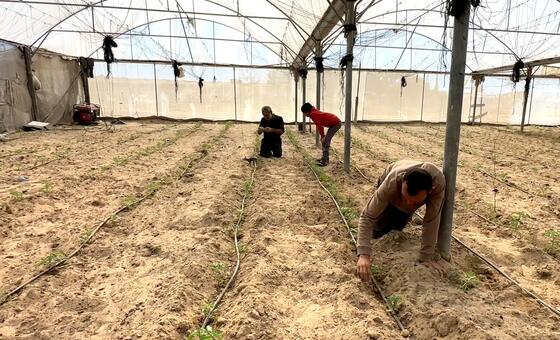
Gaza Farmers Strive to Rebuild Amid Conflict
Qinilo.com – In the aftermath of the ongoing conflict in Gaza, Palestinian farmers are confronting the daunting task of restoring their agricultural livelihoods, as highlighted by the World Food Programme (WFP). The focus keyword, “Gaza farmers battle to rebuild,” encapsulates the urgent efforts of these individuals to revive their crops and communities despite relentless challenges. The WFP, alongside other United Nations agencies, is playing a crucial role in supporting these farmers, who are now working to cultivate the same staple produce that once sustained their families. Taysir Dahdouh, a farmer from the Zeytun neighborhood east of Gaza City, exemplifies this struggle. His small farm, comparable in size to a standard football pitch, was left in ruins during the October 2023 conflict, forcing him to rely on limited resources to resume farming.
The destruction of farmland and infrastructure has had a profound impact on Gaza’s agricultural sector, which is vital for food security and economic stability. Many farmers, like Dahdouh, have faced not only physical damage to their land but also disruptions to supply chains and access to essential tools such as irrigation systems and fertilizers. The WFP has been instrumental in providing critical aid, including seeds, tools, and financial support, to enable these farmers to restart their work. However, the process of rebuilding is slow, and the recovery of Gaza’s agricultural output remains heavily dependent on continued international assistance and peace.
“We have allocated 200 temporary housing units to accommodate families who returned to a heavily bombed area and began farming again,” said Alessandro Mrakic, head of the UN Development Programme’s Gaza office. “They are now growing eggplants, tomatoes, and molokhia, among other produce.” This statement underscores the resilience of Gaza farmers in the face of adversity. Despite the devastation, they are taking incremental steps to rebuild their lives, often working in partnership with UN agencies to secure the resources necessary for survival. The efforts of these farmers, however, are not without obstacles, as they continue to navigate the complexities of war-torn landscapes and scarce resources.
Settler Violence Threatens Agricultural Stability in the West Bank
While the WFP focuses on aiding Gaza farmers, the conflict has also extended its reach to the West Bank, where settler violence is intensifying. The Food and Agriculture Organization (FAO) has raised concerns about the shrinking access to land for Palestinian farmers in this region, noting that settler expansion has significantly limited their ability to cultivate crops. The FAO’s cash aid program, which supports roughly 1,500 farmers in Gaza during the 2026 planting season, highlights the interconnected challenges faced by agricultural communities across the occupied territories. This initiative is expected to provide fresh vegetables for over 100,000 residents, but the situation in the West Bank remains dire, with settler attacks accounting for approximately 55% of all Palestinian injuries in the area this year.
Settler violence, often involving the construction of new settlements and the occupation of land, has forced many Palestinian families to relocate, disrupting their farming activities and creating a cycle of displacement. The Office for the Coordination of Humanitarian Affairs (OCHA) recently visited Deir Nidham village in Ramallah, where families displaced by settler violence and expansion efforts are struggling to adapt. The conflict in Gaza and the settler activities in the West Bank are two sides of the same coin, both contributing to the broader crisis affecting Palestinian agriculture. As the WFP and FAO work to stabilize Gaza’s farming sector, the situation in the West Bank remains a critical concern for the sustainability of food production in the region.
Legal and Political Dimensions of the Conflict
The legal status of Israeli settlements in the occupied West Bank continues to be a focal point of international debate. UN spokesperson Stéphane Dujarric emphasized that the Secretary-General is “deeply alarmed” by the decision to grant city status to Givat Ze’ev, a settlement northwest of Jerusalem. This move, while symbolic, has raised questions about its implications for the peace process and the rights of Palestinians to their land. The focus keyword, “Gaza farmers battle to rebuild,” also resonates with the broader context of settler expansion, as both regions face similar challenges in maintaining agricultural viability. The International Court of Justice’s advisory opinion from July 2024 reaffirms that all Israeli settlements, including those in East Jerusalem, are illegal under international law, further complicating efforts to restore stability for Palestinian farmers.
As the conflict persists, the need for a two-state solution has become more pressing than ever. The UN agencies, including the WFP and FAO, are not only addressing immediate humanitarian needs but also advocating for long-term agricultural recovery. In Gaza, the rebuilding of farmland is essential to ensure food production for the population, which has been severely impacted by the war. Meanwhile, in the West Bank, the expansion of settlements and the associated violence are creating additional barriers for farmers. The “Gaza farmers battle to rebuild” narrative is thus part of a larger story of displacement and resilience, where the international community’s support is critical to overcoming these challenges.
The humanitarian situation in the West Bank is compounded by the lack of access to key agricultural resources. Farmers in areas like Ramallah are increasingly confined to smaller plots of land, often at the expense of their neighbors. This displacement not only affects their ability to grow food but also impacts the broader economy, as agriculture is a cornerstone of the region’s livelihoods. The WFP’s efforts in Gaza, while focused on immediate recovery, also serve as a model for addressing similar issues in the West Bank. By investing in infrastructure and providing financial aid, the organization aims to create a more sustainable environment for farmers to rebuild their lives.
Despite these efforts, the path to recovery for Gaza farmers is fraught with uncertainty. The destruction of farmland, the loss of crops, and the ongoing conflict have created a landscape where rebuilding is both a personal and collective endeavor. The focus keyword, “Gaza farmers battle to rebuild,” reflects the determination of these individuals to overcome the challenges posed by the war. As the WFP and other UN agencies continue their support, the resilience of Gaza’s farmers remains a beacon of hope for the region’s agricultural future. However, without sustained international aid and a peaceful resolution to the conflict, the battle to rebuild will remain an uphill struggle.