
Countries far from conflict paying the price for wars not their own, India tells UN
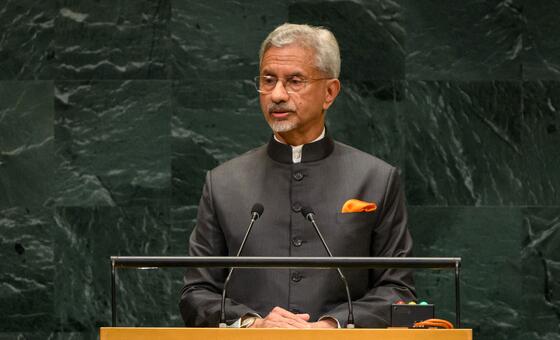
Countries Far From Conflict Paying the Cost, India Tells UN
Qinilo.com – Countries far from conflict paying the price for wars they did not start are facing growing economic and security pressures, India’s External Affairs Minister Subrahmanyam Jaishankar told the United Nations General Assembly. Speaking during the high-level debate of the Assembly’s 81st session, he said violence in one region can hinder progress far beyond the battlefield.
Mr. Jaishankar said that in an interconnected world, conflict damages development, disrupts confidence and creates uncertainty for nations with no direct role in the fighting. The effects can spread through trade, shipping, energy supplies, food markets and financial systems.
“Not only weakening security, but is also threatening progress, slowing the pace of development in a globalized world.”
Conflict affects economies far beyond the front lines
Countries far from conflict paying higher prices may struggle with more expensive fuel, food, fertilizers and financing. For many developing nations, these pressures affect household costs, agriculture and long-term development plans, even when the conflict itself is taking place far away.
The Indian minister warned that the Global South is especially exposed when supply chains and essential commodities are disrupted. He said the consequences of instability are no longer limited to the countries directly involved, as economic interdependence can turn distant wars into a shared global burden.
He also expressed concern about continued violence in the Gulf region and attacks involving commercial vessels and maritime personnel in international waters. Secure sea routes, he said, remain vital to global trade and the movement of essential goods.
India calls for restraint and diplomacy
Addressing tensions in West Asia and the broader Middle East, Mr. Jaishankar called for restraint, de-escalation and protection for civilians. He stressed the need to keep energy supplies and commercial activity moving without interruption.
He reiterated that a two-State solution is necessary for lasting peace in the region. His remarks reflected wider calls for a political settlement that can reduce civilian suffering and prevent further escalation.
Mr. Jaishankar also addressed the war in Ukraine, which has entered its fifth year. He said India supports efforts to advance peace and urged the international community to focus on bringing the conflict to an end.
“An endless war” must give way to “ending the war.”
The statement echoed earlier remarks by Prime Minister Narendra Modi and underlined India’s view that diplomacy must remain central, even when a political settlement appears difficult.
A warning against weaponized interdependence
Mr. Jaishankar described the international environment as increasingly shaped by pressure, threats and unpredictability. He said the world was living “on the brink of the abyss” and needed greater stability and security.
After eight decades of the United Nations, he said, the world should have developed a more stable order. Instead, finance, markets, supply chains and technology are increasingly being used as tools of competition and leverage.
“We are witnessing circumstances in which everything is being weaponized.”
He said this culture of “hyper-competition” weakens institutions and pushes countries to de-risk and diversify their economic relationships. Countries far from conflict paying the cost of such disruptions must therefore protect access to essential supplies while pursuing sustainable development.
India urges accountability for terrorism
The minister also identified terrorism as a continuing threat to international peace and security. He said State-sponsored cross-border terrorism challenges the global order and called for accountability from governments involved in such activity.
Mr. Jaishankar said there can be no dilution of zero tolerance for terrorism. Referring to statements made during Friday’s General Debate, he accused what he called “a serial practitioner of terrorism” of distorting facts and attempting to justify terrorism.
“It is for the perpetrator of terrorism to mend its ways.”
Frequently Asked Questions
What was India’s main message at the UN? India said countries not directly involved in wars are still suffering through higher costs, disrupted trade, insecurity and slower development.
Why do distant conflicts affect other countries? Modern economies depend on global shipping, energy, food supplies, technology and financial markets. Disruptions in any of these areas can raise costs and create shortages elsewhere.
What did India say about peace efforts? India called for restraint in West Asia, supported a two-State solution, and said diplomacy should be used to end the war in Ukraine.