
Saudi Arabia warns Gulf security inseparable from global stability amid regional tensions
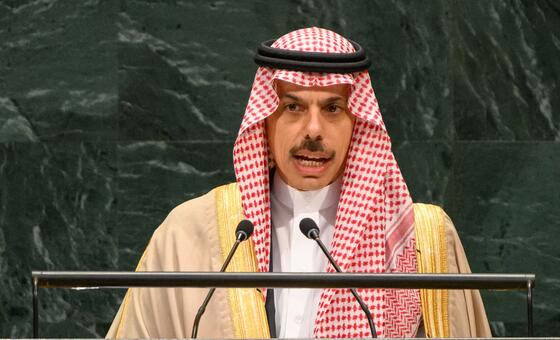
Saudi Arabia Warns Gulf Security Is Vital to Global Stability
Qinilo.com – Saudi Arabia warns Gulf security is inseparable from international stability as pressure across the Middle East threatens trade, energy supplies and vital sea routes. Addressing the UN General Assembly, Foreign Minister Prince Faisal bin Farhan called for stronger global cooperation to protect Gulf States and maritime corridors.
He said the region’s security has direct consequences for peace, commerce and dependable energy flows worldwide. Saudi Arabia and neighbouring countries, he added, had faced what he described as Iranian attacks on security assets, civilian locations and economic facilities.
“The security of the Gulf region is part and parcel of the security of the region and the world at large,” he said.
Prince Faisal said the Kingdom has the right to defend its sovereignty, people, residents and national resources. He also urged countries to act together against conduct that threatens international peace and security.
Protecting strategic shipping routes
Saudi Arabia warns Gulf security depends in part on preserving freedom of navigation through waterways central to global trade. The minister highlighted the Strait of Hormuz, Bab el-Mandeb Strait, Red Sea and Gulf of Aden, all of which connect energy producers, commercial shipping networks and markets around the world.
He rejected using maritime routes for coercion or intimidation, stressing that disruptions can affect supply chains, freight costs and the movement of goods far beyond the Middle East.
Prince Faisal called for conditions in the Strait of Hormuz to return to those that existed before 28 February, without additional fees or restrictions on passage. He said commercial transit should remain protected from measures that could undermine economic activity.
While outlining immediate risks, he welcomed de-escalation efforts involving Qatar, Pakistan and other countries. He called for sustainable regional arrangements that address the underlying causes of instability rather than only responding to individual crises.
Regional security, nuclear safeguards and energy
Saudi Arabia warns Gulf security requires a comprehensive and lasting framework. The Kingdom also reaffirmed support for a Middle East free of weapons of mass destruction.
Peaceful nuclear programmes should operate with international supervision and safeguards, Prince Faisal said. His remarks combined support for civilian nuclear development with the need for measures that build confidence and prevent escalation.
He said energy security and climate action should complement each other. Saudi Arabia’s Vision 2030 programme, renewable-energy investments, clean hydrogen projects, carbon-capture technologies and infrastructure development were presented as part of a wider economic and development strategy.
The minister urged practical energy transitions that consider development needs, economic resilience and reliable access to energy, without prematurely excluding particular energy sources.
Palestine, Yemen and Red Sea security
On the Occupied Palestinian Territory, Prince Faisal condemned attacks affecting civilians, restrictions on humanitarian aid, forced displacement and settlement expansion. He said a fair and lasting settlement depends on a two-State solution.
Saudi Arabia continues to support an independent Palestinian State along the 1967 borders, with East Jerusalem as its capital. He described that outcome as the viable foundation for a just and durable peace.
He also called for an inclusive political settlement in Yemen to restore stability and ease civilian suffering. Saudi Arabia has provided more than $29 billion in humanitarian and development assistance for Yemen, he said.
Prince Faisal condemned Houthi missile and drone attacks against Saudi territory and commercial vessels. He said attacks in the Red Sea and near Bab el-Mandeb threaten navigation between the Mediterranean, the Indian Ocean and international markets.
Frequently asked questions
Why does Gulf security matter internationally? The Gulf contains major energy facilities and shipping passages used by international trade. Disruptions can affect energy supplies, delivery schedules and transport costs in many countries.
Which waterways did Saudi Arabia identify? The minister referred to the Strait of Hormuz, Bab el-Mandeb Strait, the Red Sea and the Gulf of Aden as strategically important routes.
What did Saudi Arabia call for? Saudi Arabia called for collective action to protect freedom of navigation, reduce regional tensions and establish durable security arrangements.