
Clean your plate – to reduce food loss and waste
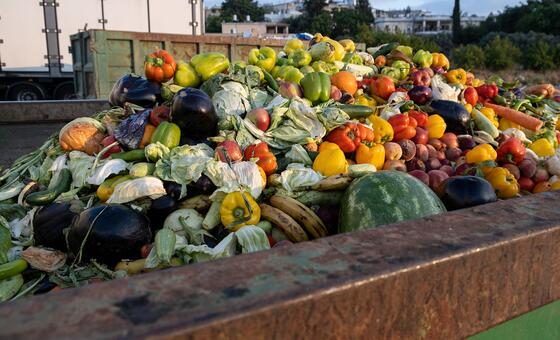
Reducing Food Waste Can Cut Emissions and Protect Forests
Qinilo.com – A discarded sandwich, forgotten leftovers or vegetables left to spoil may seem insignificant on their own, but food waste has a substantial global cost. When uneaten food reaches landfill sites and breaks down, it releases methane, a potent greenhouse gas. Food loss and waste are responsible for an estimated eight to 10 per cent of worldwide greenhouse-gas emissions.
The challenge begins well before food reaches a household kitchen. Crops can spoil after harvest, during storage or while being transported to markets. At the consumer end, excess purchasing, inadequate meal planning and food prepared but not eaten all contribute to the same problem: more than one billion meals go uneaten each day.
The issue is being highlighted on the International Day of Awareness of Food Loss and Waste, observed on 29 September by the UN Environment Programme (UNEP) and the UN Food and Agriculture Organization (FAO). This year’s observance places particular attention on the relationship between food loss, forest protection and sustainable agrifood systems.
Food Efficiency and Forest Protection
Using food more effectively can lessen the demand for additional farmland, helping to ease pressure on forests. This matters because forests are not separate from food systems: they help protect soils, influence rainfall patterns and support the environmental conditions needed for agriculture.
“Using the food we already produce more efficiently can reduce pressure on land and forests and help feed more people,” said Michael Muratha, a Programme Manager at UNEP, speaking from its headquarters in Nairobi.
Preventing losses also has a practical role in communities facing climate-related disruptions. Droughts, floods and unstable supplies can make it harder for farmers and families to maintain reliable access to nutritious food. Better handling, storage and transport can keep more harvested crops edible for longer, particularly fruits and vegetables that spoil quickly.
This is especially important at a time when 2.6 billion people cannot afford a healthy diet rich in fruit and vegetables. Saving food that is already grown does not resolve hunger by itself, but it can help make food systems more resilient and reduce unnecessary losses of nutrients, land, water and labour.
Cold Storage Makes a Measurable Difference
Investment in food infrastructure is one of the clearest opportunities for reducing waste. Reliable cold chains, refrigerated transport and suitable storage facilities can prevent perishable goods from deteriorating between farms, markets and consumers.
Muratha pointed to a cooperative of 179 farmers near Nairobi, Kenya, where post-harvest losses had reached as much as 40 per cent of crops. The cooperative received cold-storage facilities and refrigerated transport equipment, illustrating how targeted support can help farmers preserve more of what they produce.
“That’s why it’s really important to take these measures to preserve and conserve and reduce losses of food,” he said.
For farmers, stronger storage systems can offer protection when weather events disrupt harvests or when food becomes scarce. For cities and households, reducing waste can mean lower costs and a better chance that food stays in use rather than becoming landfill material.
From Surplus Food to New Uses
Food that remains safe to eat can also be redirected to people who need it. UNEP supports work that moves surplus food to underserved communities, including children attending daycare centres. Such approaches focus on preventing edible food from being discarded while helping ensure it reaches people instead.
Innovation is another part of the response, although it does not always require sophisticated technology. Community-based projects can create new uses for ingredients that are commonly overlooked. In Brazil, Favela Orgânica teaches communities, street vendors and chefs how banana peels, broccoli stalks and other frequently discarded food parts can be incorporated into meals.
“Innovation can help at different points where food is lost or wasted, and it does not always have to be high-tech,” Mr. Muratha insisted.
Digital tools are also beginning to help businesses understand where waste occurs. In a UNEP-supported initiative involving 13 hotels, artificial intelligence tools were used to measure discarded food and improve purchasing and preparation decisions. The participating hotels reduced post-consumer breakfast waste by 62 per cent over four months.
For households, the principles can be simple: plan meals, check what is already available before shopping, store food appropriately and use leftovers safely. Restaurants, retailers and institutions can make similar changes at a larger scale by tracking discarded items and adjusting portions, ordering and preparation.
Economic and Climate Stakes
Food loss and waste cost the world more than $1 trillion each year. Prevention can deliver financial benefits alongside environmental gains: every dollar spent on preventing food waste saves cities $8 and households $84.
Last year, UNEP and partners introduced the Food Waste Breakthrough initiative during the UN COP31 climate change conference in Brazil. Its aim is to halve food waste by 2030, reduce methane emissions and strengthen climate action.
“For communities, it means more food reaching people and greater resilience when harvests, prices or supply chains are disrupted,” he said.
Reducing food loss will require action across the entire chain, from harvesting and transportation to supermarkets, restaurants and homes. Better infrastructure, improved planning, food redistribution and practical innovation can all contribute to a system that makes better use of what has already been produced.
“It will not end hunger on its own, but it is an important part of building more secure and sustainable food systems.”
Related Reading
Frequently Asked Questions
What is Clean your plate?
Clean your plate is the main topic of this guide. The article explains the context, practical details, and next steps readers should understand.
Why does Clean your plate matter?
Clean your plate matters because readers are looking for a useful answer, not just a short summary. Good content should match search intent and help them decide what to do next.