
Funding cuts put 8.3 million refugees at risk of losing vital assistance
Funding Shortfalls Threaten Essential Protection for Millions of Displaced People
Qinilo.com – Millions of refugees, stateless people and others forced from their homes could lose access to services intended to keep them safe as humanitarian funding falls sharply. The UN refugee agency has warned that nearly 8.3 million people may be affected by reductions that are already weakening protection systems across several countries.
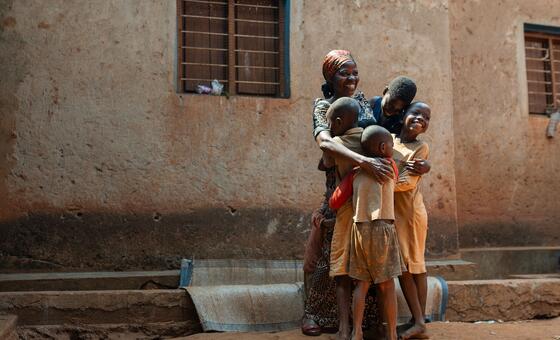
The pressure is particularly acute for families returning to Afghanistan, including Haji Mohammad Shafi, who spent 44 years in Pakistan before being compelled to leave. After selling his possessions, he travelled back to Afghanistan with his five children and arrived with very little.
The family received a single cash payment from UNHCR after crossing the border. But Mr. Shafi has no reliable income, and a leg injury restricts the work he can do. He and his children are now living in a temporary shelter in Kabul Province, where stones reinforce the walls and plastic sheeting covers the windows.
“When there is little food, I give it to the children. If they are hungry, they cry,” he says.
“We have nothing prepared for winter. If someone helps, we can manage. If no one helps, we have nothing.”
Funding Falls as Needs Remain Exceptionally High
The warning comes as UNHCR’s available funding declined from $5.178 billion in 2024 to $3.932 billion in 2025. By July, the agency had received just 32 per cent of the $8.5 billion it needs for 2026, despite the number of people covered by its mandate remaining at historically high levels.
Such reductions do not simply mean smaller programmes. Protection work often depends on systems that need enough staff, facilities and local capacity to operate at all. Registration services, safe accommodation, legal support and child protection programmes can become ineffective when resources drop below a viable level.
UNHCR’s report, Protection Eroded: The Human Cost of Underfunding, argues that protection cannot be divided into ever-smaller shares in the way that some material aid may be reduced. Once funding falls too far, essential systems cease to function.
“Below a certain threshold the system doesn’t shrink, it fails,” the report states.
Dominique Hyde, UNHCR’s Director of External Relations, said the consequences can quickly expose displaced people to the same dangers they were trying to escape.
“When registration stops, safe houses close or child protection services disappear, the very risks that people fled – violence, exploitation and abuse – reappear in displacement,” she said.
Afghan Returnees Face Smaller Grants and Uncertain Winter Prospects
Afghanistan illustrates how quickly diminished funding can affect households arriving with few resources. More than one million people have returned to the country during 2026 alone. The cash assistance offered on arrival has been lowered from $375 per person to $170 per household.
Support intended to help families rebuild their lives after returning has also contracted dramatically. Reintegration grants have reached only 175 households so far this year, compared with 5,300 households in 2024.
For returnees, a one-time payment may help cover immediate needs, but it does not replace an income, a home, health care or the tools needed to earn a living. Families facing injury, disability, illness or limited job opportunities can be especially vulnerable when follow-up support is unavailable. As winter approaches, inadequate shelter and food supplies can deepen the uncertainty already facing people who have just restarted their lives.
Risks Grow for Women, Children and Survivors of Violence
The impact extends far beyond Afghanistan. In Chad, registration delays threaten 319,000 refugees who may be left without documentation. Without papers, people can face greater exposure to detention and may struggle to access services or prove their status.
At the same time, up to 200,000 women and girls in Chad could lose access to safe spaces. Around 233,000 children may no longer receive child protection support. These services can provide a vital point of contact for people facing abuse, exploitation, separation from family members or other risks linked to displacement.
In Ethiopia, the number of safe houses available to survivors of gender-based violence has dropped from 29 to 13 in one year. Child protection coverage in some locations has fallen by as much as 85 per cent. In Sudan, more than 50,000 survivors of sexual violence in Darfur and Kordofan could be deprived of life-saving post-rape care.
These figures show why protection assistance is more than an administrative category. It includes the practical support that helps people obtain documents, find refuge from violence, access specialized care and keep children safe. When those networks are cut, the effects can be immediate and difficult to reverse.
Staff and Offices Reduced Despite Rising Demand
UNHCR has already reduced its workforce by one third during 2025 and shut offices in 140 locations. The agency says even its most urgent activities are now being affected.
The composition of available funding is also changing. Contributions restricted to particular projects account for 51 per cent of funding this year, up from 19 per cent in 2022. Earmarked money can support important work, but it may limit an organization’s ability to shift resources quickly when a crisis develops in another location or when needs change unexpectedly.
“Flexible funding helps us move the right expertise and funds to where they are needed the most,” Ms. Hyde said.
She stressed that protection systems cannot withstand unlimited reductions without collapsing. UNHCR is calling on donors and partners to provide urgent assistance and increase flexible contributions, with the aim of preserving services that have taken years to establish.
For families such as Mr. Shafi’s, the broader funding gap is reflected in everyday decisions: whether there is enough food for children, whether a fragile shelter can withstand winter, and whether help will still be available after the first emergency payment is spent.
Related Reading
Frequently Asked Questions
What is Funding cuts put 8 3 million?
Funding cuts put 8 3 million is the main topic of this guide. The article explains the context, practical details, and next steps readers should understand.
Why does Funding cuts put 8 3 million matter?
Funding cuts put 8 3 million matters because readers are looking for a useful answer, not just a short summary. Good content should match search intent and help them decide what to do next.