
Guterres condemns Israeli move to militarise seized compound in occupied East Jerusalem
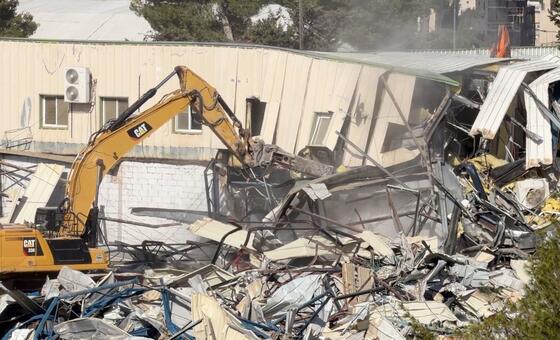
UN Secretary-General Condemns Israel’s Decision to Militarize UNRWA Compound in East Jerusalem
Qinilo.com – On Wednesday, the United Nations Secretary-General, António Guterres, issued a sharp rebuke of Israel’s recent decision to convert a UNRWA compound in occupied East Jerusalem into military infrastructure. The compound, seized in January, has become a focal point of international concern, with Guterres labeling the move as “wholly unacceptable.” His remarks underscored the broader implications of the action, emphasizing its violation of UN premises and the agency’s operational mandate in the occupied Palestinian territory.
In a statement disseminated by his spokesperson, Guterres reiterated that the utilization of the Sheikh Jarrah compound by the Israeli authorities for military purposes constitutes a clear breach of the inviolability of United Nations facilities. This move, he argued, not only undermines the agency’s role but also weakens the credibility of the UN’s presence in the region. The statement highlighted the legal implications, citing the International Court of Justice (ICJ) as a key authority in affirming the unlawfulness of such actions. According to the ICJ, Israel lacks the authority to exercise sovereign control over any part of the occupied Palestinian territory, and it is obligated to cease its unlawful occupation as swiftly as possible.
“The Secretary-General condemns in the strongest terms the Israeli authorities’ decision to establish military facilities at the UNRWA Sheikh Jarrah compound in East Jerusalem,” the statement said. “Such actions, as affirmed by the International Court of Justice, are unlawful. The State of Israel is not entitled to exercise sovereign powers in any part of the occupied Palestinian territory and is under an obligation to bring to an end its unlawful presence…as rapidly as possible.”
Guterres also reaffirmed the integral role of UNRWA within the United Nations system, stressing that the compound remains under UN control and is therefore a protected site. He urged immediate reversal of the decision, calling for the compound to be returned to the agency without delay. This plea comes amid escalating tensions over the use of UN properties for military purposes, raising questions about the agency’s ability to carry out its humanitarian duties in the region.
Humanitarian Challenges in Gaza Amid Continued Israeli Strikes
Meanwhile, in Gaza, the United Nations Office for the Coordination of Humanitarian Affairs (OCHA) issued a warning about the ongoing impact of Israeli airstrikes on civilian infrastructure. The strikes, according to OCHA, have targeted residential neighborhoods and makeshift shelters housing displaced families, intensifying the humanitarian crisis. On Monday, an aerial attack in Jabalya Camp, located in northern Gaza, damaged tents and tarpaulins used by approximately 30 households. The extent of the damage has prompted humanitarian teams to assess the needs of affected residents and deploy emergency aid.
UN Spokesperson Stéphane Dujarric emphasized the necessity of protecting civilians and civilian facilities at all times, stating, “We reiterate that civilians and civilian facilities must be protected at all times.” This declaration follows reports of significant disruptions to aid delivery, with Israeli authorities imposing strict coordination requirements that have caused delays and obstacles. OCHA noted that a humanitarian convoy faced a one-hour hold at an Israeli checkpoint, while another mission transporting refrigerated supplies was canceled due to prolonged delays at the Kerem Shalom crossing. A separate operation was abandoned after the designated route became impassable, further complicating the distribution of essential resources.
Despite these challenges, aid organizations continue to expand their efforts to support the population. The United Nations Development Programme (UNDP) has delivered over 2,500 durable temporary housing units to Gaza since January, with more than half already operational as shelters for homes, clinics, and educational spaces. The UN estimates that approximately 900,000 individuals in the territory require urgent shelter assistance and long-term housing solutions, highlighting the scale of the displacement crisis.
Humanitarian partners are also working to sustain basic services, including food distribution. Around 130,000 bread bundles are produced daily, with many distributed freely through shelters and community centers. Additionally, these supplies are available at subsidized prices in roughly 170 locations across the enclave, providing a critical lifeline for residents. However, the persistent delays in movement have hindered the efficiency of these operations, leaving thousands without timely access to essential goods.
As the situation in Gaza deteriorates, the UN and its agencies remain committed to alleviating the suffering of displaced populations. Their efforts, though constrained by logistical and political barriers, are crucial in maintaining a semblance of normalcy for those in need. Guterres’ condemnation of the East Jerusalem compound and the ongoing reports from Gaza reflect a dual challenge: the erosion of UN premises in occupied territories and the escalating humanitarian toll on civilian life in the Gaza Strip.