
US-Iran war leaves shipping at near-standstill in Hormuz again
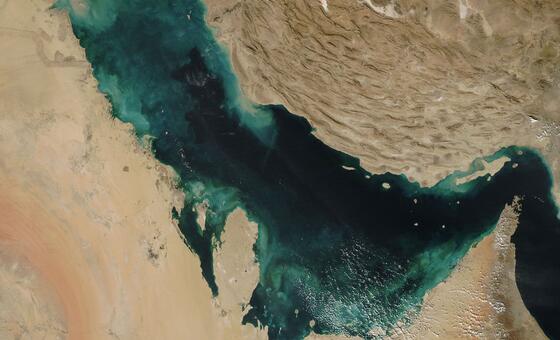
US-Iran Conflict Disrupts Shipping in Hormuz, Stranding Crews and Raising Regional Tensions
Qinilo.com – Escalated tensions between the United States and Iran reportedly halted maritime activity in the Strait of Hormuz on Thursday, trapping approximately 6,000 sailors on hundreds of ships and prompting Gulf nations to prepare for potential further assaults.
UN Condemnation of Iranian Actions
Following concerns raised by UN Secretary-General António Guterres about the resumption of military strikes, IMO Council Member States issued statements criticizing Iran for its “persistent threats” and attacks on Gulf State vessels within their waters.
In line with UN Secretary-General António Guterres’s concern, Council members emphasized the need to safeguard critical maritime routes, particularly in the strategic waterway of Hormuz, which serves as a global energy artery.
Bahrain, France, Germany, and Saudi Arabia highlighted the disruption to sea traffic, urging measures to ensure safe passage through the region.
Iran’s Counterclaims
In response, Iranian officials accused foreign powers of “military interference” with their commercial ships, citing ongoing “aggression” by the United States and Israel.
IMO Secretary-General Arsenio Dominguez urged a pause in all transit through the Strait until “essential safety conditions” are met, citing security concerns that delayed the evacuation of 136 vessels and 2,900 crew members so far.
Meanwhile, Iranian health agencies reported 14 fatalities and multiple injuries from strikes across five provinces during the recent clashes.
Oil Market Volatility
The conflict triggered a temporary surge in crude oil prices, which stabilized by Thursday at $77 per barrel—still above pre-war benchmarks.
Context of the Truce Agreement
The renewed hostilities followed attacks on three merchant ships in Hormuz on Tuesday, despite a June 17 truce agreement between Iran and the US. This 14-point memorandum aimed to end military operations globally, including in Lebanon, and set a 60-day deadline for resolving disputes over Iran’s uranium enrichment program.
It also required the reopening of the Strait for all vessels and the relaxation of sanctions imposed by the US and UN Security Council.
Global Economic Impact
As the conflict intensified, leaders of the International Energy Agency, International Monetary Fund, World Bank Group, and World Trade Organization convened to assess the economic effects. They noted that while the Middle East crisis has caused some growth slowdowns and inflationary pressures, the global economy has largely weathered the disruption.
These institutions called for continued efforts to resolve the conflict and restore normalcy to the Strait, which transports roughly one-fifth of the world’s oil and gas. Fuel and fertilizer prices have since eased since June, though uncertainty persists over long-term economic consequences.