
World News in Brief: Schools closed in West Bank, AI in healthcare, Indigenous rights
World News in Brief: Educational Challenges, AI in Healthcare, and Indigenous Rights
Qinilo.com – The United Nations reported on Wednesday that access to education in the West Bank has deteriorated further, with six UN-run schools remaining closed for over a year and an additional six shuttered due to ongoing conflicts.
UN Spokesperson Stéphane Dujarric informed journalists in New York that ten schools in Area C have been abandoned following settler attacks and restricted movement. He noted that the UN aid coordination office, OCHA, has highlighted the impact of these disruptions on displaced families.
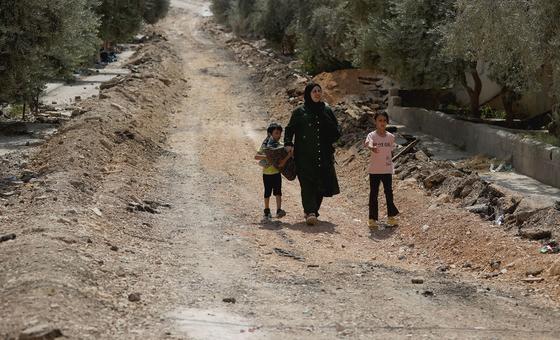
During a joint humanitarian mission to a former UN school in Gaza, Suzanna Tkalec, the UN’s deputy humanitarian coordinator, visited sites hosting 18 families who have lost their homes. The UN emphasized that limited aid access has worsened living conditions for these communities.
“Our humanitarian partners are committed to mobilizing assistance to address the community’s most urgent needs,” stated Mr. Dujarric.
Despite continued Israeli military actions in Gaza and raids in the West Bank, aid workers persist in delivering critical support. In the past month, UN partner organizations have provided over 378,000 items, including tarps, hygiene kits, and fuel containers, to civilians in Gaza.
In June, the UN World Food Programme (WFP) issued food vouchers and cash aid to approximately 286,000 individuals in the West Bank. However, the UN warns that without increased funding, supply shortages may threaten vulnerable populations by winter.
“Without additional funding, depleted stockpiles cannot be replenished, putting vulnerable families at even greater risk, particularly as humanitarians prepare for winter,” said Mr. Dujarric.
WHO Advocates for Health-Specific AI Regulations
The World Health Organization (WHO) stressed that AI governance must prioritize equitable healthcare access, ensuring the technology reduces disparities rather than deepening them. This call to action was delivered in a press release as the UN promotes global AI coordination.
A high-level conference in Lisbon, initiated by the WHO and Portugal’s government, gathered representatives from 37 nations across all WHO regions. The event focused on strategies to integrate AI responsibly into medical systems.
According to an April report, 74% of EU Member States use AI for diagnostics, but only 11% have developed health-specific AI policies. Furthermore, just eight% have established liability frameworks for AI errors.
“Every country in the world is wrestling with the same questions right now: how do we govern AI responsibly, how do we build the health workforce to use it safely, and how do we make sure it serves patients rather than just those who can afford the technology,” said Dr. Hans Kluge, WHO’s Europe regional director.
Dr. Kluge pointed out that patients already rely on chatbots to explore health concerns, underscoring the urgency of regulation. He warned that “Regulating AI in health is hard. But not regulating it is harder – measured in patients harmed, trust lost and inequalities widened.”
The WHO released ethical guidelines for AI in healthcare in 2021, aiming to balance innovation with fairness. A central theme of the conference was ensuring marginalized groups, including those with limited access to medical care, benefit from AI advancements.
“No country should have to navigate the AI transformation alone,” the WHO wrote in its statement.
Indigenous Rights at Risk During Energy Transition
At the 19th session of the UN Expert Mechanism on Indigenous Peoples’ Rights, Volker Türk, the UN’s human rights chief, warned that the shift to clean energy must not endanger Indigenous communities. He called for stronger protections as development projects encroach on traditional lands.
Indigenous rights defenders frequently face threats such as intimidation, violence, and legal action when opposing activities like mining and large-scale farming. Between 2023 and 2025, at least 15% of human rights defenders killed or disappeared globally were Indigenous individuals.
Türk highlighted the tragic case of Brooklyn Rivera, an Indigenous leader in Nicaragua who died while in state custody in May. His remarks underscored the need for global accountability in safeguarding these rights.