
Security Council LIVE: Founding principles of the UN facing ‘profound strain’, Guterres warns
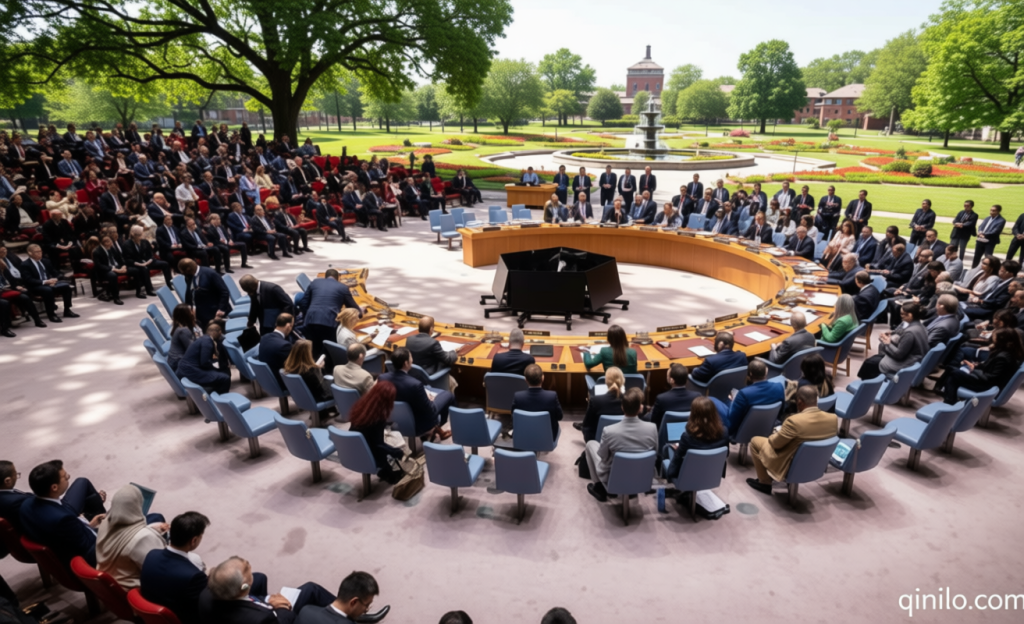
Security Council LIVE: Founding Principles of the UN Facing ‘Profound Strain’, Guterres Warns
Qinilo.com – The United Nations Security Council convened for a critical discussion on safeguarding the multilateral framework that underpins global peace and stability. With rising tensions across the world and persistent disagreements among member states, the council’s role as a unifying force has come under scrutiny. Delegates from various nations gathered to address the challenges threatening the effectiveness of the UN system, particularly as geopolitical rivalries intensify and international cooperation wavers.
Key Themes of the Debate
The meeting centered on reinforcing the core tenets of the United Nations, which have long served as the foundation for collective decision-making. Among the topics highlighted were the need to uphold the UN Charter, which enshrines principles such as sovereign equality, peaceful resolution of disputes, and the maintenance of international security. Representatives emphasized that these principles are now being tested by the growing complexity of global conflicts and the increasing influence of powerful states over smaller ones.
A central issue discussed was the transformation of global governance structures. Critics argue that the current system is ill-equipped to address emerging threats like climate change, pandemics, and economic inequality, which require coordinated international action. Delegates called for reforms to make the Security Council more representative and efficient, suggesting that outdated mechanisms might hinder timely responses to crises. This debate also touched on the importance of maintaining a rules-based order, a concept central to the UN’s mission since its inception.
Challenges to the UN’s Authority
The council faced mounting pressure to demonstrate its relevance in a rapidly shifting world order. Recent events, including the escalation of regional conflicts and the withdrawal of key nations from international agreements, have raised concerns about the UN’s ability to act decisively. Some members pointed to the Security Council’s reliance on consensus, which can lead to gridlock when geopolitical interests clash. Others highlighted the need for greater transparency in decision-making processes to rebuild trust among member states and the public.
António Guterres, the Secretary-General of the United Nations, delivered a compelling address, stressing that the UN’s founding ideals are at risk of being undermined. He warned that without urgent action, the organization would struggle to remain a cornerstone of international relations. Guterres underscored the importance of collective responsibility, stating,
“The Security Council’s credibility is vital to the survival of the United Nations. If we fail to protect its core functions, we risk eroding the very framework that has kept the world from descending into chaos.”
His remarks reflected a broader consensus that the UN must adapt to new realities while staying true to its original mission.
The debate also explored the implications of deepening divisions between major powers. With the US, China, and Russia often at odds, the Security Council’s ability to act as a neutral arbiter has been questioned. Some members argued that the council should prioritize mediation and diplomacy over military intervention, while others emphasized the necessity of swift action in cases of aggression. This tension highlights the challenge of balancing sovereignty with collective security in an era of polarization.
Pathways to Strengthening the UN System
Proposals to enhance the UN’s effectiveness included expanding its mandate to address non-traditional security threats and modernizing its institutions to reflect today’s geopolitical landscape. A few members suggested increasing the number of permanent seats to better represent the interests of developing nations. Others advocated for strengthening the role of the General Assembly in decision-making, ensuring that all voices are heard in shaping global policy.
Reforms were also discussed in the context of restoring public confidence in the Security Council. Delegates acknowledged that the council’s decisions are often seen as biased or influenced by powerful states. To counter this perception, some proposed stricter criteria for veto power and greater accountability mechanisms. These measures, they argued, could help ensure that the Security Council remains a fair and impartial body capable of addressing crises with impartiality.
Meanwhile, the debate touched on the importance of maintaining a cohesive international response to global challenges. The UN’s ability to unite member states under a common cause has been tested by the rise of nationalism and the prioritization of national interests. Guterres reiterated that the UN must remain a platform for dialogue, even as disagreements persist. He urged nations to find common ground on issues such as climate action and pandemic preparedness, emphasizing that these challenges cannot be tackled in isolation.
Geopolitical Impacts on the UN’s Role
Regional tensions, such as those in the Middle East, Africa, and Southeast Asia, were cited as examples of how geopolitical divisions complicate the UN’s efforts. In the Middle East, the council has been called upon to mediate between warring parties, yet its resolutions are frequently contested. In Africa, the UN has faced criticism for its slow response to conflicts, prompting calls for more flexible approaches to peacekeeping and humanitarian aid.
Representatives from smaller states emphasized the need for the UN to remain a bulwark against unilateralism. They argued that the organization’s unique ability to foster multilateral dialogue is essential for preventing the fragmentation of the global order. One delegate noted that the UN’s legitimacy hinges on its capacity to act in the collective interest, even when member states have divergent priorities.
The discussion also highlighted the role of the UN in promoting human rights and development. Despite these efforts, the organization has been challenged by the actions of states that prioritize economic interests over humanitarian commitments. Guterres acknowledged these hurdles but remained optimistic, stating that the UN’s adaptability is one of its greatest strengths. He called for renewed commitment to the organization’s principles, urging member states to recognize the long-term benefits of cooperation over confrontation.
Looking Ahead: A Call for Unity
As the debate concluded, the focus shifted to the next steps in strengthening the UN system. Delegates agreed that reform must be both comprehensive and timely, with the Security Council playing a pivotal role in driving progress. They also emphasized the importance of public engagement, noting that the UN’s success depends on the support of its member states and the global community.
While the meeting did not yield immediate consensus, it underscored the shared recognition of the UN’s critical role in an interconnected world. The Security Council’s ability to navigate these challenges will determine whether the organization can continue to serve as a beacon of hope in times of uncertainty. Guterres concluded by reaffirming the UN’s commitment to its founding principles, declaring that “the survival of the United Nations is not just a matter of institutional survival—it is a matter of global survival.”
The discussions will inform upcoming decisions, with the potential for new resolutions to address the pressing issues facing the international community. As the world continues to evolve, the UN must adapt without losing sight of the values that have guided it since its creation. The Security Council’s debate marks a pivotal moment in this ongoing effort, highlighting the urgency of reinforcing the principles that define the United Nations.