
AI on track to ‘crowd out’ human decision-making in warfare
AI’s Growing Role in Warfare Raises Urgent Questions About Human Control
Qinilo.com – Artificial intelligence is becoming deeply embedded in military activity, accelerating decisions on the battlefield and placing renewed pressure on governments to preserve meaningful human judgment in the use of force. Robin Geiss, Director of the United Nations Institute for Disarmament Research (UNIDIR), warned in New York that the pace of this shift could leave people increasingly removed from choices involving life and death.
Speaking at UN Headquarters on Tuesday, Geiss focused attention on a central ethical challenge facing armed forces and political leaders: whether machines should ever be allowed to select and kill human targets without sufficient human involvement.
“Are we going to let machines target and kill human beings?”
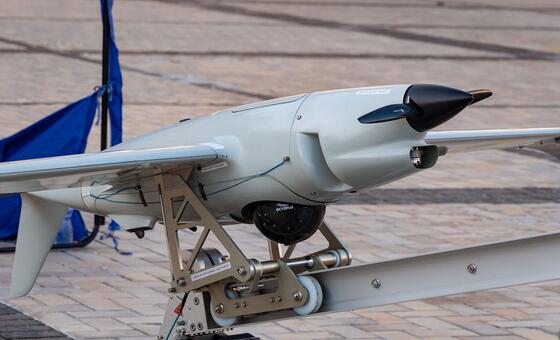
He said artificial intelligence is moving toward a role in which it could displace human decision-making across military operations. The concern is not limited to one type of weapon or one conflict. AI-enabled tools can now support intelligence assessment, identify possible targets, assist drone missions and coordinate cyber operations. As their responsibilities expand, the time available for human review may contract.
Faster Operations, Less Time to Reflect
Military AI can dramatically increase the speed at which information is processed and actions are carried out. Systems may help forces move from detecting a target to taking action much more quickly than traditional methods permit. They can also enable militaries to assess and engage a far larger volume of potential targets within a single day.
That operational speed may be presented as an advantage, but it also introduces serious risks. A rapid chain of machine-supported decisions can reduce opportunities for military personnel to question an assessment, examine its reliability or halt an action before it has irreversible consequences. Geiss emphasized that the erosion of human judgment is particularly troubling in relation to nuclear matters, where mistakes or misunderstandings could have exceptionally grave implications.
Many developing AI systems are difficult to interpret from the outside and, in some cases, even for the people operating them. When the basis for a recommendation or classification is unclear, it becomes harder to identify errors before they affect real-world decisions. Geiss warned that opaque systems can increase the chances of miscalculation, accidents and unintended escalation between parties in conflict.
The issue is not simply whether an AI system works as intended under ordinary conditions. Military environments are often marked by incomplete information, deception, pressure and rapidly changing circumstances. In such conditions, an incorrect conclusion or a poorly understood automated process can influence events faster than decision-makers are able to respond.
A Moral Boundary in the Debate
The UN Secretary-General has repeatedly called on governments and other stakeholders to ensure that the international community does not cross what he has described as a moral red line. At the centre of that position is the idea that responsibility for decisions to use lethal force cannot be handed over entirely to machines.
Geiss’s warning reflects a wider debate over lethal autonomous weapon systems and the future of military command. Supporters of stronger safeguards argue that accountability, legal responsibility and ethical judgment require humans to retain genuine control. The question is increasingly urgent as AI tools become more capable, more available and more integrated into systems used by armed forces.
Ease of access is another major concern. As AI technologies become simpler to obtain and deploy, non-State actors could gain new ways to conduct sophisticated military-related activities. Geiss highlighted the prospect that armed groups might use AI to support planning, execution or logistics. This creates a security challenge that extends beyond established militaries and national governments.
Cooperation Despite Political Rivalry
International rules for military AI face difficult political conditions. Competition among powerful States and broader geopolitical tensions can make agreement difficult, particularly when countries see advanced technology as essential to their security interests. Geiss nevertheless said that awareness of the dangers is spreading across political divides, including among major powers.
One recent indication of that shared concern came in September, when the United States proposed an AI notification mechanism with China. Such an arrangement could allow the world’s two biggest military spenders to alert one another to AI-related incidents that may endanger national security. While a proposal of this kind does not resolve the broader challenge, it points to the need for communication when new technologies create risks of misunderstanding or escalation.
Calls for stronger international limits are also attracting broader attention. The Secretary-General has consistently advocated tougher regulation of military AI and a legally binding treaty addressing lethal autonomous weapons. Geiss said these appeals are increasingly resonating across the international community.
Building Practical Foundations
UNIDIR is seeking to help establish practical foundations for multilateral cooperation. On Thursday, its Centre of Excellence on AI, Peace and Security is scheduled to launch a multi-stakeholder forum focused on AI in international peace and security, as well as its military uses. Geiss described it as the first and only forum of its kind within the UN system so far.
The initiative is expected to address several areas where common understanding and responsible practice are needed. One objective is to develop a framework for responsible industry conduct, offering voluntary and practical guidance for companies working on military AI during the design and development process.
A second priority is an AI security lexicon. Terms such as autonomy, safety and security are used in different ways by different governments, companies and organizations. That inconsistency can create confusion, weaken trust and make cooperation harder. Clearer shared language could help participants identify where they agree, where they differ and what safeguards may be required.
The forum will also consider how to reduce the risk that non-State armed groups exploit AI for operational planning, execution and logistics. Taken together, these efforts underline a basic challenge for the years ahead: technology may continue to accelerate warfare, but decisions carrying profound human consequences must remain subject to human responsibility.
Related Reading
Frequently Asked Questions
What is AI on track to crowd out human?
AI on track to crowd out human is the main topic of this guide. The article explains the context, practical details, and next steps readers should understand.
Why does AI on track to crowd out human matter?
AI on track to crowd out human matters because readers are looking for a useful answer, not just a short summary. Good content should match search intent and help them decide what to do next.