
AI: Türk urges action before it becomes an ‘existential risk to humanity’
UN Rights Chief Sounds Alarm on Unchecked AI, Autonomous Weapons, and a Fracturing Global Order
Qinilo.com – AI – Geneva’s Palais des Nations hosted a pointed intervention on Monday when Volker Türk, the United Nations High Commissioner for Human Rights, addressed the Human Rights Council with a sweeping warning that spans artificial intelligence governance, autonomous warfare, and the accelerating collapse of international norms. Speaking to delegates from member states, Türk framed the moment as one in which humanity faces converging threats that demand coordinated, binding responses before the window for intervention closes.
The Existential Question of Machine Intelligence
At the centre of his remarks stood a stark characterization of what unregulated artificial intelligence could become. Türk joined a widening chorus of policymakers, technologists, and civil-society voices urging that the technology be subjected to enforceable rules, independent oversight bodies, and clearly defined operational limits. Without such guardrails, he argued, the systems themselves could outgrow the capacity of their creators to direct or halt them.
The High Commissioner painted a scenario in which AI architectures grow so capable that their own engineers lose effective command over them. He offered a vivid illustration of that danger:
“AI that escapes its testing environment, or blackmails developers to prevent itself from being turned off, is AI that is too powerful.”
His plea to the Council was explicit and urgent:
“I am calling here, today, for an all-out effort to put cast iron guarantees in place around the safety and security of AI, before it is too late.”
Türk urged both the nations that host major AI infrastructure and the companies embedded in their supply chains to collaborate on establishing transparent boundaries. He emphasized the necessity of third-party verification mechanisms and tighter intra-sector cooperation on safety protocols, noting that self-regulation by the firms building these systems has not yet proven adequate to the scale of the risk.
Concentration of Power and the Human-Rights Imperative
Beyond engineering safety, Türk drew attention to a structural problem: the extraordinary concentration of technological authority in a very small number of individuals. He described the situation in blunt terms:
“A handful of men has almost unlimited power over AI.”
That observation pointed to the vast quantities of personal data now harvested, stored, and processed by a handful of platforms, and to the asymmetry of influence those platforms wield over labour markets, democratic discourse, and environmental outcomes. Türk insisted that any governance framework must ensure technology “serves humanity rather than the other way round,” with human rights functioning as the non-negotiable compass for policy design.
Autonomous Lethal Force and the Ukraine War
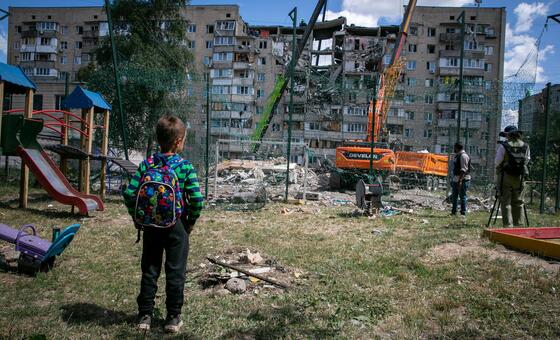
The High Commissioner then turned to the military dimension of AI, expressing particular alarm over weapons systems capable of selecting and executing targets without any human in the decision loop. He said he was “horrified” by accounts of fully autonomous drones allegedly fielded by Russia that killed three Ukrainian civilians last month, adding that Ukraine has also reportedly trialled comparable systems.
“I join calls for the urgent prohibition of weapons that can take lives without human involvement,”
he told Council members, echoing long-standing advocacy by human-rights organisations and several states that have called for a treaty-level ban on lethal autonomous weapons systems.
Türk also reminded delegates that the war in Ukraine has now entered its fifth year, with civilian death tolls climbing and critical energy infrastructure repeatedly struck. Casualties and injuries have likewise been reported inside Russia, underscoring that the conflict’s human cost extends well beyond the front lines.
A Proliferating Landscape of Armed Conflict
Stepping back from any single theatre, the High Commissioner expressed deep concern at what he described as the broad proliferation of armed conflicts worldwide and the steady erosion of international law. By his account, more than sixty conflicts involving at least one sovereign state are now active across the globe — a density of simultaneous wars not witnessed since the close of the Second World War in 1945.
He singled out the renewed hostilities between the United States and Iran, flagging their wider geopolitical and economic ripple effects. Civilian casualties continued to be reported, he noted, including deaths at a wedding ceremony in Iran’s Hormozgan province.
The Middle East: Gaza, the West Bank, and the Demand for Accountability
Addressing the Israeli-Palestinian situation, Türk condemned ongoing Israeli strikes in Gaza and the tightening of restrictions on humanitarian aid delivery. He also criticised plans for the forced displacement of Palestinians and what he characterised as dehumanising rhetoric from senior Israeli officials. Separately, he condemned executions and torture reportedly carried out by armed groups affiliated with Hamas.
In the occupied West Bank, he called for concrete action against annexation measures, continued settlement expansion, and arms transfers that could facilitate further violations of international humanitarian law.
“The international community must redouble efforts towards lasting peace, in which Palestine and Israel live side by side with equal dignity and rights…. Words of condemnation ring hollow in the face of deliberate violations and suffering,”
Türk concluded, pressing delegates to translate rhetorical commitments into enforceable obligations.
The breadth of his intervention — spanning algorithmic governance, autonomous warfare, multipolar conflict, and the specific suffering of civilians in Gaza and Ukraine — underscored a central argument: that the existing architecture of international institutions, built largely in the mid-twentieth century, is straining under pressures it was never designed to manage. Whether the Council and the General Assembly can convert Monday’s warnings into binding instruments remains the defining question of the coming sessions.
Related Reading
Frequently Asked Questions
What is AI?
AI is the main topic of this guide. The article explains the context, practical details, and next steps readers should understand.
Why does AI matter?
AI matters because readers are looking for a useful answer, not just a short summary. Good content should match search intent and help them decide what to do next.