
Beyond the Moon: Space Week around the world
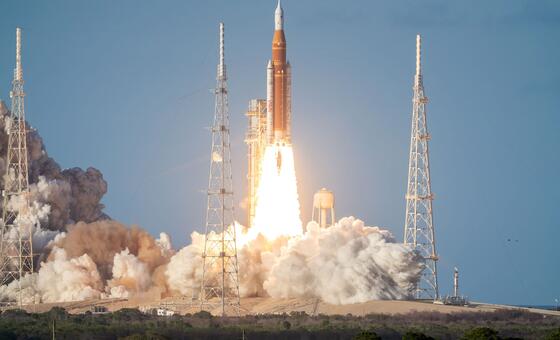
World Space Week Highlights a Growing Era of Lunar Exploration
Qinilo.com – From 4 to 10 October, World Space Week invites people across the globe to consider how space exploration continues to shape science, technology and international cooperation. This year’s observance comes at a moment when the Moon is once again a major focus of attention, following decades of missions that have expanded knowledge of Earth’s closest celestial neighbour.
The annual event offers more than a celebration of rockets, satellites and distant worlds. It is also an opportunity to reflect on the systems that support peaceful activity beyond Earth, including international dialogue, scientific exchange and the responsible use of outer space.
A legacy that began with Sputnik
The modern space age accelerated in 1957, when the Soviet Union launched Sputnik, the first artificial satellite to orbit Earth. The achievement demonstrated that humanity had entered a new technological era, but it also raised urgent questions about how activities in outer space should be managed.
In the years that followed, the United Nations created the Office for Outer Space Affairs, known as UNOOSA. The office has since tracked major developments in space exploration and supported international cooperation on the peaceful use of outer space.
Its work has unfolded alongside an extraordinary history of lunar exploration. More than 77 successful missions to the Moon have been carried out, each adding to the broader understanding of its surface, environment and place in the solar system. These efforts have involved changing technologies and generations of scientists, engineers and space agencies.
The Moon Remains a Powerful Destination
Interest in lunar missions has endured because the Moon is both nearby and scientifically important. It is a visible reminder that space is not an abstract frontier: it can be observed from nearly every part of Earth and has inspired human curiosity for thousands of years.
For modern exploration, lunar journeys also provide demanding tests of spacecraft design, navigation, communications and landing systems. Missions must operate across vast distances and in an environment that offers no breathable air, limited protection from radiation and extreme changes in temperature.
Each successful journey contributes to a larger body of experience. While individual missions have different objectives, lunar exploration as a whole has helped establish techniques and knowledge relevant to future activity in space. It has also reinforced the value of careful planning, international coordination and the sharing of scientific insights.
Space activity affects life on Earth
World Space Week is a useful reminder that the benefits of space-related work are not confined to astronauts or mission control centres. Satellites support communications, navigation, weather observation and many forms of research. Space-based tools can help people better understand conditions on Earth and make decisions that depend on reliable information.
The growing visibility of lunar exploration can therefore serve as an entry point for a wider public conversation. It encourages students to explore science and engineering, gives communities a reason to discuss the future of technology, and helps explain why international rules and cooperation remain important as more actors become involved in space activity.
Space is increasingly connected to everyday life, even when its role is not obvious. A signal transmitted across continents, an image of weather patterns or a navigation service used during travel may rely on infrastructure operating far above the planet. World Space Week brings these connections into view.
International Cooperation Beyond Earth
Outer space has long required countries to work through shared questions. Spacecraft move beyond national borders, and the consequences of activity in orbit or farther away can affect many nations. This makes international engagement essential, whether the issue involves scientific cooperation, access to space-derived information or the peaceful use of the space environment.
UNOOSA’s continuing role reflects that need. By monitoring developments and helping sustain international discussion, the office contributes to a framework in which space can be approached as a domain for cooperation rather than conflict.
World Space Week provides a public setting for that message. Events held during the week can connect institutions, educators, researchers and young people with the broader story of exploration. They also underline that space science is not solely about reaching a destination; it is about building knowledge responsibly and ensuring that its benefits are broadly understood.
Looking beyond the horizon
The history of lunar missions shows how quickly ambitious ideas can become practical achievements. From the launch of Sputnik in 1957 to the many successful journeys that have reached the Moon, space exploration has repeatedly demonstrated the value of sustained research and international engagement.
As World Space Week runs from 4 to 10 October, the occasion offers a chance to look beyond familiar boundaries. The Moon remains a central symbol of exploration, but the larger story is about humanity’s shared capacity to learn, collaborate and use science to better understand both the universe and the planet called home.
Related Reading
Frequently Asked Questions
What is Beyond the Moon?
Beyond the Moon is the main topic of this guide. The article explains the context, practical details, and next steps readers should understand.
Why does Beyond the Moon matter?
Beyond the Moon matters because readers are looking for a useful answer, not just a short summary. Good content should match search intent and help them decide what to do next.