
‘Don’t give up’: Syrian women’s ongoing search for the missing
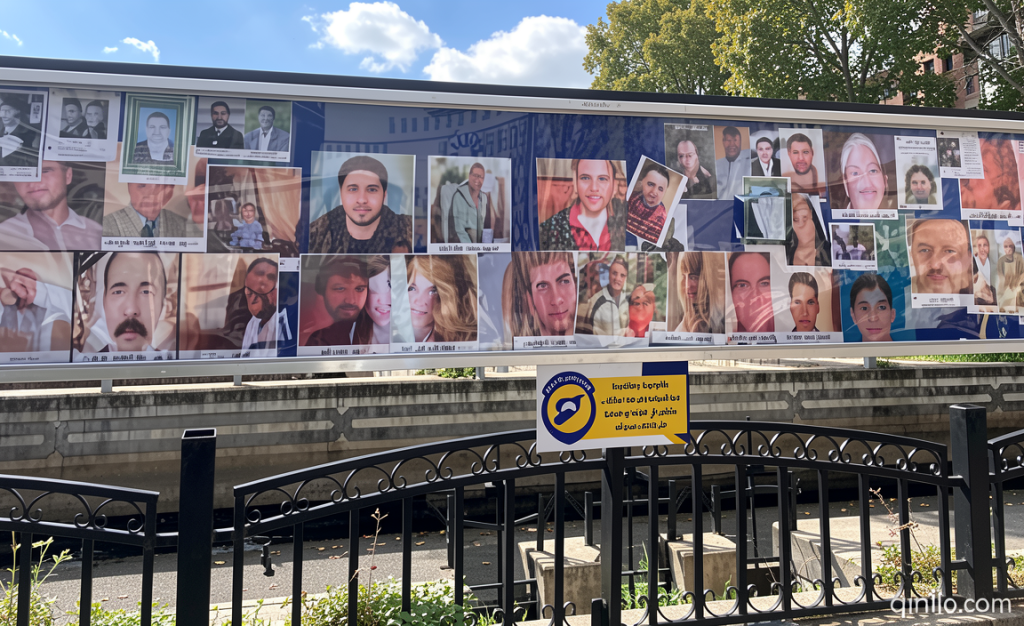
UN Assembly Marks International Day for Women Searching for Missing Persons
Qinilo.com – On Monday, delegates gathered at UN Headquarters in New York to adopt a resolution that will forever link the date 19 December to a cause long overlooked in global discourse: the tireless work of women who spend years, sometimes decades, hunting for answers about relatives taken by state forces, militias, or the chaos of war. The measure designates the day as the International Day of Recognition for Women Searchers of Missing Persons, a formal acknowledgment that the emotional and logistical labor of finding the disappeared falls disproportionately on mothers, sisters, wives, and daughters.
The resolution arrives against a backdrop of staggering scale. Syria alone carries an estimated 130,000 to 300,000 missing persons, a range cited by the Independent Foundation for Missing Persons in Syria. Across the country’s more than a decade of civil war, enforced disappearances, and mass detentions, entire families were hollowed out overnight. For those left behind, the absence of a body, a grave, or even a confirmed fate transforms grief into an open wound that never closes.
A Sister’s Decade-Long Pursuit
Yasmin Al-Mashaan arrived at the UN session carrying the weight of five brothers lost to Syria’s conflict. Three were killed — two during peaceful demonstrations, one by snipers loyal to the former Bashar Al-Assad government. Two were forcibly disappeared, their fates unknown. It was not until she stumbled upon a photograph of her brother Uqba among the so-called “Caesar photos” that her private mourning hardened into public advocacy.
The Caesar archive, smuggled out of Syria in 2013, contained thousands of images documenting deaths in government custody. For families who had received no notification, no body, no explanation, those photographs were often the only confirmation that a loved one had existed inside the state’s machinery of detention.
“I took it upon myself to seek the truth for all the victims who do not know the fate of their loved ones,” Al-Mashaan said.
That personal mission propelled her into a leadership role within Syria’s National Commission for Transitional Justice, where she now works to build institutional mechanisms for accountability. She also founded the Caesar Families Association, a network uniting families of enforced-disappearance victims across Syria. Her presence at the Assembly vote was not ceremonial; it represented years of lobbying, testimony, and coalition-building aimed at securing international recognition for women searchers worldwide.
“All the resilience and sacrifices made have been honored by recognising the right of women to search for their loved ones,” she told reporters after the vote.
From Sednaya Prison to the Search
Amina Khoulani’s story predates the civil war by more than a decade. In 2003, under the Assad regime, she was arrested alongside her husband and four brothers. While she, her spouse, and one brother were eventually released, the remaining three family members were executed at Sednaya prison, one of Syria’s most notorious detention facilities. Khoulani fled the country, settling first in Lebanon and later in the United Kingdom.
When the Syrian revolution erupted in 2011, she threw herself into the human rights struggle. That involvement brought renewed danger, but it also connected her to other families enduring the same agonizing uncertainty. She helped establish the first association of Syrian women dedicated specifically to searching for missing persons — a grassroots structure that would later feed into national-level commissions.
“An affirmation that the role of women was not a secondary role, but rather a truly active role,” Khoulani said of the Assembly’s decision.
The Universal Dimension
The resolution’s scope extends well beyond Syria. Debra Tice, mother of American journalist Austin Tice, who has been missing since 2013 after being detained in Syria, spoke to the significance of the day’s designation. Tice, whose case has drawn international attention for over a decade, urged every searcher to maintain their resolve.
“Hold onto your desire to find them and to know exactly where they are,” she told those searching. “The best thing one could hope for is to embrace them again, if that is possible, if they are found, if they can get out of somewhere and return to the arms of their loved ones.”
Carla Quintana and the Institutional Framework
Carla Quintana, president of the Independent Foundation for Missing Persons in Syria, framed the resolution as a necessary corrective to decades of invisibility. Women who patrol detention records, file complaints, organize vigils, and maintain family networks across borders have done so without formal recognition or state support.
“Women searching for their missing loved ones bear the burden of uncertainty for years, often decades, as they refuse to let those who have disappeared be forgotten,” Quintana said. She added that the Assembly’s action constitutes “a tribute to the courage, perseverance and exceptional contribution of these women in the search for truth.”
Syria’s New Chapter
Ambassador Ibrahim Al-Ulabi, Syria’s Permanent Representative to the United Nations, closed the day’s remarks by situating the resolution within the country’s post-Assad transition. He acknowledged the enormous burdens carried by Syrian women involved in searching for the disappeared, while insisting that remembrance must extend beyond suffering alone.
“We do not just want to remember the suffering, we also want to recall the resilience and efforts made,” Al-Ulabi said. “And we hope, as we move forward in this new chapter of Syria’s history, to also recall hope.”
The designation of 19 December creates an annual anchor point for advocacy, fundraising, and diplomatic pressure. For families like Al-Mashaan’s, Khoulani’s, and Tice’s, the day is not symbolic closure but a reminder that the search continues — that the question of where a missing person is, and whether they are alive, remains unanswered. The resolution does not solve that question. It ensures the world will not look away while women answer it, one name at a time.
Related Reading
Frequently Asked Questions
What is Don t give up?
Don t give up is the main topic of this guide. The article explains the context, practical details, and next steps readers should understand.
Why does Don t give up matter?
Don t give up matters because readers are looking for a useful answer, not just a short summary. Good content should match search intent and help them decide what to do next.