
Ebola response faces setback as transit centre burns down in DR Congo camp
Ebola Care Capacity Hit After Fire Destroys Transit Centre in Ituri
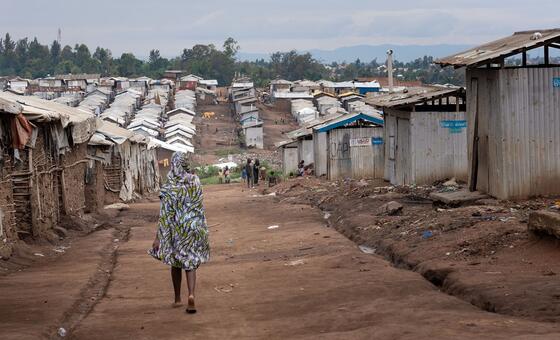
Qinilo.com – The effort to contain Ebola in the Democratic Republic of the Congo has suffered a serious setback after a transit centre serving patients in Ituri province was destroyed by fire. The facility operated in Kigonze camp, a site that has now been abandoned after thousands of residents fled escalating insecurity.
For health teams, the loss is significant because transit centres provide an essential link between suspected Ebola cases, testing, referral and treatment. Their destruction reduces the ability to isolate and care for people quickly, at a time when violence is already limiting access to affected communities.
“It’s been a huge struggle to create Ebola transit centres [and] Ebola treatment centres; it’s required money, bringing in staff and it’s been a struggle all across the east,” said Julien Harneis, the UN’s senior Ebola response official in the DRC. “So, when we lose a centre, that means we lose capacity, we lose investment and we have to start again. And above all, it means that people do not get access to the care that they really need.”
Camp population flees amid insecurity
Kigonze had sheltered roughly 19,000 people displaced by violence in the country’s resource-rich eastern region, near the Rwandan border. In recent days, large numbers left the camp after soldiers were said to have entered it in search of weapons and individuals suspected of links to non-State armed groups. Gunfire was also heard in the area.
The transit-centre blaze on Tuesday evening was described by Mr. Harneis as deeply disappointing. He said staff at the facility had delivered vital, high-quality care, while the United Nations works with authorities to help protect health facilities from further harm.
Health infrastructure is especially important in an Ebola outbreak because delayed diagnosis, interrupted referrals and limited isolation capacity can make it harder to break chains of transmission. The destruction of a centre also means replacing equipment, restoring staffing and rebuilding trust among communities already uprooted by conflict.
Conflict constrains humanitarian and health work
Elsewhere in Ituri, more than 3,000 people fled the Rhoe displacement camp in Djugu territory after clashes intensified on 27 September. At least four people were killed and seven injured, while homes in Blukwa were set on fire. Women and children make up most of the people forced from their homes.
Fighting has heavily affected access to the health zones of Fataki, Drodro and Lita. It has delayed the movement of laboratory samples from Fataki to Bunia and interrupted transfers of confirmed Ebola patients to treatment facilities. Several aid groups have paused activities in areas affected by insecurity.
The emergency extends beyond Ituri. In neighbouring North Kivu, two people involved in the Ebola response were killed in Lubero on 27 and 28 September. Conflict in Masisi has displaced more than 24,000 people since the middle of September.
Violence in South Kivu and Tanganyika has also driven thousands from their homes, increasing humanitarian needs across eastern and central parts of the country. Humanitarian agencies and their partners are monitoring developments while urging all sides to protect civilians, secure displacement camps and allow relief workers to reach people in need.
An Outbreak Across Seven Provinces
The current Ebola public health emergency was declared in mid-May and has spread to seven provinces: Bas-Uele, Haut-Uele, Ituri, North Kivu, South Kivu, South Ubangi and Tshopo. It is the DRC’s 17th Ebola outbreak.
More than 8,000 infections have been confirmed, including 4,000 deaths. Ituri remains the centre of the outbreak, with the majority of cases concentrated in and around Bunia and Mongbwalu.
Response teams face a dual task: expanding operations where infections remain intense while moving rapidly into emerging hotspots before the virus becomes established. This work includes patient care, surveillance, community engagement, safe burial practices and support for local health authorities.
“Where transmission remains intense, we need to increase capacity to halt the pace of infections. And in emerging hotspots, we need to intervene quickly to stop the virus from taking hold,” the World Health Organization said.
Mongala illustrates the challenge of reaching care
In Ituri’s Mongala health region, 346 confirmed Ebola cases and 149 deaths have been recorded since the first infection was identified on 18 May. The region lies 45 kilometres from Bunia, the provincial capital, but travel can take almost two hours by road.
Mongala does not have its own treatment centre. Patients must be referred either to Nizi, 27 kilometres away, or to Bunia, depending on available beds and the patient’s preference. Insecurity and disrupted transport make those journeys even more difficult.
Safe and dignified burial teams remain a central part of the effort to prevent further infections while respecting affected families. The number of mobile burial teams in Ituri has grown from 53 teams, each with 12 members, to 114 teams deployed across the province.
The fire at Kigonze adds another obstacle to an already strained response. Restoring access to care, protecting medical workers and ensuring safe routes for patients, samples and supplies will be critical as Ebola teams seek to contain the outbreak amid continuing displacement and conflict.
Related Reading
Frequently Asked Questions
What is Ebola response faces setback as transit?
Ebola response faces setback as transit is the main topic of this guide. The article explains the context, practical details, and next steps readers should understand.
Why does Ebola response faces setback as transit matter?
Ebola response faces setback as transit matters because readers are looking for a useful answer, not just a short summary. Good content should match search intent and help them decide what to do next.