
From NASA to the classroom: The engineer bringing AI to those left behind
From NASA to the classroom: The engineer bringing AI to those left behind
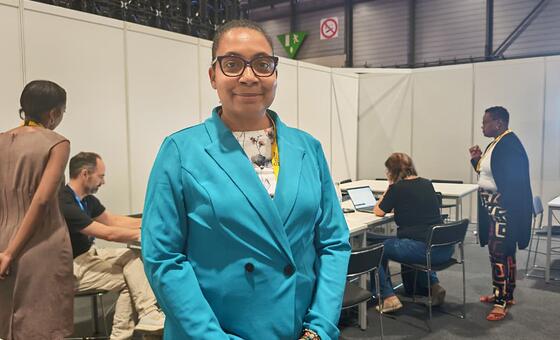
Qinilo.com – Nia Jetter, an engineer with two decades of experience in spacecraft and robotics, now focuses on ensuring the AI advancements of today do not exclude anyone. Her mission centers on expanding access to technology and education for communities traditionally overlooked by the tech sector.
Early Encounters with Innovation
Growing up in New Jersey, Jetter saved her grandfather’s quarters—not for treats, but to purchase batteries and light bulbs. These small items became the foundation for her early experiments with circuits, often repurposed from household objects around her.
Her parents played pivotal roles in shaping her curiosity. Her father provided access to materials through the library, while her mother, a teacher in early childhood and special education, taught her how to simplify intricate concepts for others to grasp.
A Career Shaped by Technology
Over time, her passion evolved into a professional trajectory that included roles at NASA, Boeing, and Raytheon. She later joined Amazon, where she held the position of senior principal technologist in robotics AI—a title reserved for a select group of engineers globally.
Jetter pursued studies in mathematics and computer science at MIT, specializing in planetary science. She later earned a master’s in aeronautics and astronautics from Stanford, followed by 20 years of developing autonomous algorithms for space systems and robotic applications.
Reimagining AI’s Impact
Despite her success, Jetter felt a growing concern about AI’s societal role. “This moment in time is crucial,” she said, emphasizing how AI’s influence on society depends on the diversity of voices guiding its development. “If we lack the right perspectives, the outcomes won’t serve our global community well.”
Her conviction led to a shift in focus. Instead of solely advancing AI, she aimed to ensure its benefits reached all corners of the world. This vision gave rise to thinqueBytes, a non-profit initiative that began as a personal project over five years before joining the Distinguished Minds Institute.
Breaking Down Barriers
thinqueBytes operates by transforming complex topics like AI, robotics, and aerospace into digestible video segments. Each “byte” answers fundamental questions: What is AI? Will it replace human jobs? How can it protect or harm? For Jetter, accessibility to these technologies is a matter of equity.
She stressed that understanding emerging innovations “should not be a privilege but a right.” This belief stems from her own experiences in engineering programs, where she noticed a gender imbalance. “Bias often resists change,” she observed, “and sometimes that change is simply brilliant minds who deserve a seat at the table.”
Advocating for Global AI Governance
In early July, Jetter’s work intersected with the United Nations’ first Global Dialogue on AI Governance in Geneva. The event brought together every country to discuss AI’s future. UN Secretary-General António Guterres highlighted AI’s potential to “compress decades of progress into years” and act as “the great equaliser of the twenty-first century.”
Yet he cautioned that the choice lies between “governing by design or drifting by default.” He noted that 2.2 billion people, or one in four worldwide, remain disconnected from digital systems. ITU Secretary-General Doreen Bogdan-Martin reinforced this, stressing that AI’s success depends on combining technological growth with international collaboration.
Building Futures, One Byte at a Time
Jetter’s efforts have already impacted thousands. Her organization has trained over 1,000 young people across four continents, fostering skills in AI and STEM. As she spoke at the AI for Good Global Summit, the conversation turned to practical applications—like AI aiding cancer detection, improving remote education, and cultivating critical thinking in a machine-centric era.
While she could return to her former career at any moment, Jetter remains committed to her new path. “AI is like a hammer,” she said. “In the right hands, it builds. In the wrong, it destroys.” Her goal is clear: to ensure the tools of the future are built with fairness in mind.