
Gender equality woefully off track, new UN report reveals
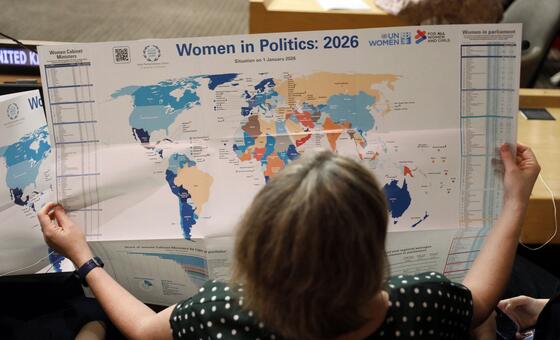
Global Gender Equality Targets Drift Further From Reach
Qinilo.com – Progress toward equal rights and opportunities for women and girls is moving far too slowly to meet the world’s 2030 development commitments. A new United Nations assessment warns that, if present trends continue, full gender equality remains 171 years away.
The finding comes as many of the institutions and programmes designed to close gender gaps are facing weakened authority and shrinking budgets. The Gender Snapshot 2026 paints a picture of stalled momentum across politics, law, economic life and personal safety, with none of the targets under Sustainable Development Goal 5 currently advancing fast enough to be achieved by 2030.
SDG 5 includes commitments to eliminate discrimination and violence, end practices such as child marriage and female genital mutilation, expand women’s role in public leadership, and protect economic and property rights. The report’s central message is that these goals are interconnected: unequal legal status, limited political voice, lack of financial resources and exposure to violence can reinforce one another throughout a woman’s life.
Political power remains heavily male-dominated
Women still encounter major obstacles before they can participate fully in public life. Six out of every seven countries are led by men, highlighting how concentrated political authority remains at the highest level.
The financial burden of campaigning is one barrier. In some settings, the expense of seeking office can surpass 100 times average income per person, placing candidacy beyond the reach of many potential women leaders. Safety is another concern. As many as eight in 10 women contesting elections in certain countries experience violence connected to their public role.
Representation alone does not guarantee equal influence. Women who do enter government are often assigned portfolios with less control over security or economic decisions. Men hold nearly nine in 10 defence minister positions and more than eight in 10 finance minister roles worldwide.
The same imbalance is visible outside government. Women account for just 6 per cent of chief executive officers globally and head fewer than one-fifth of the world’s highest courts. That means many decisions affecting employment, business, law, public spending and economic policy are still made largely without equal female participation.
This is not simply a question of fairness in appointments. When half the population does not have a comparable voice in leadership and decision-making, democratic participation and the protection of human rights are weakened. Broad representation can help ensure that institutions reflect the experiences and needs of the communities they serve.
Violence and harmful practices continue at immense scale
The report also underlines the persistence of severe abuse and discrimination. Nearly one in five girls is married before reaching 18. Around 230 million women and girls around the world have survived female genital mutilation.
Violence by partners and sexual violence remain widespread. Nearly one-third of women globally have experienced intimate-partner or sexual violence during their lives. Over the past year alone, 316 million women endured physical or sexual violence from an intimate partner.
These figures represent more than a distant global statistic. Violence can restrict education, employment, health, mobility and participation in community life. It can also prevent women and girls from accessing services, building financial independence or exercising their rights without fear.
Legal equality remains incomplete
No country has yet delivered complete legal equality for women. Of 131 countries examined, 51 per cent still have major shortcomings in their laws.
Land rights are one particularly important area. Almost two-thirds of countries offer women little or no meaningful legal protection over land. This can limit ownership and secure tenure, particularly where land is central to income, housing or family security. Fewer than 30 per cent of the countries reviewed provide for joint land registration or guarantee women a role in land governance.
Legal rules matter because they determine whether rights can be claimed in practice. Gaps in laws governing ownership, inheritance, employment or family life can leave women exposed to unequal treatment even when broader commitments to equality exist on paper.
Funding reductions threaten already slow progress
Efforts to address these barriers are being constrained by cuts in development assistance. Funding for programmes focused on gender inequality has dropped to its lowest point since 2021, even as the deadline for the Sustainable Development Goals draws closer.
During the past two years, one-quarter of institutional mechanisms dedicated to gender equality have had their operating budgets reduced. One-third have also lost institutional influence or authority. Among UN entities, 42 per cent have identified a weakening of their gender equality work amid funding reductions.
The timing is especially consequential. Institutions that collect data, enforce protections, develop policy and support survivors often need stable resources over many years. Reduced financing can make it harder to maintain services, monitor progress or turn legal commitments into practical protections.
“What the Gender Snapshot 2026 shows is that this is not inevitable,” said Li Junhua, UN Under-Secretary-General for Economic and Social Affairs.
“It is the result of choices, made visible through data. Investing in gender equality, institutions, and the statistical systems that hold them to account is not a cost. It is the fastest route back to the 2030 Agenda’s promise of equal power for all.”
The assessment frames the gap as a result of policy and investment decisions, rather than an unavoidable outcome. Meeting the promise of the 2030 Agenda will require stronger protections, sustained funding, reliable data and a meaningful shift in who holds power. Without those changes, the distance between formal commitments and everyday equality will remain vast for generations.
Related Reading
Frequently Asked Questions
What is Gender equality woefully off track new UN?
Gender equality woefully off track new UN is the main topic of this guide. The article explains the context, practical details, and next steps readers should understand.
Why does Gender equality woefully off track new UN matter?
Gender equality woefully off track new UN matters because readers are looking for a useful answer, not just a short summary. Good content should match search intent and help them decide what to do next.