
International Criminal Court Prosecutor Karim Khan dismissed
ICC Assembly Votes to Remove Prosecutor Karim Khan Amid Misconduct Allegations
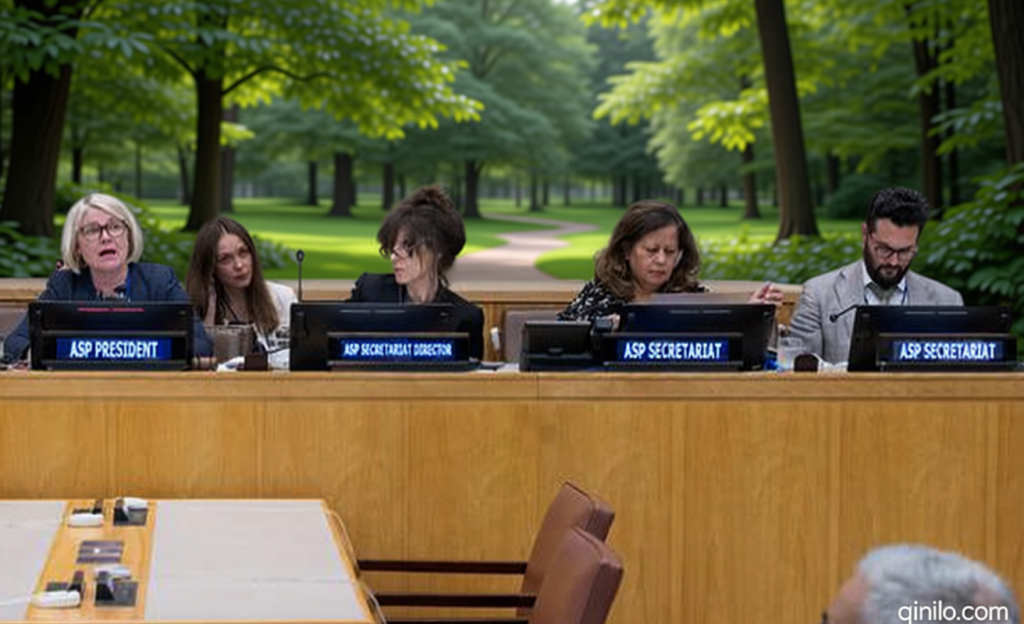
Qinilo.com – International Criminal Court Prosecutor Karim Khan has been officially dismissed from his position following a decisive vote by member states. The International Criminal Court’s governing body reached this conclusion after reviewing extensive evidence related to sexual misconduct allegations that had been widely publicized. The historic decision was announced during an emergency session held at United Nations Headquarters in New York on Friday, marking a significant moment in the institution’s history.
The Dismissal Vote
Member States approved the removal through a simple majority within the closed-door session of the 125-member Assembly of States Parties. Khan had originally been elected to a nine-year prosecutorial term in 2021, and his departure represents one of the most consequential personnel decisions in the court’s recent history. The Assembly president delivered the formal announcement, emphasizing the need to maintain dignity and privacy for all parties involved in the proceedings.
“The Assembly has decided by a majority of 82 States Parties that…prosecutor Karim Kahn committed serious conduct and a serious breach of duty…and to remove [him] from office,” the Assembly president announced, calling for the dignity and privacy of all those involved.
Timeline of Events
The path to dismissal unfolded over several months of careful deliberation. In November 2024, the ICC formally requested an external investigation through the UN Office of Internal Oversight Services (OIOS). By May 2025, Khan had taken a leave of absence while the investigation proceeded, with deputy prosecutors assuming leadership of the Office of the Prosecutor during this transitional period.
March 2026 brought conclusions from a panel of judicial experts to the Assembly. Following this, an assessment of the ICC Bureau in June drew upon the OIOS report, supporting evidence, expert recommendations, and written submissions from various stakeholders. At its June 8 meeting, the Bureau acted by qualified majority to refer the disciplinary proceedings to the full Assembly. The body simultaneously suspended Khan from duty immediately and called for a special session to address the matter comprehensively.
ICC Background and Operations
Established in 2002 through the landmark Rome Statute, the International Criminal Court has become a cornerstone for adjudicating the world’s most serious crimes. The court currently maintains seven convictions and has 34 cases on its docket, demonstrating its ongoing relevance in international justice. The institution cannot execute arrests independently and relies on State support, particularly from its 125 member nations. Not every country has joined the court. Both Israel and the United States signed the Rome Statute in 2000 but have yet to ratify it.
The International Criminal Court has issued several high-profile arrest warrants recently, including one for Russian President Vladimir Putin in 2023 and another for Israeli Prime Minister Benjamin Netanyahu in 2024. These warrants underscore the court’s growing influence in holding powerful figures accountable for international crimes.
International Relations and Sanctions
Relations between the ICC and major powers have faced challenges in recent years. In 2025, Washington placed sanctions on nine ICC personnel—including judges, the prosecutor, and deputy prosecutors—related to investigations into alleged war crimes against Israel and the United States. These sanctions highlighted tensions between the court and certain member states regarding its jurisdiction and investigative priorities.
The court operates under a cooperation agreement with the UN. It functions as a court of last resort rather than replacing national judicial systems. States retain primary responsibility for investigating, trying, and punishing perpetrators of the gravest offenses. Created with “millions of children, women and men” in mind who “have been victims of unimaginable atrocities that deeply shock the conscience of humanity,” the ICC stands as the world’s first permanent, treaty-based international criminal court. Its mandate covers crimes against humanity, war crimes, genocide, and the crime of aggression.
The Assembly will now move to elect a new prosecutor to fill the vacant position, ensuring continuity in the International Criminal Court’s mission to deliver justice for victims worldwide.