
Record carbon dioxide levels will impact us for centuries, says UN weather agency
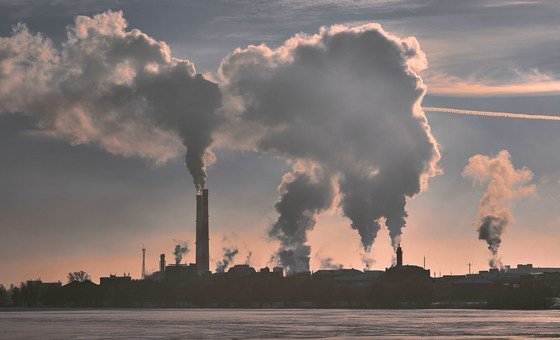
Record Carbon Dioxide Levels Will Affect Climate for Centuries
Qinilo.com – Record carbon dioxide levels will continue to shape the climate for decades and centuries, according to the World Meteorological Organization (WMO). Atmospheric concentrations of carbon dioxide, methane and nitrous oxide all reached new highs in 2025, increasing the amount of heat trapped in the atmosphere and raising the risk of more severe weather.
The global average concentration of carbon dioxide reached 426.8 parts per million in 2025, equal to 153 per cent of the estimated pre-industrial level in 1750. Carbon dioxide is the most important long-lived greenhouse gas linked to human activity and remains a major driver of global warming.
“Every additional part per million matters because it traps additional heat,” WMO Deputy Secretary-General Ko Barrett said. “In effect, we are supercharging the ocean and the atmosphere.”
Greenhouse gases continue their upward trend
Record carbon dioxide levels will not be the only concern for climate scientists. Methane and nitrous oxide, the second- and third-most significant long-lived greenhouse gases associated with human activity, also set new atmospheric concentration records in 2025.
These gases provide additional energy for extreme weather, including heat waves, tropical cyclones and intense rainstorms. The WMO said the past 11 years have been the warmest ever observed, and the longer-term warming trend is expected to continue.
“Greenhouse gases are trapping an unprecedented amount of heat in the atmosphere, providing energy for more extreme weather and associated risks to our economies and societies,” Ms. Barrett said.
Carbon dioxide is rising faster than in the past
Measurements show how quickly atmospheric carbon dioxide has increased. When the WMO’s Greenhouse Gas Bulletin was first published in 2004, the annual average concentration was 377.5 ppm. By 2025, it had risen to 426.8 ppm.
In the 1960s, carbon dioxide concentrations increased by an average of 0.8 ppm per year. Between 2011 and 2020, the average annual rise reached 2.4 ppm, three times the earlier rate. The increase from 2024 to 2025 was 2.8 ppm, following an especially sharp 3.5 ppm rise between 2023 and 2024.
WMO senior scientific officer Oksana Tarasova linked the earlier exceptional increase to a strong El Niño event, drought, dry vegetation and more frequent wildfires, all of which weakened natural systems that normally absorb carbon.
Why record concentrations matter
Record carbon dioxide levels will remain important long after the emissions that produced them. Carbon dioxide has a very long lifetime in the atmosphere, meaning its warming influence extends far beyond a single season or year.
The WMO Bulletin measures greenhouse gases that have accumulated in the atmosphere rather than annual emissions alone. Oceans and land ecosystems absorb a significant share of human-produced carbon dioxide, but roughly half of annual CO2 emissions remain in the atmosphere.
Warming, drought, ecosystem stress and wildfire activity can reduce the ability of forests and other land systems to absorb carbon. Ocean temperature and chemistry can also affect how much carbon the seas can take in. From 1990 to 2025, the warming effect of long-lived greenhouse gases increased by 56 per cent, with carbon dioxide responsible for about 81 per cent of that increase in radiative forcing.
FAQ: What do these findings mean?
What do record carbon dioxide levels mean for my area? The effects vary by location, but additional heat in the climate system can intensify risks such as heat waves, heavy rainfall and tropical cyclones. Local impacts depend on geography, infrastructure and preparedness.
Why do concentrations rise even when nature absorbs carbon? Land and oceans absorb part of human-produced CO2, but not all of it. The remaining share builds up in the atmosphere, while drought, fires and ecosystem stress can weaken natural carbon sinks.
Could El Niño affect carbon dioxide levels again? The WMO said a powerful El Niño expected to develop could reduce the capacity of land ecosystems to absorb carbon in 2026, alongside continued emissions from fossil fuel burning.