
Shock and devastation remain, a day after Himalayan flood disaster
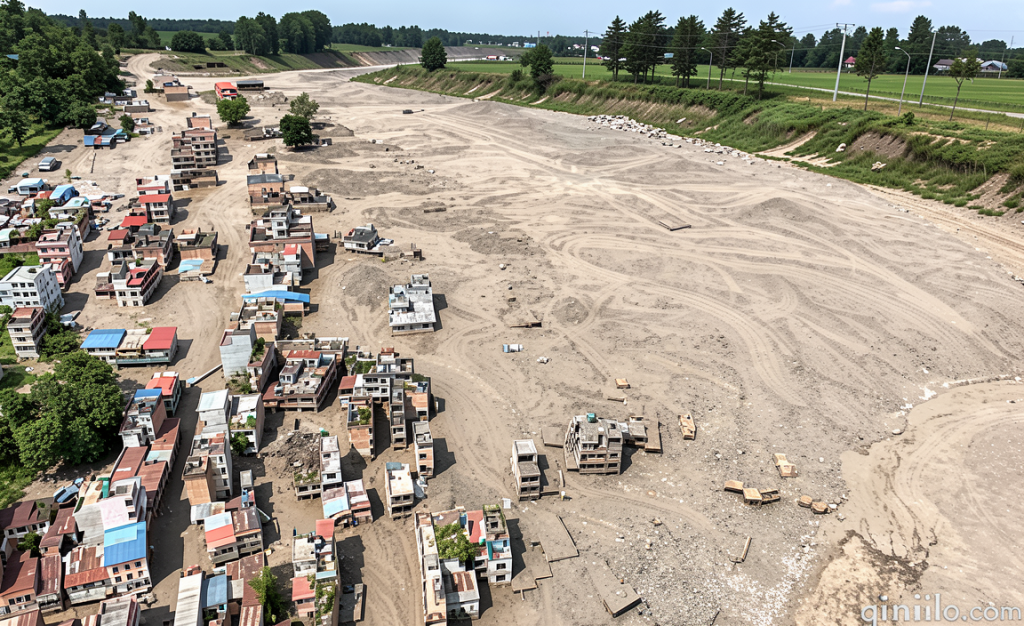
Himalayan Glacier Collapse Triggers Catastrophic Flash Floods Across Nepal and China
Qinilo.com – A collapsed glacier perched high in the steep valleys of the Himalayas has been identified as the likely trigger behind a sudden wall of floodwater and mud that tore through towns and villages on Wednesday, leaving hundreds dead or missing across two countries and severing entire communities from the outside world. The scale of destruction — roads, bridges, hydropower stations, water mains, and telecommunications lines swept away or buried under debris — has rendered large stretches of northern Nepal and western China effectively unreachable in the hours and days since the event struck.
Nepal: Three Districts Bear the Brunt of the Disaster
The districts of Rasuwa, Nuwakot, and Dhading in Nepal’s northern highlands have absorbed the worst of the flooding. Rasuwa, situated roughly 80 kilometres north of Kathmandu, was hit with particular ferocity. The towns of Timure, Rasuwagadhi, and Syabrubesi — the latter a well-known gateway for trekkers, mountaineers, and pilgrims heading toward the Langtang valley — were among the hardest struck settlements. Families across the affected zones are coping with loss, forced displacement, and the collapse of essential services, from electricity to clean water.
UNICEF confirmed that at least 17,000 children have been impacted by the flash floods that ripped through the three districts. Alice Akunga, the UNICEF Representative to Nepal, described scenes of unimaginable speed and violence:
“Children across Rasuwa and Dhading saw their lives being literally washed away in front of their eyes in a very short span of time, with homes, classrooms, and medical facilities damaged.”
She added that survivors now face compounded dangers — disease outbreaks in displaced camps, malnutrition, and heightened risks of violence and exploitation — while the death toll continues to climb.
“Too many lost their lives and loved ones. With the death toll still rising, we know this tragedy is far from over. Children who have survived the floods now face heightened risks of disease, malnutrition, violence and exploitation.”
UNICEF stated it is scaling up on-the-ground support but called for additional resources to reach every affected child. Separately, the UN office in Nepal confirmed that agencies are already deployed in the affected zones carrying food, medical supplies, and relief materials in coordination with the government-led response.
China: Tibet Region Reports Heavy Casualties
On the Chinese side of the range, authorities placed the number of missing persons at approximately 560. The UN country office reported on Wednesday that the Tibet autonomous region sustained significant damage, with substantial casualties and widespread destruction of infrastructure in the flood-affected zones.
International Emergency Response Mobilised
The United Nations relief chief, Tom Fletcher, announced on X that an initial $2 million had been released from the UN Global Emergency Fund (CERF) “to save lives with emergency medical care, shelter, water.” Secretary-General António Guterres pledged full institutional backing for national rescue operations:
“The United Nations is mobilising supplies and humanitarian teams and we pledge to support national efforts to deliver emergency aid and support.”
The World Health Organization dispatched an interagency emergency health kit containing medicines and consumables sufficient to deliver basic health services to up to 10,000 people. Six multipurpose tents accompanied the shipment to sustain temporary health-service delivery in communities where permanent facilities have been destroyed. WHO stated the supplies are meant to support frontline health workers continuing critical care and immediate health response, and affirmed its commitment to working alongside national health authorities as the situation evolves.
On Thursday, the UN World Food Programme and UNICEF were scheduled to begin deploying staff and trucks loaded with relief supplies into the hardest-hit areas. Parallel efforts focused on rapidly gauging the full extent of the disaster. Satellite imagery and spatial analysis of the flooded zones were supplied through UN-SPIDER — the UN platform for Space-based Information for Disaster Management and Emergency Response, managed by the UN Office for Outer Space Affairs (UNOOSA). The initiative links disaster-management specialists with space agencies to strengthen risk reduction, early-warning, and emergency-response capabilities.
Why the Himalayas Are Now a Flash-Flood Flashpoint
The region struck by this disaster sits in one of the most seismically active and glaciologically unstable corridors on Earth. A 7.8-magnitude earthquake had previously shaken the same area, weakening slopes and destabilising ice bodies that had already been stressed by decades of warming. When a glacier or ice dam fails in a steep-sided valley, the resulting outburst flood can reach downstream settlements within minutes, carrying boulders, timber, and sediment with enough force to obliterate bridges and carry away entire structures. The combination of seismic activity, glacial retreat, and monsoon-season rainfall makes the upper reaches of the Kali Gandaki and Trishuli river basins — which drain the Rasuwa and Nuwakot districts — perennially vulnerable to exactly the kind of compound event witnessed this week.
For the communities of Syabrubesi, Timure, and the surrounding villages, the immediate challenge is not only rescue and shelter but the restoration of lifeline infrastructure: hydropower generation that feeds northern Nepal’s grid, water treatment plants, and the telecommunications links that coordinate search-and-rescue operations. Until those systems are rebuilt, the isolation that slowed the first wave of aid will continue to compound the humanitarian crisis, making every additional hour of international deployment critical.
Related Reading
Frequently Asked Questions
What is Shock and devastation remain a day after?
Shock and devastation remain a day after is the main topic of this guide. The article explains the context, practical details, and next steps readers should understand.
Why does Shock and devastation remain a day after matter?
Shock and devastation remain a day after matters because readers are looking for a useful answer, not just a short summary. Good content should match search intent and help them decide what to do next.