
UN chief condemns ‘indifference’ as Ebola cases mount in DR Congo
Ebola’s Grip Tightens Across Congo as Funding Gap Threatens Containment
Qinilo.com – The Democratic Republic of the Congo is battling one of the deadliest Ebola episodes in recent memory, and the international community’s financial commitment has not kept pace with the epidemic’s momentum. Since the Bundibugyo strain first surfaced in mid-May, more than 5,600 confirmed cases and 2,700 deaths have been recorded across six provinces, with roughly 500 new infections surfacing every single week. The World Health Organization acknowledges that its interventions have slowed the pace of transmission but concedes the curve has not yet been turned downward.
A Funding Cliff Looms
Speaking to reporters at UN Headquarters on Thursday, the Secretary-General framed the situation in stark terms: the humanitarian appeal stands funded at barely 48 per cent, and existing resources are projected to exhaust within weeks rather than months. He called for an additional $1.1 billion to sustain operations through the most dangerous phase of the outbreak.
“The challenge is immense,” he said, noting 500 new cases are being reported every week while the humanitarian response remains only 48 per cent funded.
He drew a deliberate parallel between the biological threat and the political failure to respond:
“We know how to contain Ebola, how to interrupt transmission and how to save lives, but we must also overcome another virus: the virus of indifference.”
“Without additional funding, vital operations will run out of money at the very moment they need to ramp up,” he warned.
The warning carries particular weight because the epidemic is spreading faster than containment teams can deploy. Every week of underfunding translates into more unmonitored contacts, more unburied bodies, and more communities left without basic infection-control supplies.
Conflict as a Force Multiplier
The outbreak is unfolding in a region scarred by decades of armed conflict. In Ituri province alone — the epicentre of the current wave — approximately one million people have been displaced from their homes. Across the wider region, more than 12 million individuals require humanitarian assistance and protection. Health infrastructure, already fragile, has been further degraded by years of neglect and periodic destruction.
Insecurity compounds the medical emergency. Over 40 healthcare workers have been killed in the line of duty, and treatment centres as well as ambulances carrying patients have come under attack. Response teams must therefore navigate both a viral threat and an armed one, while certain communities remain physically inaccessible due to ongoing hostilities.
Community Voices Enter the Fight
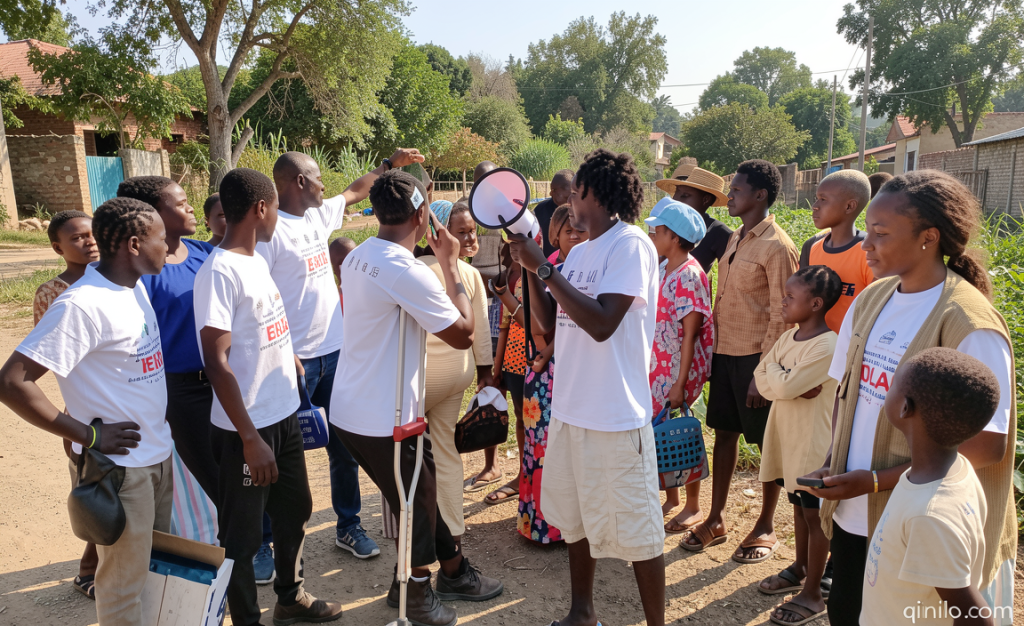
Recognizing that biomedical interventions alone cannot halt transmission, local cultural figures have stepped into the public-health arena. Lokua Kanza, a celebrated Congolese singer-songwriter who serves as a national UNICEF ambassador, posted a video urging residents to adopt preventive measures such as handwashing, avoiding contact with the sick, and reporting suspected cases promptly. The popular duo Wedy and singer Drigo Eboma each released music calling on listeners to break the chain of spread. Fifteen social-media influencers, each commanding audiences of over 100,000 followers, have used their platforms to reach younger demographics with prevention messaging.
Religious authorities are playing a parallel role. More than 50 faith leaders in Ituri province received briefings on how to communicate prevention guidance and counter rumours circulating in their congregations. Separately, around 30 former combatants underwent specialized training from UN partners and local organizations on recognizing suspect cases and promoting hygiene practices before being dispatched to heavily trafficked areas north of Ituri to relay that information to communities with limited contact to formal health services.
Burundi Braces for Cross-Border Spread
Neighbouring Burundi has not yet logged a confirmed case, yet its geographic proximity to affected Congolese provinces and the continued movement of people across the border keep it at elevated risk. UN humanitarian agencies and partners are supporting government-led preparedness measures already under way, including strengthened surveillance at entry points through temperature screening and thermal-scanner deployment, alongside training for nurses, community health workers, and journalists who will serve as frontline communicators.
Uganda Declares Its Outbreak Over
On the same day the Secretary-General sounded the alarm for Congo, UN health officials announced that the Bundibugyo Ebola outbreak in neighbouring Uganda has officially ended. The declaration follows 42 consecutive days without a new confirmed case after the country’s final patient was discharged from care on 16 July. The 42-day threshold — equivalent to twice the upper limit of Ebola’s incubation period — is the internationally recognized criterion for closing an outbreak.
During its episode, Uganda recorded 20 confirmed cases, including two fatalities. More than 800 close contacts were identified and monitored to prevent onward transmission. In the final weeks of the response, UN agencies and partners expanded operations with 35 additional mobile safe-and-dignified burial teams and 286 community-based teams deployed to high-risk zones, supported by more than 2,500 volunteers and civil-protection personnel.
The contrast between Uganda’s closure and Congo’s accelerating curve underscores a central lesson of the current crisis: Ebola remains a solvable problem when resources, access, and political will align. The science of containment is settled; what remains unsettled is the collective decision to fund it.
Related Reading
Frequently Asked Questions
What is UN chief condemns indifference as Ebola?
UN chief condemns indifference as Ebola is the main topic of this guide. The article explains the context, practical details, and next steps readers should understand.
Why does UN chief condemns indifference as Ebola matter?
UN chief condemns indifference as Ebola matters because readers are looking for a useful answer, not just a short summary. Good content should match search intent and help them decide what to do next.