
Who gets to shape AI? UN debate centres on power, trust and inclusion
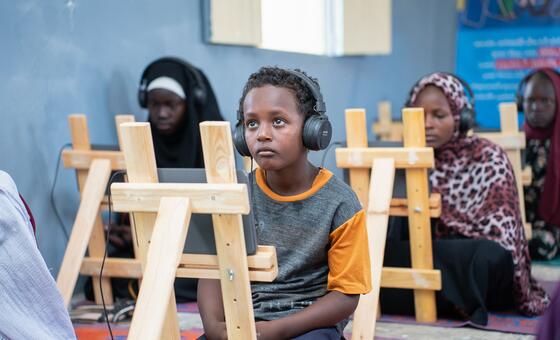
AI governance becomes a test of global inclusion
Qinilo.com – Artificial intelligence has rapidly moved from a specialist technology issue to a central question of international policy: who will decide how it develops, who will set the safeguards, and who will share in its gains? During the United Nations High-Level Week in New York, leaders broadly recognized AI’s potential while revealing major differences over power, regulation and fair participation.
There was wide agreement that AI could transform medicine, research, public services and economic opportunity. Yet the same discussions underscored fears that weak oversight could magnify inequality, disrupt employment and leave many countries dependent on technologies designed elsewhere.
Secretary-General António Guterres described AI as a profound force for change, capable of advancing healthcare, speeding scientific progress, widening opportunity and improving people’s lives. But he stressed that technology alone is not the central threat. The greater concern is a system in which powerful capabilities operate without clear responsibility, transparent decisions or effective oversight.
“AI is indeed a game changer — with enormous promise to advance medicine, accelerate scientific discovery, expand opportunity, and improve lives.”
Innovation and safeguards must advance together
One of the strongest messages from the General Debate was that governments do not want to halt innovation. Instead, they are trying to establish rules that permit useful development while reducing the chance of serious harm from misuse, negligence or increasingly autonomous systems.
General Assembly President Khalilur Rahman argued that AI should be treated as an accelerator of human advancement, rather than something to be shut down out of fear. At the same time, he warned that the technology could cost jobs and widen existing digital gaps if its deployment is not carefully managed. He called for protections informed by evidence and science.
“AI can be a powerful accelerator of human progress; therefore, we must not close the door to innovation.”
Switzerland made a similar case, emphasizing that regulation must build public confidence without suffocating the benefits AI can offer. Japan highlighted the need for international cooperation on the safety of advanced, frontier systems. Saudi Arabia focused on ethics and responsible deployment, while Singapore supported testing arrangements, stronger trust measures and cross-border reporting of AI-related incidents.
The concern is not limited to deliberate abuse. Nations are also examining what happens when systems become more independent, opaque or difficult to challenge. That is why transparency, human responsibility and mechanisms for responding to failures have become recurring themes in the global debate.
“The danger is not technology. The danger is technology without accountability: Capability without oversight. Decision-making without transparency.”
Daily benefits, workplace disruption and public responsibility
For many governments, the AI debate is ultimately about practical effects on ordinary life. The United Kingdom pointed to possible gains such as earlier cancer diagnosis, improved public services and economic renewal. India presented AI as a development tool with the capacity to support people, prosperity and solutions at population scale.
“We view AI as a transformational driver, for human empowerment, economic prosperity and population-scale problem solving.”
These opportunities come with disruption. The United Kingdom also warned that AI may reshape how people live and work while increasing certain risks. Its position was that core decisions about the technology should remain in the hands of elected governments accountable to the public.
This raises an important policy question for communities everywhere: whether AI will be used to improve access to essential services and knowledge, or whether its advantages will be concentrated among those with the most capital, data and computing capacity. The answer will depend not only on technical design, but also on education, infrastructure, labour protections and public institutions.
More than access: a role in writing the rules
Developing countries and emerging technology economies are pressing for a role that goes beyond using tools created by others. Their central demand is participation in shaping the standards, institutions and development choices that will influence AI for decades.
South Africa argued that Africa must help write the rules, connecting AI governance to research investment, young people and economic transformation. Switzerland likewise stressed that genuine inclusion requires a voice in governance, rather than simply access to finished products.
India emphasized national sovereignty in developing domestic AI ecosystems, models and deployment approaches that align with each country’s needs and priorities.
“We believe in the right of each nation, to shape its eco-system, with the development of its own models, and deployment strategies, consistent with its national goals and priorities.”
China called for technological progress to be distributed more widely instead of being concentrated within a small group of countries or societies. It urged a people-centred approach that narrows the digital divide and supports development whose benefits are broadly shared.
“We should take a people centered approach and develop AI for the positive and for good, narrow the digital divide and promote development that is universally beneficial.”
Singapore proposed looking ahead to a possible UN framework convention and a dedicated international institution for AI. Its underlying message was that global arrangements should include all countries, rather than being designed solely by the leading technology powers.
Data and computing power remain central concerns
Debates over AI are also debates over resources. Advanced systems depend on massive volumes of data, specialized infrastructure, technical skills and access to computing power. Nations without these foundations may struggle to develop their own capabilities or meaningfully influence standards established elsewhere.
Brazil warned about the influence held by large technology companies, while France raised concerns about dependence on dominant States or a limited number of private firms. Developing countries have called for greater access to computing resources, expertise and infrastructure so they can take a fuller part in digital development.
The United Nations has already begun building forums for this work, including an Independent International Scientific Panel on AI and a Global Dialogue on AI Governance. These initiatives reflect a growing recognition that AI cannot be managed effectively through isolated national decisions alone.
The central challenge is therefore not simply whether the world can develop more capable AI. It is whether countries can build a system in which innovation remains possible, responsibility is enforceable and every society has a meaningful opportunity to shape the technology that may increasingly shape its future.
Related Reading
Frequently Asked Questions
What is Who gets to shape AI UN debate?
Who gets to shape AI UN debate is the main topic of this guide. The article explains the context, practical details, and next steps readers should understand.
Why does Who gets to shape AI UN debate matter?
Who gets to shape AI UN debate matters because readers are looking for a useful answer, not just a short summary. Good content should match search intent and help them decide what to do next.