
‘I am somebody’: Street-smart youth take their declaration to the UN
A Declaration Forged on the Pitch, Delivered at the UN
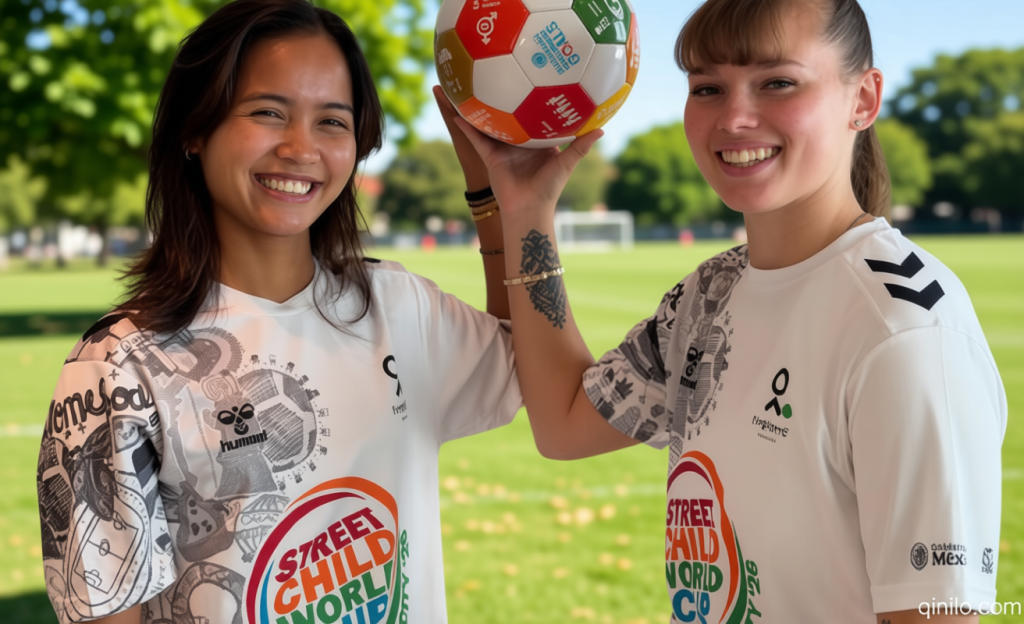
Qinilo.com – Far from the polished halls of international diplomacy, a powerful document took shape in Oaxtepec, Mexico. There, twenty-eight teams gathered for this year’s Street Child World Cup, drafting and endorsing a text that would soon travel to New York. The result was the United Declaration of the Street Child World Cup 2026, a manifesto centered on football and the empowering slogan “I Am Somebody.”
From Local Struggles to Global Stage
Samantha Richards and Angela Hifume, both graduates of Street Child United, carried this declaration into the Hall of Flags at United Nations Headquarters. They brought with them the hopes of hundreds of street-connected youth who rarely felt heard.
Richards’ path to leadership began with personal challenges. Home life presented obstacles that affected her wellbeing and occasionally placed her in precarious circumstances.
“Growing up, I had some difficulties at home,” she said. “But football gave me friendships, leadership skills, and an outlet to speak up.”
Through her involvement with SCU, Richards connected with fellow athletes pursuing education. She followed their example and became the first person in her family to complete a college degree.
“Sport is a catalyst for mental health advocacy, and it’s ok to speak up when you’re struggling, just like I did,” she said.
A Journey Through Foster Care to Oxford
Hifume’s story unfolded across continents, beginning in the Philippine foster care system. The experience left her feeling isolated and disconnected.
“In foster care, it’s so easy to think that you’re nothing more than a foster kid,” she said.
SCU transformed her perspective. She found a team to guide, a platform to address audiences, and ultimately opportunities that carried her to the United States for studies and to Oxford University for a PhD. Football opened doors she never imagined.
“Football gave me the gift of curiosity about the rest of the world beyond the game,” she said.
Five Priorities for Change
The declaration distilled the voices of young athletes into five core demands: securing legal identity, ensuring access to education, protecting children from violence, advancing gender equality, and guaranteeing meaningful participation in decisions impacting their lives.
SCU operates within the UN’s Football for the Goals initiative, leveraging the sport to promote the Sustainable Development Goals. Bringing the declaration to New York—where the World Cup final was co-hosted—provided grassroots advocates with unprecedented visibility.
Richards had already addressed the General Assembly Hall on a panel before the Hall of Flags ceremony. For her, the sequence of events completed a meaningful circle.
“Standing in the Hall of Flags and the General Assembly wasn’t just about me,” she said. “It was about every young person who’s ever been made to feel invisible. Through football, I found my voice, and today we showed that our voices belong in these spaces.”
Beyond the Applause
Hifume viewed the declaration as a call for sustained commitment rather than temporary attention.
“This Declaration is about making sure every street-connected child knows they matter,” she said. “When we invest in children, they become leaders.”
Both leaders emphasize that the work continues once media coverage ends. They urge governments and international agencies to view the five demands as actionable priorities, not ceremonial gestures. The voices of street-connected children must remain central long after the tournament concludes.
As Richards summarized, the foundation of their message rests on a fundamental truth: “we are all somebody”.