
Gaza: Dialysis patients face grueling hospital journey by donkey cart
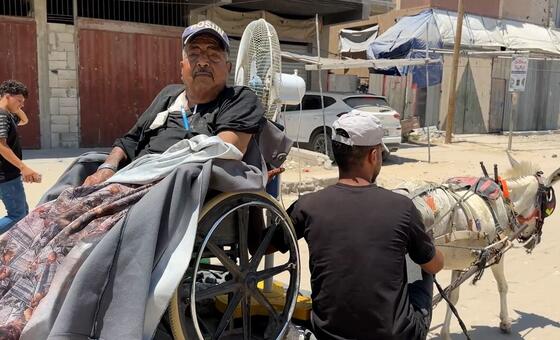
Enduring the Trek: Gaza’s Dialysis Patients Navigate Harsh Realities
Qinilo.com – Gaza – Within the battered Gaza Strip, hundreds of individuals battling kidney failure confront mounting barriers to essential medical care. The situation has grown particularly dire for those requiring regular dialysis, as damaged infrastructure and scarce resources strain the health system even following the October 2025 ceasefire agreement.
A Daily Pilgrimage Under the Sun
Fathi Hajji, an elderly resident of the Al-Mawasi area, undertakes a demanding three-times-weekly trek to Nasser Hospital in Khan Younis. His method of transport is as unique as it is challenging: a wheelchair secured to a cart pulled by a donkey. Alongside him travel an oxygen cylinder and a portable fan, necessities for his journey through the desert heat.
“Since January 2024 until now, I have been undergoing dialysis sessions three times a week,” he shared. “I suffer a lot because of transportation as I travel in a cart pulled by a donkey under the scorching sun, and thank God, what can we do? I have no other choice.”
The conflict that began in 2023 between Israel and Hamas has left deep scars on Gaza’s medical infrastructure. According to the World Health Organization, Israeli strikes and widespread facility damage, combined with restrictions on medical supply imports, continue to hinder healthcare delivery for chronic disease patients.
The Road to Recovery
Mr. Hajji’s grandson, Saif, accompanies him on this arduous route. The unpaved pathways force them to halt frequently. “There is great suffering along the way due to the heat of the sun and the rough roads,” Saif explained. “We have to stop every fifty metres to adjust the position of my grandfather’s wheelchair, and we arrive at the hospital exhausted and in immediate need of oxygen.”
Upon reaching the Nasser Medical Complex, patients queue patiently for their turn at the limited number of functioning dialysis machines. Medical personnel work tirelessly to manage growing patient numbers with constrained resources.
“We are under a lot of pressure on the dialysis machines, many of which are worn out,” said Hamza Abu Raya, a staff member at the centre. “We also suffer from a shortage of treatment supplies, including bicarbonate, in addition to the unavailability of the drug Eprex for a long time, which increases the suffering of patients.”
Once settled onto a bed, Mr. Hajji begins his treatment, which spans between three and five hours. A health worker closely monitors his condition throughout the session.
“It is very difficult, especially with the high temperatures, so I had to bring a fan with me, and I also need to fill the oxygen cylinder daily,” Mr. Hajji noted.
Compounding Challenges
UN Office for the Coordination of Humanitarian Affairs reports highlight additional complications beyond equipment failures. Shortages of fuel, spare parts, and medical supplies remain widespread. These shortages coincide with warnings about spreading infectious diseases and mounting pressure on already overwhelmed health facilities.
Despite these obstacles, health partners persist in delivering services to the fullest extent possible. After each session concludes, Mr. Hajji is carefully transferred back into his wheelchair.
He will then embark on the return journey via the same donkey-drawn cart, preparing for another cycle that repeats three times each week—a testament to both human resilience and the ongoing struggles faced by Gaza’s most vulnerable patients.