
Lebanon: Civilian risks grow as military activity continues, UN says
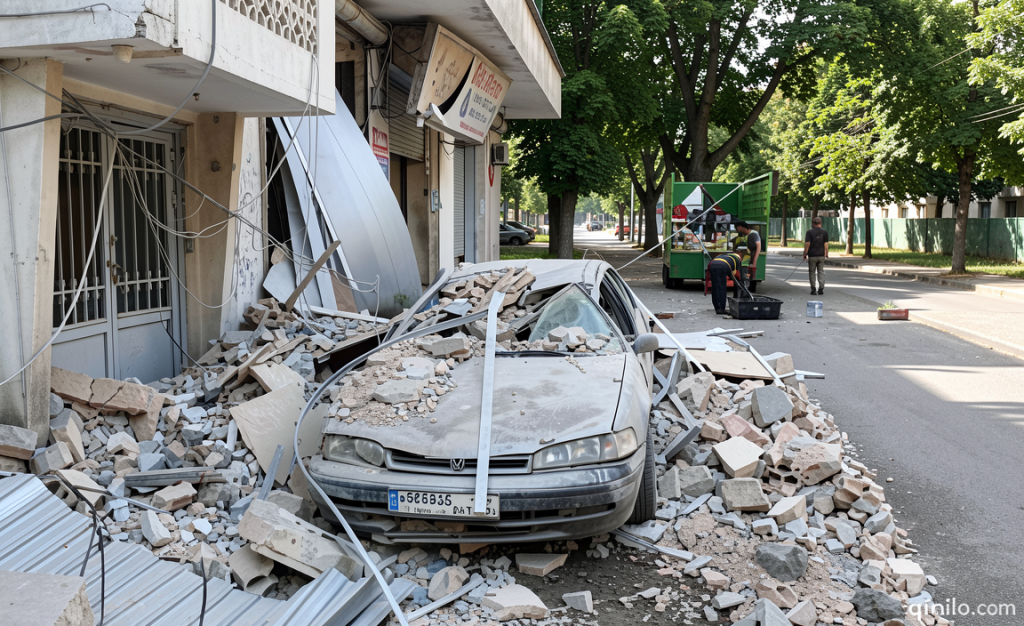
Civilians in South Lebanon Face Deepening Danger as Fighting Between Israel and Hezbollah Persists
Qinilo.com – Broken asphalt, severed utility lines, and the constant hum of military logistics are reshaping daily life for residents across southern Lebanon. The United Nations peacekeeping mission stationed in the country, UNIFIL, has warned that the cumulative toll of ongoing exchanges between Israeli forces and Hezbollah is pushing civilian communities toward a breaking point, even as the intensity of open combat has eased compared with earlier months of the conflict that ignited in March.
Drone Strikes and Retaliatory Bombing Reignite Tensions
On Wednesday and Thursday, Hezbollah launched drone attacks that prompted retaliatory Israeli airstrikes. Although those latest strikes fell outside the geographic zone where UNIFIL operates, the mission’s spokesperson, Kandice Ardiel, told UN News that the reverberations are being felt across the entire southern region and along the Blue Line — the demarcation boundary established after the 2006 war that separates Lebanese territory from Israeli-controlled areas.
Ardiel pressed all parties to honour Security Council resolution 1701, the landmark 2006 ceasefire framework designed to end hostilities between Israel and Hezbollah, and to channel disputes through the de-escalation mechanisms already built into that agreement.
“It’s in no one’s interest to continue on a military path. The only solution to this is political and diplomatic.”
Despite the relative lull in large-scale exchanges, UNIFIL has documented a noticeable uptick in military activity within its own operational area — logistical convoys, controlled demolitions, and projectile launches — all of which the mission says threaten to erode the fragile calm that had taken hold over recent weeks.
Widespread Destruction Traps Residents in Isolation
The physical footprint of the conflict is severe. Multiple villages and neighbourhoods in south Lebanon have sustained heavy damage to housing, road networks, and civilian infrastructure. For many residents, the practical consequence is isolation: travel between neighbouring settlements has become difficult or impossible, and access to hospitals, schools, and markets is constrained.
Humanitarian agencies and peacekeeping personnel encounter the same logistical barriers when attempting to deliver aid or carry out monitoring duties. UNIFIL has therefore intensified its coordination with both the Lebanese Armed Forces and the Israeli Defense Forces, using deconfliction protocols to clear safe corridors and reduce the chance of accidental incidents during transit.
Peacekeepers routinely accompany specific movements to bolster safety and guarantee humanitarian access wherever conditions allow. Yet friction persists. Along the coastal highway connecting UNIFIL’s headquarters in Naqoura to Beirut, Israeli military checkpoints have caused intermittent delays for mission vehicles.
“Peacekeepers have freedom of movement, and any interruption of that is a concern for us.”
Mandate Expiry Raises the Question of a Security Vacuum
UNIFIL’s current mandate is scheduled to lapse at the close of this year, a timeline that has sharpened debate over what replaces the mission. In a letter made public in June, UN Secretary-General António Guterres laid out several options for sustaining implementation of resolution 1701 without the full UNIFIL footprint. Each scenario retains a reduced UN military or police presence along the Blue Line for monitoring purposes, paired with an expanded UN political office — UNSCOL — tasked with promoting peacebuilding and coordinating multilateral efforts in the region.
The mission itself has been unequivocal: a durable end to the conflict cannot be engineered through force alone. UNIFIL is calling on both sides to resume dialogue and adopt concrete measures that restore security for communities living on either side of the boundary.
Humanitarian Response Strains Under a Funding Shortfall
On the aid front, UNIFIL has worked in tandem with the UN Office for the Coordination of Humanitarian Affairs (OCHA) to shepherd humanitarian convoys to affected populations. Since the Hezbollah-Israel conflict escalated in March, roughly 900,000 people have received at least one round of emergency cash assistance, according to UN Spokesperson Stéphane Dujarric.
Nevertheless, the scale of need far outstrips available resources. The six-month flash appeal — a funding mechanism requiring nearly $640 million to support those displaced or otherwise impacted by the fighting — is set to expire within four days and stands at only half its target. Dujarric underscored the urgency of closing that gap.
“We call for full respect for international humanitarian law, the protection of civilians, the protection of civilian infrastructure, the protection of humanitarian and aid workers as well as our peacekeepers while stressing that sustained humanitarian support is essential to meet the needs of communities affected by the ongoing hostilities.”
For the residents of south Lebanon, the arithmetic is simple: every day the political track remains dormant, the military track extends, and the civilian cost — in shattered homes, severed roads, and deferred medical care — compounds. The question facing the international community is whether the diplomatic architecture of resolution 1701 can be reactivated before the next escalation cycle renders the humanitarian response untenable.
Related Reading
Frequently Asked Questions
What is Lebanon?
Lebanon is the main topic of this guide. The article explains the context, practical details, and next steps readers should understand.
Why does Lebanon matter?
Lebanon matters because readers are looking for a useful answer, not just a short summary. Good content should match search intent and help them decide what to do next.