
Review of landmark nuclear treaty breaks up without consensus, raising arms race fears
Review of Landmark Nuclear Treaty Without Consensus Sparks Global Concern
Qinilo.com – The Review of Landmark Nuclear Treaty concluded at the United Nations in New York after a four-week session, but a unified declaration was not reached. Delegates from over 190 nations participated in the 11th Review Conference of the Nuclear Non-Proliferation Treaty (NPT), yet the absence of agreement highlights the treaty’s growing challenges in fostering international cooperation. With nuclear arsenals expanding and geopolitical tensions rising, the outcome raises fears that the treaty may struggle to prevent a new arms race in the coming decades.
Deliberations End in Stalemate Amid Rising Nuclear Risks
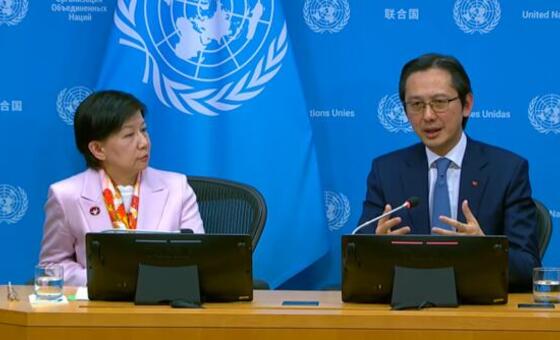
As the final day of the Review of Landmark Nuclear Treaty drew to a close, representatives could not reconcile differing priorities. Ambassador Do Hung Viet, who presided over the conference, and Izumi Nakamitsu, head of UN disarmament, addressed the stalemate in a press conference. Their remarks underscored the urgency of reforming the treaty, which has been a cornerstone of global nuclear governance since 1970. Despite earnest discussions, the lack of consensus threatens to stall progress on critical issues like disarmament and non-proliferation.
“The international climate now demands swift and decisive action,” stated Ambassador Viet during the briefing. “Without a clear direction, the treaty’s ability to guide nuclear policy is at risk.”
The diplomat noted that the fourth version of the outcome document had been drafted, but disagreements over its content prevented a final approval. His exhaustion mirrored the frustration of many delegates, who had invested significant time in negotiations only to see them fall short of a meaningful resolution.
Ms. Nakamitsu emphasized that the Review of Landmark Nuclear Treaty’s repeated failures could erode confidence in the NPT’s ability to curb nuclear proliferation. She argued that nuclear-armed states must lead by example, as their commitments to disarmament are vital for the treaty’s credibility. “Non-proliferation and disarmament are intertwined,” she said, “and the absence of progress in one area undermines the other.” Her comments reflected the mounting pressure on nations to align their actions with the treaty’s goals.
16-Year Gap in Reforms Leaves Treaty in Limbo
The inability to finalize the Review of Landmark Nuclear Treaty marks the third consecutive conference without a binding declaration. Since the NPT’s adoption in 1970, member states have only reaffirmed its principles every five years. The last successful update occurred in 2010, and the next is not anticipated until 2031. This 16-year gap has left the treaty’s framework vulnerable to outdated assumptions, as modern nuclear threats continue to evolve.
Ambassador Viet acknowledged the missed opportunities, stressing that the Review of Landmark Nuclear Treaty’s outcome could determine the treaty’s relevance in the future. “A strong declaration would have strengthened the NPT’s role in preventing nuclear proliferation,” he noted. “But without it, we face a period of uncertainty.” The diplomat’s remarks highlighted the need for urgent dialogue to address the growing disconnect between the treaty’s original objectives and current security dynamics.
While some delegates expressed cautious hope, the overall consensus was that the Review of Landmark Nuclear Treaty’s outcome lacked substantial direction. The absence of a unified statement has left key issues—such as the modernization of nuclear weapons and the expansion of global stockpiles—unaddressed. Analysts warn that this outcome could embolden nations to prioritize their nuclear ambitions over collective disarmament efforts, potentially accelerating the formation of a new arms race.
“The Review of Landmark Nuclear Treaty’s failure to produce a final document signals a shift in global priorities,” observed one expert. “Nuclear-armed states may now feel less constrained by the treaty’s original framework.”
This sentiment aligns with growing concerns that the NPT is losing its grip on international nuclear governance. With modernization programs underway and tensions escalating, the treaty’s ability to serve as a unifying force for disarmament is under scrutiny, and its survival hinges on renewed diplomatic commitments.