
Ukraine: UN alarmed by reports of deadly strike on dormitory in occupied Luhansk
Ukraine: UN Alarmed by Reports of Deadly Strike on Dormitory in Occupied Luhansk
Qinilo.com – On Friday, the United Nations expressed deep concern over accounts of a nighttime assault on a vocational school and dormitory in Starobilsk, a town in Ukraine’s Luhansk region. The attack reportedly resulted in several fatalities and injuries, with children among the victims. This incident has intensified global attention on the humanitarian toll of the ongoing conflict, particularly in areas under temporary Russian control.
The UN has no means to confirm the details of the strike due to its current inability to access the occupied territory. This lack of direct observation has raised questions about the accuracy of the reports, though the organization continues to monitor the situation closely. The dormitory, which is part of a larger complex, is believed to have housed at least 86 teenagers, aged between 14 and 18, according to UNICEF’s Deputy Executive Director, Ted Chaiban.
UNICEF Highlights Vulnerability of Adolescents
“The attack reportedly left six dead and dozens of others injured, including children,” Ted Chaiban stated during an emergency Security Council meeting in New York. He emphasized that the dormitory’s role as a shelter for young people makes it a critical target during wartime.
Chaiban further noted that rescue efforts are ongoing, and the full scale of the damage remains unclear. “It is too early to know the full extent of the casualties,” he added, underscoring the urgency of the situation. His remarks highlight the disproportionate impact of military operations on children, who are often caught in the crossfire of battles that are not directly tied to their interests.
Global Condemnation of Civilian Targeting
António Guterres, the UN Secretary-General, has consistently condemned attacks on civilian populations and infrastructure. His spokesperson, Stéphane Dujarric, reiterated this stance in a statement released on Friday. “The Organization strongly condemns any attacks against civilians and civilian infrastructure, wherever they occur,” Dujarric said. The spokesperson emphasized that such strikes violate international humanitarian law and must be halted immediately.
The UN’s focus on protecting civilians has been central to its response to the conflict. Edem Wosornu, director of operations at the UN’s relief coordination office, OCHA, described the unfolding crisis as a troubling trend. “The situation is still unfolding, and there is much we do not yet know,” Wosornu told ambassadors during the Security Council session. However, she pointed to a pattern that contradicts the principles of international law, stating that the war’s human toll is becoming increasingly evident.
UNHCR Warns of Escalating Attacks on Humanitarian Work
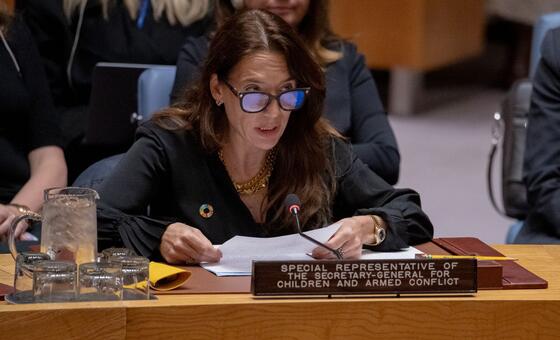
Vanessa Frazier, the Secretary-General’s Special Representative for Children and Armed Conflict, added another layer of urgency to the situation. She noted that several individuals might still be trapped beneath the rubble, describing the reports from Luhansk as a source of ongoing worry. “I have been following these developments with concern,” Frazier said, highlighting the precariousness of the conditions faced by displaced families.
Earlier on Friday, the UN refugee agency, UNHCR, released a statement detailing the growing threat to civilians. It warned that attacks across Ukraine are not only causing more casualties but also hindering the delivery of essential aid. According to UNHCR, a warehouse leased by the agency in the eastern city of Dnipro was hit by a missile during a recent Russian strike, destroying materials meant for emergency shelters and supplies for displaced individuals.
Humanitarian Infrastructure Under Threat
“This was the first such attack on a UNHCR facility since the start of the full-scale Russian invasion,” the agency noted in its statement. The incident underscores the vulnerability of humanitarian sites, which are often essential for supporting those affected by the war.
UNHCR also highlighted a concerning trend: attacks on humanitarian personnel and operations. Last week, two clearly marked convoys carrying aid near frontline areas were reportedly struck by drones, disrupting the flow of assistance to communities in need. These incidents illustrate the increasing risks faced by those working to alleviate the suffering caused by the conflict.
Historical Context and Long-Term Impact
The UN has documented a significant increase in the number of children harmed by the war since 2022. Verified data shows that over 3,400 children have been killed or injured in Ukraine during this period, a figure that reflects the broader devastation caused by the ongoing hostilities. The latest strike in Starobilsk adds to this grim statistic, reinforcing the need for stronger protections for young people.
Wosornu’s comments during the Security Council meeting aligned with this broader narrative. She stressed that the current crisis demonstrates a failure to uphold the standards of international humanitarian law, which should safeguard civilians from unnecessary harm. “Civilians must be protected,” she said, emphasizing the moral and legal imperative to prioritize their safety in military operations.
Global Response and Calls for Action
As the situation in Luhansk worsens, the UN continues to urge all parties to the conflict to minimize civilian casualties. The emphasis on the dormitory as a shelter for adolescents has drawn particular attention, with officials highlighting the significance of such spaces in supporting vulnerable populations. The attack in Starobilsk is seen as a stark reminder of the human cost of the war and the need for immediate intervention.
With the number of displaced people rising, the importance of humanitarian aid cannot be overstated. The UN’s efforts to coordinate relief operations are being tested by the frequency of attacks on critical infrastructure. This pattern of targeting shelters and aid centers has disrupted not only the delivery of immediate assistance but also the long-term recovery of affected communities.
The UN’s ability to respond effectively depends on its access to the conflict zones, which remains limited. While the organization works with available information, the lack of direct observation raises challenges in verifying the full impact of each strike. This has led to calls for greater transparency and accountability from the Russian forces occupying the region.
As the international community grapples with the scale of the crisis, the voices of those directly affected are growing louder. The young people in Starobilsk, now orphaned or injured, symbolize the broader plight of civilians in Ukraine. Their stories serve as a powerful reminder of the war’s enduring consequences and the urgent need for a resolution that prioritizes human life and dignity.
In summary, the attack on the vocational school and dormitory in Starobilsk has sparked a renewed focus on the protection of civilians in occupied territories. With the UN unable to confirm details and multiple agencies reporting on the escalating toll of the conflict, the world is watching closely. The latest incident is not an isolated event but part of a larger pattern of violence that continues to shape the lives of Ukrainian children and families.