
Ebola risk ‘very high’ in eastern DR Congo as UN intensifies response
EBOLA RISK ‘VERY HIGH’ IN EASTERN DR CONGO AS UN INTENSIFIES RESPONSE
Qinilo.com – The United Nations is accelerating the deployment of medical teams, financial resources, and essential supplies to eastern Democratic Republic of the Congo (DRC) as it battles a rapidly expanding Ebola epidemic. With the outbreak escalating in conflict-affected regions, the organization is prioritizing urgent action to stem the spread of the virus. This comes amid growing concerns over the situation’s severity, which has prompted the World Health Organization (WHO) to elevate the national risk assessment for the DRC to “very high,” despite the global risk remaining “low.”
OUTBREAK PROGRESSION AND SCALE
As of now, 82 confirmed cases and seven fatalities have been recorded in DRC, though WHO estimates the actual outbreak size is significantly greater, with nearly 750 suspected infections and 177 potential deaths reported. The rapid escalation of cases has drawn attention to the strain’s capacity to thrive in unstable environments. The Bundibugyo strain, which is responsible for this outbreak, has not yet had a widely available vaccine or treatment, according to current medical data. This lack of effective interventions underscores the urgency of the UN’s response.
CHALLENGES IN CONTAINMENT
The outbreak is unfolding in a volatile setting marked by escalating hostilities, mass population movements, and persistent skepticism toward external organizations, all exacerbated by circulating rumors and false information. In Ituri province, a hospital was reportedly torched by upset relatives on Thursday after authorities withheld the body of a deceased family member to prevent contamination, according to local reports. Such incidents highlight the deep mistrust that complicates public health efforts in the region.
WHO and the United Nations have mobilized a team of 22 international experts, while UNICEF has dispatched an emergency response unit to Bunia. Collaborative efforts include expanding contact tracing, establishing treatment facilities, and enhancing community outreach initiatives. The UN relief chief, Tom Fletcher, announced on Friday the release of up to $60 million from the Central Emergency Response Fund to bolster containment measures in DRC and its neighboring regions. Additionally, the WHO allocated $3.9 million to support the response.
MONUSCO has arranged the transportation of nearly 30 tons of critical supplies, including medical treatments, shelter tents, and protective gear. The mission is also maintaining an aerial supply line and deploying vehicles to improve distribution networks. These logistical efforts aim to ensure that healthcare workers and volunteers have the tools needed to operate in difficult conditions.
CONTINENTAL COORDINATION AND TRIALS
The WHO and the Africa Centres for Disease Control and Prevention (Africa CDC) have formed a continental incident management team to coordinate efforts across the region. This team will play a key role in sharing resources and expertise with local authorities. Meanwhile, WHO and its partners are preparing clinical trials for experimental therapies and vaccines specifically targeting the Bundibugyo variant of the virus. These trials are part of a broader strategy to develop new tools for combating the outbreak.
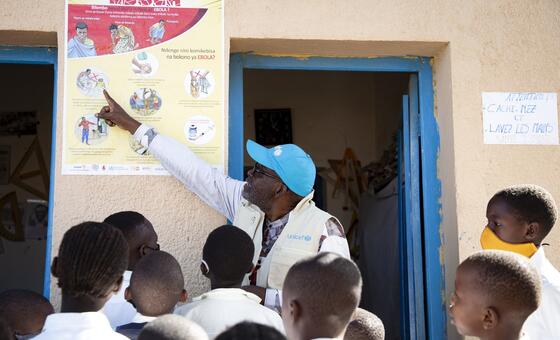
Volunteers from the International Federation of Red Cross and Red Crescent Societies (IFRC) are conducting house-to-house awareness campaigns and facilitating safe, respectful burial practices in affected zones. Their work is critical in addressing the community’s fear and misinformation, which have fueled resistance to containment measures. “During an Ebola outbreak, trust and community acceptance can mean the difference between containment and wider transmission,” Ms. Arenas emphasized.
PERSONAL STORIES AND SOCIAL FACTORS
Across both provinces, around four million people require immediate humanitarian aid, two million are displaced, and ten million are at risk of severe food shortages, according to Tedros. The UN’s humanitarian coordinator described the region as a hotspot for both health and social crises, with conflict and population movement creating additional hurdles for response teams. “These are tough operating environments for lifesaving work,” Mr. Fletcher said. “We face conflict and high population movement.”
While many residents are seeking information and treatment, others still believe “that Ebola is fabricated,” Ms. Arenas said. This belief has roots in past experiences with the virus, where communities were left without clear explanations or timely support. “They remember the fear. They remember the rumors spreading like wildfire through villages,” she told reporters in Geneva from Nairobi. “They remember neighbors vanishing into treatment centers.” These memories have created a barrier to acceptance of modern medical practices.
REGIONAL SPREAD AND INTERNATIONAL IMPACT
Two cases connected to travel from DRC have been identified in Uganda, including one fatality. Additionally, two U.S. citizens, including a medical professional and an individual categorized as a “high-risk contact,” have been relocated to Europe for care and monitoring. The spread beyond DRC’s borders indicates the need for cross-border cooperation to control the epidemic effectively.
The outbreak is currently concentrated in Ituri and North Kivu provinces, regions long scarred by armed violence and humanitarian crises. The conflict in these areas has not only displaced over 100,000 people in recent months but has also disrupted healthcare infrastructure. “Fighting has intensified, displacing more than 100,000 people and hampering health operations,” Mr. Fletcher noted. This disruption forces response teams to adapt their strategies and work with local leaders to overcome logistical and political barriers.
KEY STAKEHOLDERS AND STRATEGIES
Securing access to conflict zones remains a top priority for the UN. Mr. Fletcher stressed the importance of ensuring that frontline responders can operate without interference in areas controlled by armed groups. “It is essential that there is no obstruction,” he said. This is particularly vital for teams focused on contact tracing and community engagement, which rely on cooperation from local populations.
Aid agencies have warned that misinformation and distrust could undermine the containment efforts. “Women are more likely to be infected in the first place,” said Sofia Calltorp, head of UN Women’s humanitarian programs. This observation aligns with findings from previous outbreaks, where women were disproportionately affected due to their roles in caregiving and close contact with infected individuals. The social dynamics of the current crisis are expected to repeat these patterns, compounding the challenges for health workers.
LOOKING AHEAD
As the situation develops, the UN and its partners are working to implement a multi-faceted approach. This includes strengthening surveillance systems, expanding treatment centers, and launching public awareness campaigns. The combination of medical and community-based strategies is seen as crucial for containing the outbreak and preventing further spread. The rapid response so far has been praised, but experts warn that sustained efforts will be needed to address the complex challenges in the region.
The outbreak’s progression has also highlighted the importance of regional collaboration. With the WHO and Africa CDC forming a unified team, there is a greater chance of coordinating efforts across borders. This partnership aims to provide a consistent response to the epidemic, leveraging expertise and resources from multiple countries. As the virus continues to spread, the success of these initiatives will depend on the willingness of local communities to trust and cooperate with health authorities.