
Security Council weighs future of UN war crimes mechanism as closure nears
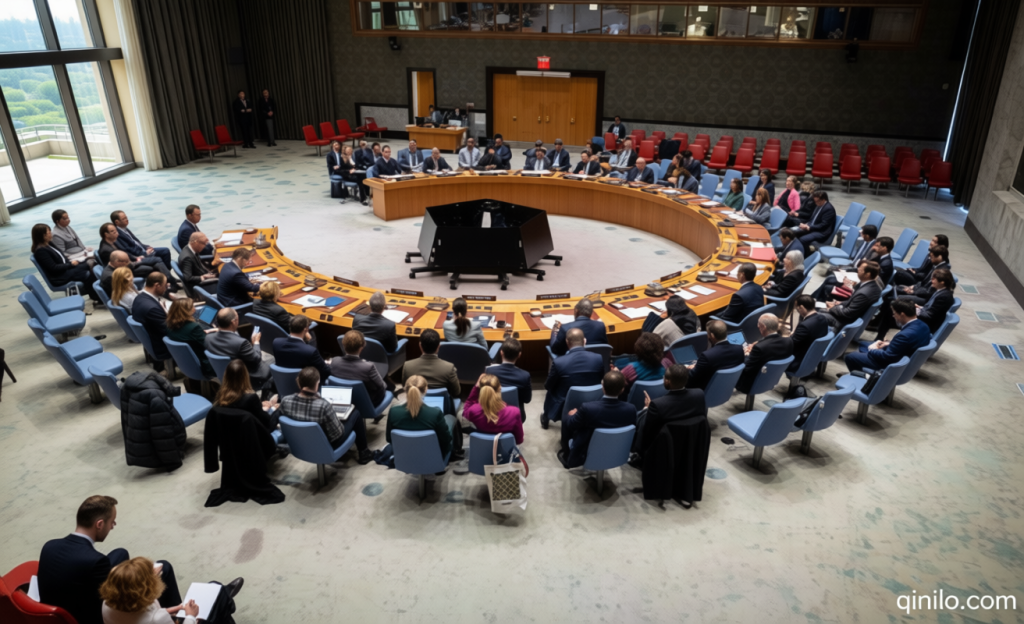
Security Council Evaluates the Next Steps for the UN War Crimes Mechanism as Closure Approaches
Qinilo.com – The United Nations Security Council convened on Friday to assess the ongoing role of the international body tasked with concluding the remaining duties of the Rwanda and former Yugoslavia tribunals. Delegates focused on maintaining the legacy of the mechanism while ensuring its operations conclude in a structured manner.
Legacy of the International Residual Mechanism
Established in 2010, the International Residual Mechanism for Criminal Tribunals (IRMCT) was designed to handle essential tasks after the International Criminal Tribunal for Rwanda (ICTR) and the International Criminal Tribunal for the former Yugoslavia (ICTY) closed. Its continued relevance has sparked debate among council members.
“The body has fulfilled its core obligations, with only a limited yet crucial amount of work remaining,” stated President Graciela Gatti Santana during her address. She highlighted the referral of the last contempt case to a national court as a key milestone.
Gatti Santana proposed a plan to significantly reduce the mechanism’s staff while shifting some duties to the UN Secretariat. This includes administrative support for national courts and archive management. However, she emphasized that certain judicial roles, such as prisoner transfers and witness protection, must stay under international oversight.
Archives: A Point of Division
The location of the tribunals’ archives became a central point of contention during the discussions. Rwanda’s Minister of Justice, Emmanuel Ugirashebuja, argued that relocating the ICTR archives back to the country would symbolize the recovery of historical significance for genocide survivors.
“For the Tutsi genocide victims, this transfer is more than a physical move—it represents the reclamation of a vital part of their collective memory,” Ugirashebuja asserted.
Tanzania, which hosted the Rwanda tribunal in Arusha for two decades, defended the current neutral setup, citing its modern facilities and widespread access. Similar disputes arose over the ICTY archives, with Serbia offering to retain materials and Croatia, Bosnia and Herzegovina, and others prioritizing transparency and accessibility.
Global Perspectives on Closure
Council members largely concurred that the mechanism was never meant to be a permanent institution. Yet, they diverged on how swiftly its functions should be phased out. Greece, Pakistan, and Somalia advocated for a small, temporary structure to streamline operations.
The United States emphasized the need for a “responsible and expeditious conclusion” of the mechanism’s work, while Russia criticized its “reluctance to fully transition responsibilities” to national authorities. Despite these differences, many delegations urged caution against hasty decisions.
“Our goal must be the definitive and orderly winding down of the mechanism,” said Colombia’s representative, underscoring the importance of stability in the process.