
Lives at risk in DR Congo as Ebola outbreak continues to outpace response
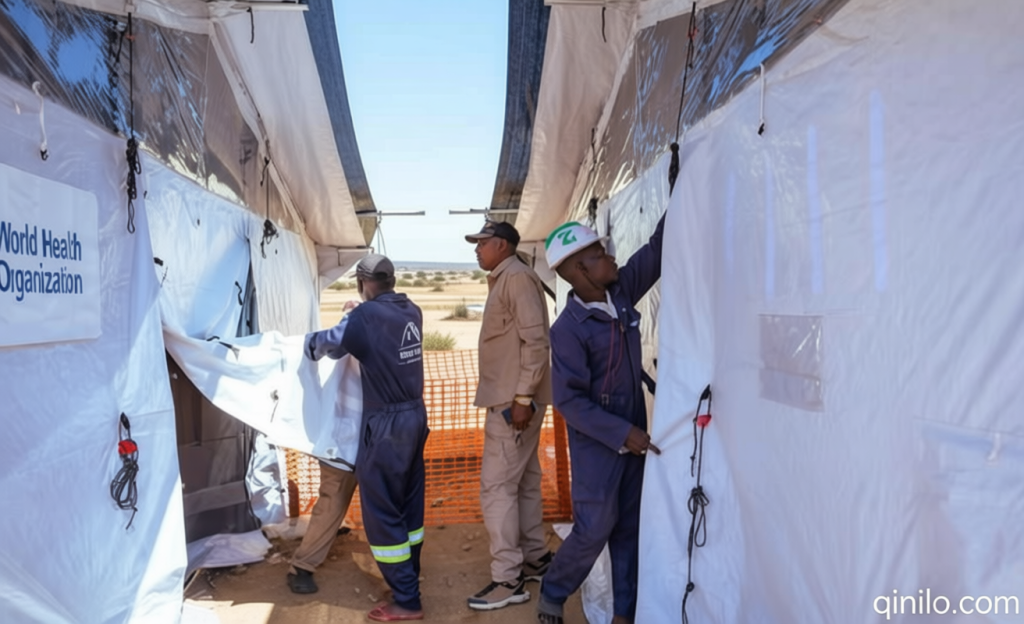
Lives at risk in DR Congo as Ebola outbreak continues to outpace response
Qinilo.com – The World Health Organization (WHO) has raised alarms about the rapid spread of the Ebola outbreak in the Democratic Republic of the Congo (DRC), which is outpacing the efforts to contain it. Despite progress in treatment capabilities and growing community involvement, the situation remains critical.
WHO Director-General Highlights Response Progress
During a media briefing in Geneva, WHO Director-General Tedros Adhanom Ghebreyesus noted that while the response has expanded care and testing at an unprecedented pace, challenges persist on the ground.
“It’s encouraging to see that since the outbreak was first reported five weeks ago, the response has scaled up significantly,” he said.
Within a month, the number of treatment beds has surged from fewer than 10 to over 500 across 19 health centers. Laboratory testing capacity has also grown, increasing from 30 daily tests in Kinshasa to more than 2,000 tests each day across nine labs in three provinces.
Tedros emphasized that communities are increasingly proactive in seeking information and assistance. “More communities are becoming aware of the risks of Ebola and asking for the tools and support to protect themselves,” he said.
Regional Spread and Clinical Trials
Over 100 individuals have recovered from the disease, indicating that early diagnosis and supportive care may be effective in saving lives. However, the demand for resources remains high.
“There are now 1,094 confirmed cases, with 277 deaths,” Tedros said. “The outbreak is progressing rapidly.”
Meanwhile, neighboring Uganda has reported 20 confirmed cases, with two deaths. The WHO is set to initiate a clinical trial next week in the DRC to evaluate whether two antiviral treatments, MBP134 and remdesivir, can lower mortality rates from Bundibugyo virus disease.
“Political advocacy and action are essential to create the conditions for increased humanitarian access and a scaled-up response,” he said.
Plans are underway to ensure affected populations can access treatment if the trial proves successful. Communities are being actively engaged in the process of understanding the trial’s goals and procedures.
Humanitarian Challenges and Worker Safety
Health officials warned that humanitarian conditions are still a major obstacle. Tedros stressed the need for political action to improve access for health teams in affected regions.
Health workers themselves have faced significant risks. An ALIMA aid worker from France tested positive for Ebola after treating patients in the DRC. Nearly 80 health workers have been infected during the outbreak.
“This case is a reminder of the risks faced by frontline responders,” Tedros said.
The WHO is urging governments to support safe deployment practices for aid personnel, including better risk communication and preparedness for evacuation.
Although some international cases have been linked to the outbreak, the agency maintains that the global risk remains relatively low. Major obstacles include inadequate contact tracing, strained treatment centers, challenges in conducting safe burials, ongoing border closures, and security incidents that disrupt operations.
The outbreak occurs amid a decades-long humanitarian crisis in the region. Earlier this month, the WHO and Africa CDC launched a joint plan requesting $518 million to bolster efforts in affected areas and surrounding countries. Updated funding details are expected next week, with aid organizations hoping for a more coordinated international response.