
30,000 people flee fresh violence in Haiti as hunger crisis deepens
30,000 people flee fresh violence in Haiti as hunger crisis deepens
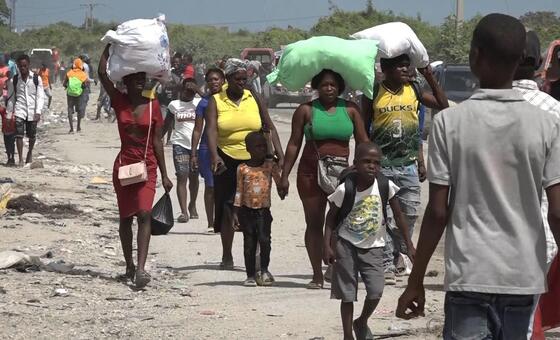
30 000 people flee fresh violence – Over the past ten days, a surge in violent attacks and atrocities by armed groups has forced approximately 30,000 residents to abandon their homes in Port-au-Prince and nearby regions. This wave of displacement adds to an ongoing humanitarian emergency, with the hunger crisis worsening as basic needs become increasingly difficult to meet. The situation has reached a critical point, leaving many without shelter, food, or the means to sustain themselves.
Violence in Cité Soleil Intensifies
Most of the recent violence has been concentrated in Cité Soleil, a densely populated and impoverished district of the capital. The area, already vulnerable due to systemic underdevelopment, has become a focal point for unrest as gangs expand their influence. Humanitarian organizations are working tirelessly to deliver urgent supplies, but the scale of the crisis continues to outpace their capacity to respond effectively.
Residents describe a landscape of chaos, where gunfire and arson have become daily occurrences. “There was shooting everywhere. Then they set a fire very close by and we ran away with the whole family,” said Dorlean Boudin, a resident of Carrefour Vincent near Cité Soleil. She recounted how her family had to leave hastily, taking only essential documents. “We didn’t go back to our homes. The gangs are everywhere in the area. We only had time to leave with our ID documents. We haven’t gone back since,” she added. Her account reflects the desperation of many who now live in fear of returning.
A Nation in Crisis: Years of Struggle
Haiti’s plight is rooted in decades of instability, with insecurity, poverty, and economic collapse creating a perfect storm of suffering. The recent assassination of a president has further destabilized the country, triggering political upheaval that exacerbates existing challenges. The combination of these factors has led to a fragmented society, where violence is not only a result of conflict but also a symptom of deeper systemic failures.
According to UN figures, over 1.4 million people—more than 12 per cent of the population—have been displaced across the nation. Port-au-Prince, in particular, has become the epicentre of this violence, with up to 90 per cent of the city reportedly under the control of gangs. The impact is felt most acutely in areas like Cité Soleil, where residents face constant threats to their safety and livelihoods.
Voices from the Frontlines
“There was shooting everywhere. Then they set a fire very close by and we ran away with the whole family.”
“We didn’t go back to our homes. The gangs are everywhere in the area. We only had time to leave with our ID documents. We haven’t gone back since.”
“I always keep a bag ready, just in case. When I hear heavy shooting, I grab my bag and flee with everyone.”
“I had just paid my rent and we had to flee. Now we have nothing — no money, no roof — and we don’t know if or when we’ll be able to return. Please help us.”
“Not having a roof to sleep under and food for the children is the hardest thing for us right now.”
These testimonies highlight the immediate and long-term consequences of the violence. For Dorlean, the loss of home and resources has left her family with no means to survive. “I need to restart a small business to raise the children. I need help with food to feed them, and to buy water because we don’t have any,” said another woman, whose family was forced to flee after witnessing horrific acts of violence. Her words underscore the urgent need for aid and the precarious balance between survival and hope.
WFP’s Emergency Efforts
The World Food Programme (WFP) has been at the forefront of providing relief to those affected by the displacement. So far, the organization has reached 8,500 newly displaced individuals from Cité Soleil with essential food supplies. In addition, nine WFP-supported schools serving around 12,000 students have had to halt meal distributions, depriving children of critical nutrition during a time of heightened vulnerability.
Janvier Muhima, a spokesperson for the WFP, emphasized that the agency is distributing a range of basic staples, including rice, pulses, oil, and fortified flour, to ensure displaced families can meet their dietary needs. “These supplies are crucial for maintaining stability and preventing further deterioration of the hunger crisis,” Muhima explained. However, the scale of the operation remains daunting, with thousands still in need of assistance and infrastructure strained to its limits.
Displacement and Its Ripple Effects
Across Haiti, the displacement of over 1.4 million people has created a ripple effect, disrupting communities and economies. Many families are now living in overcrowded temporary shelters or with relatives, struggling to access clean water, electricity, and medical care. The hunger crisis, already severe, is intensifying as food shortages and inflation make even the most basic items unaffordable for the displaced.
Meanwhile, the control of Port-au-Prince by gangs has forced residents into a state of constant alert. The city, once a symbol of Haiti’s resilience, now serves as a battleground where violence has become a way of life. With nearly 90 per cent of the capital under gang dominance, the ability of local authorities to enforce order has been significantly weakened. This has created a vacuum where armed groups can operate with impunity, further deepening the crisis.
Children at the Heart of the Conflict
One of the most alarming aspects of the current situation is the increasing involvement of children in gang activities. Reports indicate that recruitment of minors has surged, with some estimates suggesting that children now constitute 30–50 per cent of certain groups. This trend raises concerns about the long-term impact on the next generation, as young lives are disrupted and exposed to violence at an early age.
For families like Dorlean’s, the violence has not only taken their homes but also their sense of security. The constant threat of being targeted by gangs has forced parents to prioritize survival over education, work, and emotional well-being. “I had very little money. I couldn’t buy food because I had to save for emergency travel,” said one of the women, who described the cycle of fear and deprivation that has defined her family’s recent experience.
As the crisis deepens, the humanitarian response must evolve to meet the growing demand for aid. The WFP and other organizations are working around the clock, but their efforts are constrained by limited resources and the ongoing instability. Without sustained international support, the situation in Haiti risks spiraling further, with millions facing the prospect of prolonged displacement and worsening hunger. The voices of those who have fled speak volumes about the urgency of action and the need for a coordinated effort to restore stability and dignity to the affected population.