
Afghanistan among the world’s largest displacement crises
Afghanistan Among the World’s Largest Displacement Crises
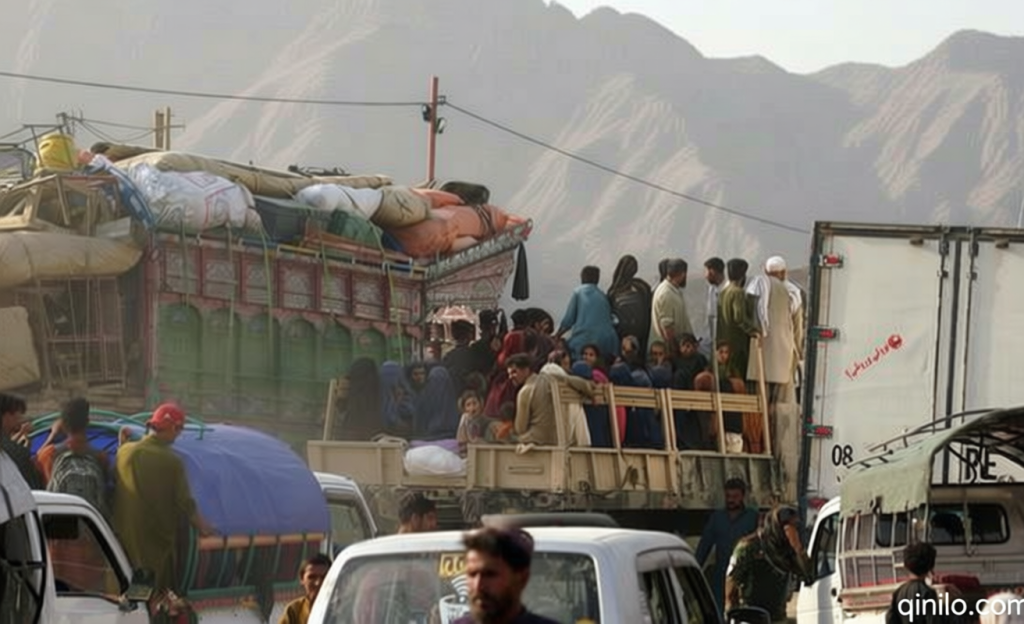
Qinilo.com – UN bodies have issued warnings that Afghanistan is dealing with one of the globe’s most severe displacement emergencies, driven by a confluence of economic hardship, environmental disasters, and seismic events.
Multiple Challenges Fuel Crisis
The United Nations Development Programme (UNDP) highlighted that Afghanistan’s situation is compounded by a struggling economy, prolonged conflict spanning four decades, 2.7 million individuals returning to the country, escalating climate disruptions, and reduced involvement of women in economic activities. These factors are collectively straining both livelihoods and public services.
“In Afghanistan, crises seldom occur in isolation,” remarked Alexander De Croo, head of the UNDP, during a collaborative visit with Barham Salih, the High Commissioner for Refugees. The trip aimed to engage with returnee groups, local partners, and government representatives to emphasize unity in addressing resilience and long-term solutions.
Disaster and Poverty Intensify Strain
Recent seismic activity has devastated countless homes and sources of income, while persistent poverty continues to afflict the majority. With 74% of the population—approximately 29 million people—struggling to satisfy fundamental needs, the UNDP is aiding displaced individuals and host communities in collaborative rebuilding efforts, aiming to transition from temporary return to sustainable recovery.
Field Visits Highlight Recovery Progress
The UN officials visited Jalalabad, where they observed ongoing initiatives targeting earthquake-affected populations. In the Sutan Valley, De Croo described the region as a “testament to recovery,” showcasing efforts already underway to restore stability.
Community-Led Solutions in Action
Projects in the Sutan Valley include women producing wire mesh and men crafting bricks to construct barriers. This work helps mitigate disaster risks, safeguard agricultural land, and generate employment. “Emergency aid sustains survival,” De Croo noted. “Development reclaims dignity and opportunity.”
Expanding Resettlement Pathways
Simultaneously, the UN Refugee Agency (UNHCR) is implementing a comprehensive strategy to lower risks in mixed migration routes and enhance asylum systems. With over 570,000 Afghans anticipated to require resettlement in 2026, the agency is focusing on expanding access to education, labor mobility, and family reunification as key pathways.