
After war took her leg, this Ukrainian gymnast refused to give up
After War Took Her Leg This Ukrainian Gymnast Refused to Give Up
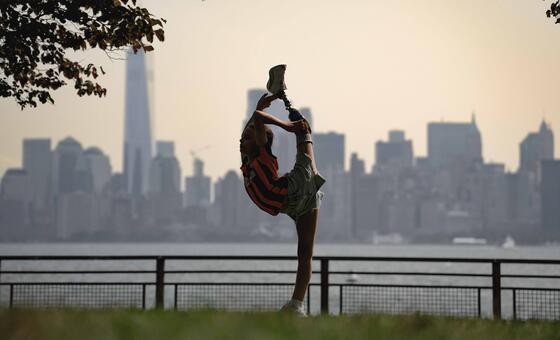
Qinilo.com – After war took her leg this remarkable young athlete proved that determination knows no boundaries. Ten-year-old Sasha Paskal recently captivated audiences at New York’s Times Square, carrying a powerful message that extends far beyond her athletic accomplishments. The rhythmic gymnast, who lost her leg during Russia’s devastating invasion of Ukraine, hopes her presence will demonstrate that Ukrainian children continue to endure the ongoing conflict with resilience and hope.
Before performing her choreographed routines on the global stage, Sasha accompanied her mother Maria to United Nations Headquarters in New York. Together, they shared their story with UN News, discussing perseverance through adversity, the healing power of sport, and the fundamental need for peace among children worldwide.
From Devastating Injury to International Competition
Sasha began her rhythmic gymnastics training as a young child, developing her skills with dedication and passion. However, her trajectory changed dramatically in 2022 when Russia launched its comprehensive assault on Ukraine. During the initial phase of the conflict, a devastating incident occurred in the Odesa region that would alter her life forever. A falling concrete structure severely damaged her leg bones, ultimately requiring medical professionals to amputate the limb after a fifteen-day period in induced coma.
After extensive rehabilitation and unwavering determination, Sasha resumed her passion for movement. She now executes dance sequences and acrobatic maneuvers with a contemporary prosthetic device. Throughout four years since her injury, she has competed against peers without physical disabilities, securing medals at multiple events, most notably at an international competition held in Romania. After war took her leg this young gymnast refused to let her dreams die.
A Voice for Ukrainian Children on the World Stage
For Maria, each appearance serves as a platform to maintain global awareness of Ukraine’s youngest citizens who continue to suffer. The mother-daughter duo has become ambassadors for peace and resilience.
“The main message is that people should not forget that the war is still going on in our country,” she explained with conviction.
Sasha’s remarkable journey has influenced “The Heart Sees More Than the Eyes,” an inclusive comic book developed by youth with assistance from UNICEF through the UPSHIFT initiative. This publication chronicles a young gymnast who persists in training following leg loss and supports classroom discussions about disability and inclusion. After war took her leg this story continues to inspire children everywhere.
The Broader Impact on Ukrainian Youth
Sasha’s personal narrative mirrors the ongoing suffering experienced by Ukraine’s children on a much larger scale. UNICEF reports indicate that approximately 2.6 million children—exceeding one-third of the nation’s youth—have been forced from their residences due to the conflict. Of this population, roughly 791,000 remain within Ukraine’s borders while 1.8 million seek refuge overseas.
Since February 2022, over 3,400 children have suffered fatalities or injuries during attacks, though experts estimate actual figures are considerably higher due to verification challenges in war zones. Educational infrastructure has also suffered substantially, with more than 1,700 schools and learning facilities either damaged or completely destroyed.
Currently, one out of every three children cannot participate in full-time in-person education, while those residing near active combat zones experience particularly intense psychological consequences. UNICEF and collaborating organizations continue delivering humanitarian aid, emotional support, educational services, and recovery programs to help children heal.
Looking Toward the Future with Hope
Sasha dedicates three to four hours daily, five days weekly to her training regimen. Maria credits gymnastics as crucial to her daughter’s emotional healing and recovery process.
“I think that without sport, everything would have been much worse,” Maria reflected. “She would have withdrawn into herself and been ashamed of her prosthetic leg. But when she competes, she isn’t embarrassed. She becomes much more confident.”
With aspirations of representing Ukraine at the Paralympic Games—contingent upon rhythmic gymnastics being added to the program—Sasha offers straightforward guidance for young people confronting difficulties. After war took her leg this message remains clear: never surrender to circumstances.
“Don’t give up and keep moving forward,” she advised. “And don’t be afraid of anything.”