
‘An assault on humanity itself’: Guterres pays tribute to 9/11 victims, survivors and first responders
UN marks 25 years since 9/11 with tribute and call for rights-based counter-terrorism
Qinilo.com – Twenty-five years after the attacks of 11 September 2001, United Nations Secretary-General António Guterres has honoured those who died, those who survived and the first responders who rushed toward danger in New York City.
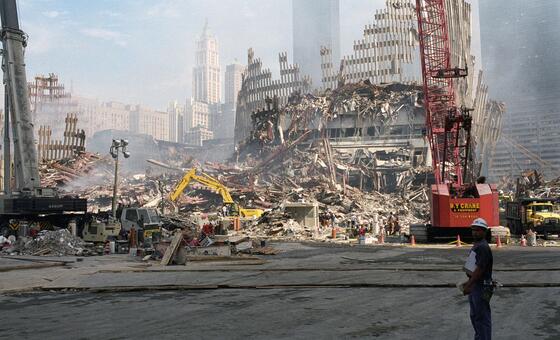
Nearly 3,000 people were killed in the attacks, including people from the United States and more than 90 other countries. The destruction of the World Trade Center, located only a few miles from UN Headquarters, left a lasting mark on the city and on the international community.
“As we mark this somber occasion on 11 September, we remember the nearly 3,000 victims – from the United States and more than 90 countries – and stand with their families and loved ones,”
Guterres described the attacks as a grave act of terror against the United States and against humanity more broadly. He said the UN remains alongside New Yorkers, Americans and everyone whose life was changed by the events of that day.
A shared commitment against terrorism
The anniversary also falls two decades after UN Member States adopted the UN Global Counter-Terrorism Strategy in 2006. That framework reflects the international view that terrorism requires collective action, while also placing emphasis on prevention, international cooperation and respect for fundamental rights.
“As we pay tribute to the victims, let us renew our shared commitment to build a future free from terrorism.”
The attacks reshaped security policies around the world. Governments expanded intelligence, border-control and law-enforcement measures in response to the threat posed by terrorist groups. Yet the anniversary has also renewed scrutiny of the consequences of some counter-terrorism policies adopted over the past quarter-century.
More than 30 independent experts appointed by the UN Human Rights Council used the occasion to pay respect to victims of terrorism while warning that many State responses have gone beyond what was necessary or proportionate. The experts are independent from UN staff and are not paid for their work.
They said broad campaigns framed as “wars on terror” had put core principles of international law under severe strain. Their statement pointed to allegations and documented patterns involving aggression, unlawful occupation, war crimes, crimes against humanity and possible genocide carried out under the banner of counter-terrorism.
The experts also cited practices including killings presented as targeted operations, torture labelled as interrogation, secret detention, enforced disappearances and proceedings before military or special courts that did not meet fair-trial standards. They specifically referred to detention facilities operated by the United States at Guantanamo Bay.
They called on States to reassess counter-terrorism laws and policies to ensure consistency with international human rights law, humanitarian law and refugee law. Their message underscored a central challenge that has persisted since 2001: protecting people from terrorism without weakening the legal safeguards intended to protect everyone.
Memories from inside UN Headquarters
For many people working at the United Nations on 11 September 2001, the unfolding catastrophe was visible from their offices or felt immediately across the city. The day had been scheduled to include the Secretary-General’s annual Peace Bell ceremony, connected with the International Day of Peace. It never took place.
Victor Evans-Harvey, now editor in chief of UN News, recalled seeing smoke that morning but initially believing he should still travel to work. At the train station, a UN security officer stopped him.
“I saw the smoke, but I still went to the train station because I had to go to work.”
He remembered telling the guard that he was heading to the office, only to be told that he could not enter work that day.
Michelle Griffin, who was then Director of Electoral Assistance, witnessed the first World Trade Center tower burning before she had even reached her desk on the 37th floor of the UN Secretariat building. Her neighbour’s anguished reaction made the disaster feel intensely personal.
“As I was leaving for work, I heard my neighbour screaming, ‘That’s my office!’”
Griffin recalled going outside and seeing the vast opening in the building. As the scale of the attacks became clearer, personnel began leaving the Secretariat through stairwells. Information travelled from floor to floor as staff attempted to understand what was happening and whether planned activities could continue.
“As we evacuated, we could hear the news spreading down the stairs,”
She remembered hearing discussions over whether the Secretary-General’s programme, including the Peace Bell event, should proceed. In the circumstances, there would be no ceremony.
UN spokesperson Stéphane Dujarric has also described the atmosphere inside the building as one of panic. Reports emerged that another aircraft could potentially be directed toward the United Nations, leading officials to keep then-Secretary-General Kofi Annan at his nearby residence.
A lasting international turning point
In the days after the attacks, the United Nations saw an exceptional display of unity, including within the Security Council. The shock of 9/11 set off political, military and legal consequences that would continue across the following decades.
The anniversary is therefore both a moment of remembrance and a reminder of unfinished responsibilities. It calls attention to families who still carry loss, responders whose service became emblematic of courage, and communities across the world affected by terrorism and by the responses to it.
For the UN, commemorating 11 September means holding those realities together: rejecting terrorism unequivocally, supporting victims and survivors, and insisting that the pursuit of security must remain rooted in international law, human dignity and accountability.
Related Reading
Frequently Asked Questions
What is An assault on humanity itself?
An assault on humanity itself is the main topic of this guide. The article explains the context, practical details, and next steps readers should understand.
Why does An assault on humanity itself matter?
An assault on humanity itself matters because readers are looking for a useful answer, not just a short summary. Good content should match search intent and help them decide what to do next.