
Ukraine: Drone attacks on Chornobyl are ‘gambling with the safety of millions of people’
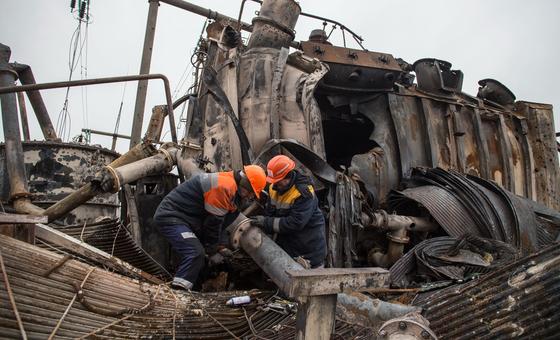
Chornobyl Strike Raises Fresh Fears Over Nuclear Safety and Ukraine’s Energy Crisis
Qinilo.com – A recent drone strike on the protective shelter surrounding Chornobyl’s damaged Reactor Four has renewed alarm over the risks facing nuclear facilities during the war in Ukraine. Alexander De Croo, Administrator of the UN Development Programme, warned from Kyiv that any attack involving such a site places vast numbers of people at risk.
De Croo travelled to Chornobyl on Wednesday, entering the massive protective structure that covers the reactor destroyed in the 1986 disaster. The visit came during a mission centred on restoring Ukraine’s damaged energy network and helping communities prepare for a fifth winter since the full-scale invasion began.
“Anyone who’s attacking those protective structures – and those protective structures around a nuclear structure – is really gambling with the safety of millions of people.”
The shelter over Reactor Four was built to contain radioactive material left by the accident and to protect the surrounding environment while long-term work continues. Damage to such a structure is therefore not simply a local concern: it raises questions about the safety of workers, nearby communities and the wider region.
“A nuclear installation can never be a target. There can absolutely be no excuse. There can absolutely be no ambiguity. This has to stop,” De Croo said.
Questions over the drone’s origin
He said a formal investigation must establish where the drone came from. Site guards told him that Russian drones pass over the Chornobyl facility every day, underscoring the persistent danger created by military activity close to nuclear infrastructure.
For De Croo, the circumstances of the incident do not lessen its seriousness. Whether the strike was intentional or accidental, he said, drones should not be operating above the plant. Keeping aircraft away from the site is a basic safeguard against an event that could have consequences far beyond the immediate area.
“Whether it was a deliberate attack or an accident, this is something which is unacceptable. Making sure that drones are not flying above that site is one way of avoiding that things like this could happen,” he said.
Chornobyl remains one of the world’s most recognizable reminders of the consequences of a nuclear accident. Reactor Four was destroyed in 1986, and the facility continues to require monitoring, containment and reliable power. Even though it no longer operates as a conventional electricity-generating station, safety systems and cooling-related equipment remain essential.
Solar project supports reactor safety
During the visit, De Croo joined Ukrainian officials and partners for the opening of a new solar power plant at Chornobyl. Lithuania and Japan supported the project, while the Ukrainian authorities worked with technical expertise from UNDP. The new installation will provide electricity for the cooling systems serving Reactor Four.
The project illustrates a wider challenge for Ukraine: energy supply has become inseparable from public safety. Electricity keeps homes illuminated, but its importance reaches much further. Hospitals need dependable power for treatment and emergency care; schools require it to function; water systems, communications and many municipal services rely on it every day.
UNDP has mobilised $1.3 billion over the past four years to assist people across Ukraine. Repairing and stabilising the energy system has become the agency’s largest operational focus. Its support has helped 6.6 million people retain or regain access to electricity.
Yet the scale of the need remains immense. Roughly half of Ukraine’s energy infrastructure has been affected by Russian attacks, leaving the country exposed as colder weather approaches. Damage to generation, transmission and local distribution systems can disrupt services well beyond the point of impact, particularly when repairs must be carried out under the threat of further strikes.
“We try to do our best to help 6.6 million people. But it’s quite clear that at this moment, it is never enough,” De Croo acknowledged.
A more resilient energy system
The goal is not limited to restoring the network as it existed before the war. Ukraine is increasingly pursuing a system that is more sustainable and decentralized. Smaller and more distributed sources of generation can make it harder for a single attack to knock out power across a broad area, while renewable projects can help diversify supply.
The Chornobyl solar facility is a practical example of that approach. It supports a critical safety function while also showing how energy recovery can incorporate infrastructure designed for greater resilience. Such work does not eliminate the hazards of war, but it can reduce dependence on vulnerable single points in the network.
Life in Kyiv offered De Croo a direct view of the pressures facing civilians. He said air raid alerts had been sounding regularly, at times at least once every two hours and also during the night. While he was in the capital, attacks were reported at a bus stop, petrol station, food-processing facility and a business centre near his hotel.
“It used to be that the frontline was in the East. Today, the frontline is everywhere,” he said.
The remark reflects how the impact of the conflict extends well beyond areas of direct ground fighting. Air attacks can interrupt daily life, damage civilian infrastructure and force people to make decisions about work, education, health care and shelter under constant uncertainty.
De Croo praised Ukrainians’ ability to keep services running and communities functioning, but cautioned against treating resilience as unlimited. Endurance has a human cost, particularly after years of disruption, displacement, loss and recurring attacks.
“We always talk about resilience, but resilience really has its limits,” De Croo said.
Reconstruction continues during the war
UNDP’s work is continuing despite the security risks. De Croo made clear that recovery efforts cannot wait for the conflict to end, even though a full rebuilding of the country will require many years. Repair teams and local authorities are already restoring power systems and other essential facilities wherever conditions allow.
The financial challenge is staggering. A recent estimate from the World Bank and UN organizations put the cost of repairing war-related damage at more than $600 billion. That figure points to a recovery effort that will extend far beyond emergency fixes, requiring long-term investment in homes, transport, public services and energy infrastructure.
“Restoring the infrastructure is not waiting for the end of the war. We have been restoring infrastructure from the start of this war, and despite the war, we will continue doing this,” the UNDP chief said.
At Chornobyl, the damaged shelter and the new solar plant capture two sides of Ukraine’s present reality: the continuing threat to critical infrastructure and the effort to keep essential systems functioning despite it. Protecting nuclear sites, maintaining power supplies and rebuilding damaged services remain urgent tasks as the country heads toward another winter of war.
Related Reading
Frequently Asked Questions
What is Ukraine?
Ukraine is the main topic of this guide. The article explains the context, practical details, and next steps readers should understand.
Why does Ukraine matter?
Ukraine matters because readers are looking for a useful answer, not just a short summary. Good content should match search intent and help them decide what to do next.