
Breaking the silence: Zimbabwean youth leader calls for urgent investment in mental health
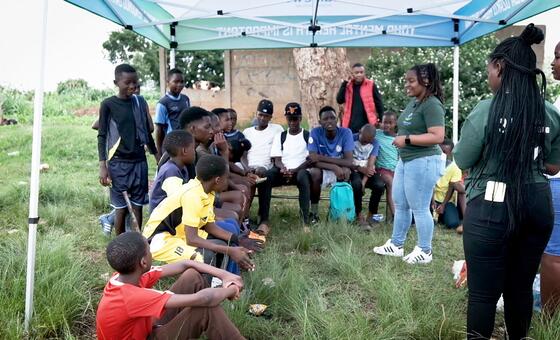
Zimbabwean Youth Leader Calls for Mental Health Investment to Break Silence
Qinilo.com – “The silence surrounding mental health issues has become a barrier for young Zimbabweans,” said Tanatswa Amanda Chikaura, a 26-year-old PhD researcher at the University of Cambridge. Her journey as an advocate began after witnessing a classmate’s suicide during her psychology studies at the University of Zimbabwe, an event that sparked her commitment to addressing the crisis facing youth in her country. Chikaura’s work focuses on dismantling the silence that often prevents individuals from seeking help or speaking out about their struggles.
A Personal Catalyst
The tragic incident revealed a critical gap: many young people in Zimbabwe lack access to mental health resources and support systems. “I saw the silence in action,” Chikaura reflected. “As a young person, I realized we needed solutions designed by our peers to tackle the unique challenges we face.” This moment of clarity led her to launch the Ndinewe Foundation, a platform dedicated to fostering open conversations about mental health through culturally relevant initiatives.
The Ndinewe Foundation
Today, Chikaura leads the Ndinewe Foundation, an organization that prioritizes peer-driven mental health programs tailored to Zimbabwe’s cultural context. Its initiatives include sports-based activities that combine physical exercise with mental health education, aiming to reduce the silence around emotional well-being. “Our programs are designed to break the silence by making mental health accessible and relatable,” she explained, emphasizing the importance of integrating local traditions into advocacy efforts.
One of the foundation’s key projects is a community outreach program that trains young volunteers to identify and support peers experiencing mental health challenges. Chikaura noted that these volunteers act as bridges between youth and formal healthcare systems, often the first point of contact for those hesitant to seek professional help due to stigma. “The silence is not just about not talking—it’s about not being heard,” she said.
Global Advocacy and a Youth-Focused Campaign
On Friday, Chikaura will join a UN event in New York as one of 14 Young Leaders for the Sustainable Development Goals. The gathering, titled One World, One Game, One Goal, will highlight the role of sports in fostering global development. A central theme of the campaign is the urgency of addressing the silence around mental health, encouraging young people worldwide to share their experiences and advocate for change.
For Chikaura, the campaign reflects her belief that youth must be at the forefront of mental health solutions. “The silence has kept us from developing strategies that truly meet our needs,” she argued. “By involving young people in conversations about their well-being, we can create a more inclusive and effective approach to mental health care.”
Urgency in the Data
Chikaura’s advocacy is driven by alarming statistics: the World Health Organization reports that suicide is the third leading cause of death for those aged 15 to 29, with the majority of cases occurring in low- and middle-income nations. She highlighted that Africa, home to the world’s youngest population, requires immediate action to combat the silence that exacerbates mental health struggles. “The silence means we’re not prioritizing mental health as we should,” she said.
Her academic work explores an overlooked aspect of the silence—suicide prevention among autistic individuals. “Autistic people face a higher risk of suicide compared to their non-autistic peers, yet targeted support remains scarce,” Chikaura stated. This research underscores the need for inclusive mental health strategies that address the unique challenges faced by marginalized groups within the broader silence affecting youth.
A Call for Action
As a UN Young Leader, Chikaura aims to amplify Zimbabwean youth voices on the international stage. She stressed that mental health funding is currently inadequate, with less than two percent of national health budgets allocated to the cause despite its growing significance. “The silence has kept mental health funding low, but it must be broken,” she insisted.
“Youth mental health has been neglected for far too long. That cannot continue.”
Ultimately, Chikaura envisions a future where every Zimbabwean community has access to culturally sensitive mental health support. “The silence needs to be replaced with understanding, care, and resources,” she said. Her mission is to ensure young people can thrive, live fully, and realize their potential by confronting the silence that has long stifled their voices. “They deserve to be the best versions of themselves,” she concluded.