
Haiti sanctions renewed: Starving the gangs of bullets
Haiti Faces Renewed Push to Cut Off Gangs’ Access to Weapons
Qinilo.com – Haiti’s worsening security emergency has prompted the UN Security Council to prolong sanctions aimed at weakening the armed gangs that have spread fear across the country. The measures focus on restricting the flow of guns and ammunition, limiting travel by designated figures and freezing assets connected to activities that threaten Haiti’s peace and stability.
The Council’s decision comes as gang violence continues to devastate communities in Port-au-Prince and beyond. Armed groups hold influence over significant areas of the capital and have increasingly moved into rural districts, leaving residents exposed to killings, kidnappings for ransom, extortion, rape and other forms of sexual violence.
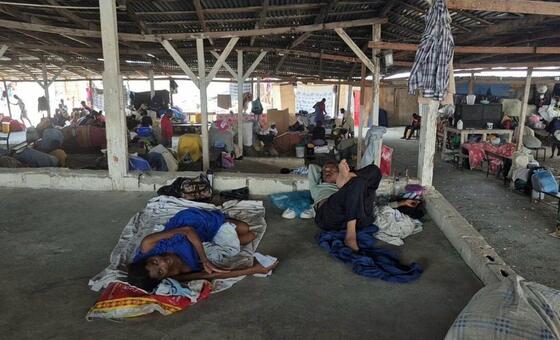
Roughly 1.5 million Haitians—about 12 per cent of the country’s population—have been displaced from their homes. For many families, the crisis is not only about armed clashes. It also affects the ability to travel safely, earn an income, access essential services and maintain daily life in their own neighbourhoods.
A Sanctions Regime Focused on Guns, Money and Movement
The Haiti sanctions committee was created by the Security Council in 2022. It uses three principal tools: an arms embargo, a travel prohibition and an asset freeze. Together, they are intended to deny armed groups and their backers the resources needed to sustain violence.
The weapons restrictions seek to stop firearms and ammunition from reaching gangs. Travel and financial restrictions apply to individuals and entities specifically designated for contributing to insecurity and gang-related violence. Nine people and two groups are currently subject to Council sanctions.
The Council has now extended the committee’s mandate for another 13 months. Haiti welcomed the renewal, while stressing that sanctions cannot by themselves return the country to security and stability.
That distinction is important. Sanctions can raise the cost of supplying or financing armed groups, but their impact depends heavily on enforcement by national authorities, regional partners, financial institutions and countries that serve as transit points for illicit goods and money.
Violence Continues to Take a Heavy Human Toll
The consequences of Haiti’s insecurity are stark. More than 3,000 people were killed and over 1,500 were injured between October last year and April this year. These figures reflect a crisis in which civilians remain vulnerable in areas contested or controlled by armed groups.
Sexual violence has become another grave feature of the emergency. A UN partner treated more than 2,400 survivors in Port-au-Prince from January through May. Most were women and girls, while minors accounted for 16 per cent of those treated. Cases involving children as young as eight were also documented.
For residents, the effectiveness of the sanctions will ultimately be measured less by diplomatic decisions than by visible changes in daily safety: fewer firearms in criminal hands, safer routes through communities and more freedom to work, travel and seek essential support.
An Imported Weapons Problem
Haiti does not produce firearms or ammunition, yet armed gangs have repeatedly maintained access to both. Estimates released by the UN human rights office last year placed the number of illegal weapons circulating in the country between 270,000 and 500,000.
Authorities in Haiti have recently stopped several illicit shipments at ports. In the United States, law enforcement authorities have intercepted firearms and ammunition intended for Haiti while pursuing trafficking investigations. The UN Office on Drugs and Crime supports regional work to counter the illegal trade.
Despite these efforts, the Security Council’s independent panel of experts on Haiti has concluded that violations of the arms embargo occur regularly. The panel collects evidence and examines information related to breaches of the sanctions regime.
Its work has included visits to Port-au-Prince and Cap-Haïtien, as well as Santo Domingo in the Dominican Republic and Miami in the United States. During those missions, experts met public officials, police representatives, financial institutions, civil society groups and people directly affected by gang violence.
Weak Points in Enforcement
The flow of arms is not limited to external trafficking routes. Some ammunition used by gangs originates in national stockpiles. Weapons seized by police are not centrally tracked, creating risks that firearms may be left unaccounted for or diverted through corruption.
Financial enforcement has also produced limited results. Only the bank accounts of two sanctioned individuals were identified as frozen, and the amounts involved were small. Banks were slow to act in some cases, while sanctioned targets were able to shift money or place it in the names of third parties.
The panel found no known attempts to violate the travel restrictions. Even so, it warned that fraudulent passports could allow sanctioned individuals to cross borders under assumed identities.
“Targeting gang leaders without addressing the networks that sustain them will inevitably fall short.”
The warning highlights a central challenge for the sanctions effort. Gang leaders may direct violence on the ground, but their operations can also rely on political, economic and security figures who provide support. The experts have indicated that additional gang leaders may meet the conditions for designation.
Closing the Networks That Sustain Violence
Gangs have continued their deadly expansion even with sanctions already in place, underlining that the existence of restrictions is only one part of the response. Consistent implementation, investigations into trafficking, stronger controls over weapons stockpiles and faster action against illicit finances are all critical to making the measures meaningful.
During the Security Council meeting, several of its 15 Member States emphasized the need to disrupt gang financing, eliminate loopholes and hold accountable the wider networks that enable armed groups.
The renewed mandate offers another opportunity to strengthen those efforts. But for Haitians living through the crisis, the key question remains practical and urgent: whether international pressure, regional cooperation and action by Haitian authorities can help restore safer communities and reduce the power of gangs over everyday life.
Related Reading
Frequently Asked Questions
What is Haiti sanctions renewed?
Haiti sanctions renewed is the main topic of this guide. The article explains the context, practical details, and next steps readers should understand.
Why does Haiti sanctions renewed matter?
Haiti sanctions renewed matters because readers are looking for a useful answer, not just a short summary. Good content should match search intent and help them decide what to do next.