
Summit in Samarkand, a boon for child wellbeing and health
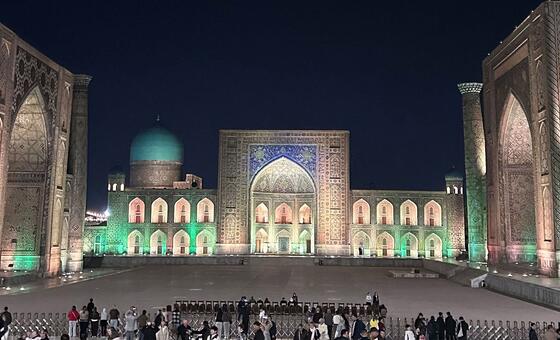
Global Summit in Samarkand Puts Children’s Wellbeing at the Centre of Policy
Qinilo.com – More than 600 participants from over 100 countries have gathered in Samarkand, Uzbekistan, for a UN-backed summit focused on a pressing global question: how can children flourish while conflict, climate disruption, economic strain and health crises continue to reshape their lives?
The World Summit Investing in Children’s Wellbeing opened on Wednesday with government representatives, researchers, civil society organizations, businesses, specialists, young people and adolescents taking part. Its agenda reaches beyond any single service, reflecting the fact that children’s lives are shaped by overlapping conditions at home, in school, in their communities and in the wider economy.
Health care, learning opportunities, protection from violence, stable family support and access to assistance all form part of a child’s wellbeing. The meeting in Samarkand is intended to address how these systems can reinforce one another, particularly as many countries face shrinking resources and growing needs.
A Future Shaped by Today’s Choices
In a message delivered at the opening, UN Secretary-General António Guterres underlined the long-term stakes of the summit. Sabine Mahl, the UN Resident Coordinator in Uzbekistan, read the message on his behalf.
“when we invest in children, we invest in the future”
Mr. Guterres warned that gains in child wellbeing are increasingly vulnerable. Armed conflict, poverty, economic pressure, public-health emergencies and climate-related shocks can place children in danger, with those already facing exclusion or disadvantage often exposed to the greatest risks.
His message also drew attention to a difficult financing environment. Humanitarian and development funding is falling while debt pressures remain severe in developing countries. That combination makes it harder for public institutions to sustain the services children rely on, from schools and social protection to health systems and safeguarding programmes.
The summit was convened by the Government of Uzbekistan alongside the Office of the UN Special Representative of the Secretary-General on Violence against Children, UNICEF, the World Health Organization and the World Bank. Its broad partnership reflects the idea that children’s needs cannot be effectively separated into isolated policy areas.
Warnings Over Aid, Climate and Child Survival
Uzbekistan’s First Lady, Ziroat Mirziyoyeva, highlighted the consequences that reduced international humanitarian assistance could have for the youngest children. Experts anticipate that deaths among children under five may rise in 2025 for the first time this century.
“This is a serious warning to us all,”
She also emphasized the scale of climate exposure facing younger generations. One billion children are growing up in countries considered most vulnerable to the effects of climate change. For families, climate shocks can affect food security, housing, health, schooling and the ability to maintain a reliable income, making child-focused planning central to wider resilience efforts.
Uzbekistan has placed children’s wellbeing high on its domestic agenda. More than half of the country’s population is under the age of 30, giving investments in childhood and adolescence particular significance for the country’s future social and economic development.
Changes to social services and expanded access to early education have been supported by UN agencies. Preschool enrolment has increased from 27 per cent in 2017 to 78 per cent in 2026, Ms. Mahl said. More than 10,000 children with disabilities now attend mainstream schools, while roughly 1.5 million families receive social assistance.
Government-backed support has also contributed to a substantial decline in the proportion of children living in monetary poverty, UNICEF says. In 2025, Uzbekistan adopted legislation intended to shield children from every form of violence, followed by an action strategy covering 2026 through 2030.
Childhood Cancer and the Unequal Chances of Survival
The Samarkand gathering also hosts the Second International Congress on Childhood Cancer, titled “From Cure to Wellbeing.” The congress focuses on paediatric oncology and haematology, where access to treatment remains deeply uneven around the world.
More than 80 per cent of children with cancer are cured in high-income countries. In many low- and middle-income countries, however, survival is below 30 per cent. Around 400,000 children and adolescents receive a cancer diagnosis globally every year.
Mr. Guterres described the gap in outcomes as an inequality driven by insufficient investment and fragile social services.
“an unacceptable inequality driven by inadequate investment and weak social services.”
WHO has set a goal of lifting the worldwide childhood cancer survival rate to 60 per cent by 2030. Achieving that objective depends not only on diagnosis and medical treatment, but also on continued schooling, emotional support, family assistance and care that recognizes the disruption prolonged illness can bring to everyday life.
That broader understanding is visible at Mehrli Maktab, or “caring school,” a state-supported institution operating within Tashkent’s Scientific and Practical Medical Centre for Paediatric Oncology, Haematology and Immunology. Children aged between two and 18 can remain connected to education while undergoing lengthy treatment.
Students study subjects including mathematics, information technology, electronics and music. The school also gives them a setting in which to make friends, pursue interests and maintain routines during a difficult period. Many children return after treatment to visit classmates, and some former students attended the Samarkand summit to speak about their own experiences.
Young People as Participants, Not Just Recipients
Organizers have made room for children and adolescents to contribute directly to the discussions. Their participation recognizes that policies affecting education, health, safety and climate resilience are most effective when they take account of the lived experiences of young people themselves.
Najat Maalla M’jid, the UN Special Representative of the Secretary-General on Violence against Children, stressed that young people bring more than personal testimony to the conversation.
“They have voices, ideas, expertise, and urgency.”
The summit’s central message is that children’s wellbeing is not a narrow social-policy concern. It is tied to how governments finance essential services, respond to climate risks, protect children from violence, reduce poverty and ensure that serious illness does not remove a child from education and community. In Samarkand, participants are examining how those commitments can be turned into systems strong enough to serve children wherever they live.
Related Reading
Frequently Asked Questions
What is Summit in Samarkand a boon for child?
Summit in Samarkand a boon for child is the main topic of this guide. The article explains the context, practical details, and next steps readers should understand.
Why does Summit in Samarkand a boon for child matter?
Summit in Samarkand a boon for child matters because readers are looking for a useful answer, not just a short summary. Good content should match search intent and help them decide what to do next.