
UN chief demands Israeli withdrawal from Lebanon amid Nabatieh escalation
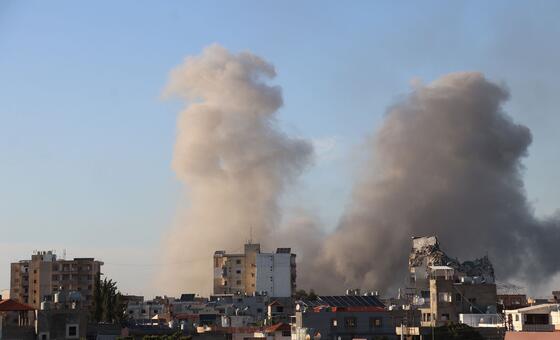
Lebanon’s Nabatieh District Under Fire as UN Demands Israeli Pullout
Qinilo.com – Southern Lebanon’s Nabatieh District has become the epicentre of a sharp military escalation, prompting the United Nations Secretary-General to issue his strongest recent call for Israel to withdraw its forces from Lebanese soil. The demand came as civilian death tolls climbed, evacuation orders swept through neighbourhoods, and what the UN described as “scenes of massive destruction” unfolded across the district over a single weekend.
The escalation marks a significant deterioration from the fragile calm that had held since mid-June, when a brief lull in hostilities allowed displaced families to begin returning home. That window of relative quiet has now closed, with Israeli ground operations, aerial bombardment, and sustained projectile fire converging on Nabatieh and its surroundings.
A Humanitarian Crisis Unfolding in Real Time
The human cost is already severe. Local authorities confirmed that roughly 5,000 families — approximately 20,000 individuals — abandoned their homes in Nabatieh District during the previous week, according to figures compiled by the UN Office for the Coordination of Humanitarian Affairs (OCHA). Hospitals and clinics in the area are buckling under the influx of wounded patients, and humanitarian corridors remain constrained by ongoing strikes and access restrictions.
Among those killed and injured in the intensifying attacks are women and children, a detail the UN highlighted as particularly alarming. Reports also indicate that Israeli strikes have struck hospitals, healthcare workers, and public institutions, compounding the crisis at precisely the moment medical capacity is most needed.
The Secretary-General’s Formal Position
In a statement released through his Spokesperson, Stéphane Dujarric, the Secretary-General declared himself “deeply concerned” by the scale and intensity of Israeli military operations in southern Lebanon. He condemned what he called
“mounting civilian casualties, including women and children killed and injured in the intensifying attacks.”
The statement drew attention to the “distress and displacement caused by the evacuation orders” and to “the scenes of massive destruction and devastation” now visible across the district. The Secretary-General singled out reports of strikes on hospitals and public buildings, as well as ongoing restrictions on humanitarian access, as matters of particular alarm.
He invoked the full weight of international legal obligation, insisting that all parties must honour their duties under international law and international humanitarian law specifically:
“Civilians and civilian objects must be protected at all times, and attacks directed against them are unacceptable.”
The formal appeal called for an immediate cessation of hostilities, demanded Israel’s withdrawal from Lebanese territory, and urged every actor involved to respect Lebanon’s sovereignty and territorial integrity. The Secretary-General also invoked Security Council resolution 1701 (2006), the landmark accord that ended the 2006 Israel–Hezbollah war and established the framework for UN peacekeeping in southern Lebanon, asking all sides to fulfil their obligations under that resolution.
On the broader diplomatic front, the UN reaffirmed its commitment to
“supporting efforts to end the violence, protect civilians and advance a lasting solution to this conflict.”
UNIFIL’s Operational Picture
The UN peacekeeping mission in Lebanon, UNIFIL, provided granular data on the military activity surrounding its area of operations. Between Thursday and Monday, the mission logged 528 projectiles fired by the Israel Defense Forces within and around its sector. On Sunday, UNIFIL also detected a single projectile fired by Hezbollah — the first such detection since 21 June.
Airspace violations reached a peak of 62 on Sunday alone, a figure the mission noted as among the highest daily totals recorded since June. Airstrikes were observed in both sectors of UNIFIL’s operational area as well as north of the Litani River. Peacekeepers additionally reported roadblocks and checkpoints impeding their movement, prompting the UN to call on all parties to respect the mission’s freedom of movement.
It is worth noting that the most severe reported incidents occurred outside UNIFIL’s designated area of operations. Nevertheless, the mission stated it continues to monitor the broader deterioration of the security situation with concern.
Humanitarian Coordination Under Pressure
Despite the operational constraints, UNIFIL facilitated 13 humanitarian missions between Thursday and Monday in coordination with OCHA, all conducted within its western sector. These operations represent a narrow channel through which aid can reach populations cut off by evacuation orders and active fighting.
Dujarric, briefing journalists in New York, underscored “the need for full respect for international humanitarian law, including the protection of civilians, healthcare and civilian infrastructure,” and stressed that humanitarian access must be maintained so that aid reaches those affected by the renewed escalation.
Why Nabatieh Matters
Nabatieh is the largest city in southern Lebanon and a historic centre of both Shia and Sunni communities. Its proximity to the Israeli border and to the Litani River corridor makes it a recurring flashpoint in the long-running standoff between Israel and Lebanon. The district’s infrastructure — roads, water systems, schools, and hospitals — has been repeatedly damaged in previous rounds of fighting, meaning that each new wave of bombardment compounds existing vulnerabilities.
Resolution 1701, adopted unanimously by the Security Council in August 2006, calls for a ceasefire between Israel and Lebanon, the withdrawal of Israeli forces to internationally recognised borders, and the deployment of a reinforced UN peacekeeping force alongside the Lebanese army along the Blue Line. Its continued relevance is underscored by the Secretary-General’s explicit invocation of the resolution in his latest statement, signalling that the UN views the current escalation as a breach of the post-2006 security architecture rather than an isolated incident.
As the weekend’s violence rolls into the following days, the question facing the international community is whether diplomatic pressure — anchored in the language of international humanitarian law and the authority of Security Council resolutions — can still translate into a halt in the bombardment, or whether Nabatieh’s residents will endure yet another cycle of displacement before a durable pause takes hold.
Related Reading
Frequently Asked Questions
What is UN chief demands Israeli withdrawal?
UN chief demands Israeli withdrawal is the main topic of this guide. The article explains the context, practical details, and next steps readers should understand.
Why does UN chief demands Israeli withdrawal matter?
UN chief demands Israeli withdrawal matters because readers are looking for a useful answer, not just a short summary. Good content should match search intent and help them decide what to do next.