
UN envoy warns of growing risks in El Obeid as Sudan conflict drags on
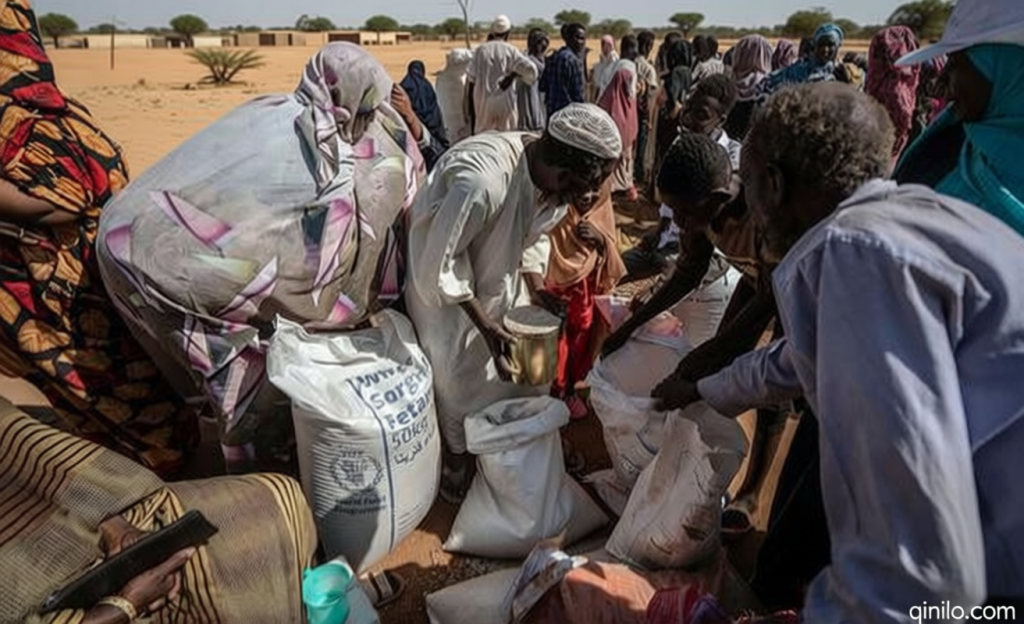
UN Envoy Warns of Growing Risks in El Obeid Amid Sudan Conflict
Qinilo.com – The United Nations envoy has issued a stark warning about the escalating dangers in El Obeid, a critical city in Sudan’s North Kordofan state, as the conflict continues to intensify. Highlighting the deteriorating conditions, the envoy stressed that the prolonged war threatens not only civilian safety but also the stability of the entire region. This escalating crisis has prompted urgent calls for international intervention to prevent further humanitarian devastation.
The Escalating Violence in El Obeid
El Obeid, once a relatively stable administrative hub, now stands at the center of a growing humanitarian emergency. The UN Secretary-General’s Special Representative for Sudan, Pekka Haavisto, emphasized that the conflict has led to a surge in military activity, with frequent drone strikes and clashes between rival factions intensifying daily. These attacks, he warned, are not only endangering civilians but also disrupting essential services and infrastructure, compounding the challenges faced by the local population.
“The spiking violence near the city, including repeated drone attacks, is already disrupting civilian life and hindering aid efforts,” Haavisto stated. “Any additional escalation would likely expose thousands to danger.”
Historical Parallels and Current Concerns
Haavisto drew direct comparisons to past crises in Sudan, such as the devastating conflict in Darfur and the ongoing instability in El Fasher. These earlier conflicts, marked by mass displacement and severe civilian casualties, have left deep scars on the population. The current situation in El Obeid, he noted, mirrors these patterns, raising alarms about the potential for a similar humanitarian catastrophe.
“This scenario echoes past conflicts, reminding us of the urgent threat to civilian safety,” Haavisto remarked. “The current situation bears similarities to earlier stages in Darfur and El Fasher.”
Haavisto also highlighted the critical role of drones in modernizing the conflict’s tactics. Unlike traditional warfare, the use of drones has introduced a new level of precision and unpredictability, making it increasingly difficult for civilians to find safe zones. The envoy urged international actors to closely monitor the situation, as the continued use of such technology could lead to a more severe humanitarian impact.
Diplomatic Efforts and Regional Involvement
Despite the grim situation, Haavisto pointed to renewed diplomatic efforts as a glimmer of hope. Recent talks between the Sudan Armed Forces (SAF) and the Rapid Support Forces (RSF) have sparked a potential shift toward peace. The envoy emphasized that these discussions, facilitated by the Quintet—comprising the African Union, East African bloc IGAD, the Arab League, the European Union, and the UN—could pave the way for a lasting resolution.
“This marks the first major political gathering in three years aimed at resolving the conflict and laying the groundwork for peace,” Haavisto noted. “It’s a promising sign.”
Haavisto’s engagement with regional leaders, including visits to Nairobi and consultations with Chad, South Sudan, and Uganda, underscores the importance of cross-border cooperation. These nations, he explained, play a vital role in the conflict’s dynamics, providing both strategic support and humanitarian access to affected areas.
International Support and the Quad’s Role
The UN envoy reiterated the organization’s strong backing for the Quad—United States, Saudi Arabia, UAE, and Egypt—in their push for a humanitarian truce. The Quad’s involvement, Haavisto said, could bring much-needed pressure to halt the violence and protect civilian populations. “Our hope is that the Quad can make progress toward a truce, which would significantly ease the burden on civilians,” he added.
“Both sides continue to see potential for military success,” Haavisto stated. “Conflicts persist as long as either side believes they can achieve goals through force.”
However, Haavisto also acknowledged the increasing skepticism of regional governments toward military solutions. While the warring factions remain committed to their strategies, the international community is pushing for a more diplomatic approach. This shift, he said, signals a broader recognition that sustained peace requires more than just military victories—it demands political consensus and international cooperation.
Looking Ahead: A Path to Stability
As the conflict in Sudan drags on, the UN envoy’s warnings highlight the urgent need for a coordinated response. The growing risks in El Obeid, he said, are a clear indicator of the crisis’s potential to escalate further. With the humanitarian situation worsening and diplomatic talks gaining momentum, the international community must act swiftly to prevent irreversible damage.